Sign In
Upcoming Event
 Free Newsletter

The Idaho Business Review Interviews of Highly Effective People: Andrea Cantor
Marc Lutz//April 14, 2026//
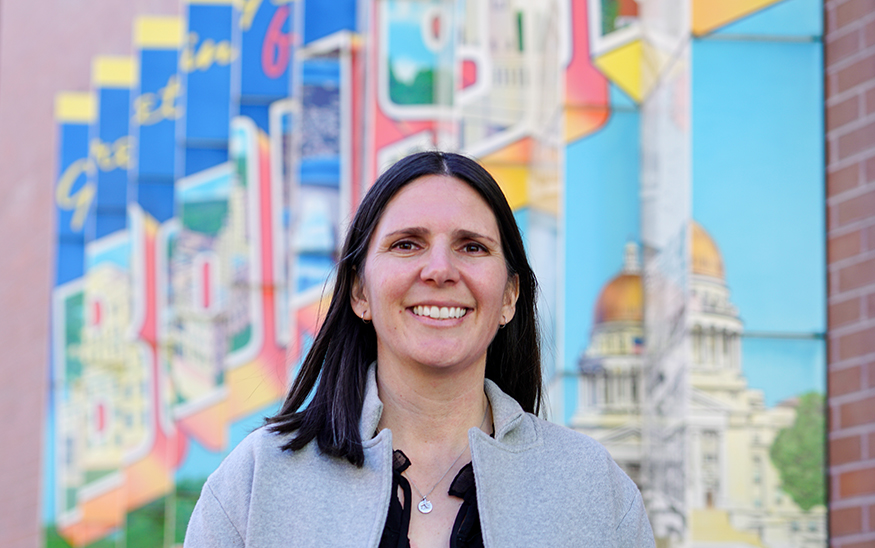
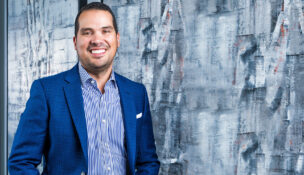
Andrea Cantor was recently named as the Economic Development director for the City of Boise. (PHOTO: MARC LUTZ, IBR)
The Idaho Business Review Interviews of Highly Effective People: Andrea Cantor
Marc Lutz//April 14, 2026//


Raised in Boise by parents who owned a small business, Andrea Cantor has a connection to the region and understands the entrepreneurial spirit. She’s also seen the changes the city and surrounding areas have gone through.
At a Glance:
- Andrea Cantor appointed director of Boise Economic Development
- Cantor has worked on Micron expansion and local business support
- Mayor Lauren McLean praises Cantor’s leadership and community focus
Cantor was recently named to the role of director for the city’s Economic Development department, working to attract businesses and people to the city to help drive positive growth.
“Andrea has been a key team member on many of Boise’s development projects,” said Mayor Lauren McLean. “Time and again she has shown a willingness to take on difficult projects, a dedication to finding solutions that serve the broader community and has prioritized building trust with our partners as we grow. I look forward to her leadership in this position.”
After spending time working, getting married, and earning a graduate degree on the East Coast, Cantor brought her New York-born husband back to the Gem State. She wanted to return to the close-knit community and to be close to family. She saw plenty of changes in her beloved Boise from the time she had been away, but they’re changes she gets excited about.
“When I have friends and family come visit, I’ll say, ‘Let’s go downtown. You won’t believe what’s happening down there.’ It’s been cool to see the change, for sure,” she said.
The following interview has been edited for length.
Idaho Business Review: What inspired you to pursue the career you are in?
Andrea Cantor: I feel like only up until a couple of years ago I knew what economic development was, so I wouldn’t say I set out to be in economic development.
I grew up here in Boise. My parents were small business owners. They worked in real estate and construction, so I spent a lot of time exploring places and seeing all sorts of people. So that’s always been an interest of mine. I studied at the University of Idaho, studied International Studies and Political Science, and thought, “Hmm, maybe one day I’ll work in some kind of politics or do something there,” but I didn’t for a long time. I moved to Baltimore, Maryland, after I graduated. I worked in property management, I did some market research, but constantly thought the things that I like about work are working with people, school, getting outside of the office. I then decided to do a graduate degree at Georgetown University focused on real estate development.
Probably 2019, my husband and I moved back to Boise … There was a tech startup at the time that I had a sales job [with] focused on traveling the country, around real estate and working with people. I did that until COVID made it where traveling wasn’t allowed. And then, with that, looked around and said, “What can I do here locally?” And the city of Boise had posted for a project manager job focused on real estate and business support. I guess some of those choices have led me to economic development, which is really focused on building relationships in the community and supporting businesses. So, I felt lucky … I’ve been kind of doing pieces of this, and then here I am.
IBR: What are some of the challenges you’ve experienced during your career and what have they taught you?
AC: One challenge I had kind of earlier on, is I went to graduate school, but I lived and worked in Baltimore, but I went to graduate school in [Washington, D.C.] I had to figure out how to balance working full time and getting to school on time. I went mostly at night and just balancing the challenges of career, education, relationships. That was hard. I mean, I was able to get it done. It definitely made me reflect that you can achieve those things, but you have to really want it. And then I think, like many, COVID were difficult times. I went from a traveling sales job to kind of having to pivot and figure out what kind of work I could do locally. I joined the city in July 2020, like I said, doing kind of business support, economic development. With that, my job is really focused on working with business owners and that were struggling and having a hard time, and my job was to help them know where we’re at from masking and distancing and really just spending a lot of time hearing how hard it was to run a business. It was a tough time to join the city in a new role, but I’m happy to say the city continues to grow, and with that, I feel like I was able to build some good relationships.
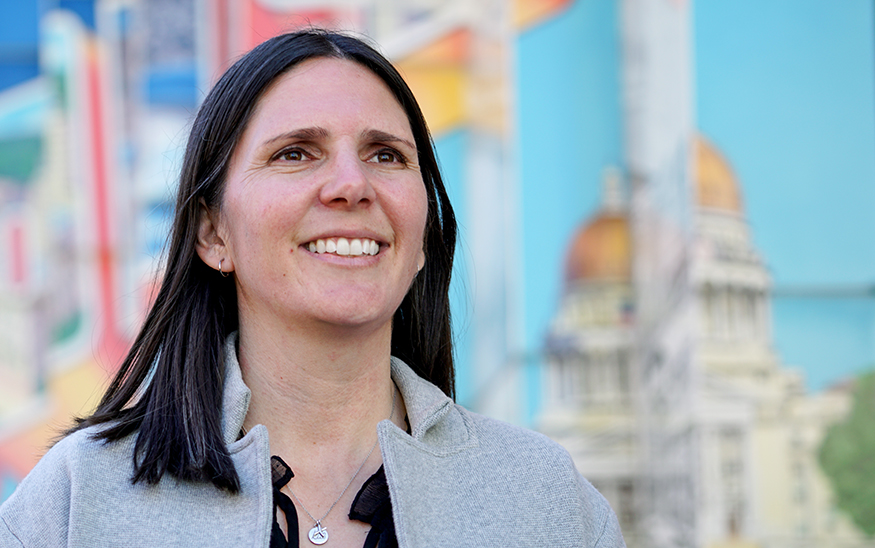
IBR: Do you find that, since your parents were small business owners, that it gives you a little more insight when working with people who own their own business?
AC: Yeah, I think I have a little more empathy and understanding of how difficult it must be to be the person who’s running the business, paying the bills and making hard choices. Because I saw my parents have to do many of those things. You get to be the owner, but you also have to be the shop cleaner. You have to do the repairs, you have to pay the bills, and it can be really difficult. Which I do think has helped me in my role to be able to connect and understand, especially when there’s challenges like construction and closures of what that impact really means for businesses.
IBR: Talk about your most recent accomplishments, the significance of those accomplishments, and how you got there.
AC: Over the last six years or so, I’ve had the opportunity working here at the City of Boise to work on projects anywhere from helping small businesses with how do they navigate our permitting process; how do we get through maybe some hard times as it relates to closures and construction; all the way up to projects like the Micron expansion. How do we help land these really great opportunities here in our city? And how do we talk about why Boise is such a great place? For me, some those are some of the accomplishments of just really getting to be here at the city at a time that we saw immense growth for our economy. For our city, that comes with some hard things, but I think from a lens of economic development, there’s been some really great successes. We’re seeing wage growth go up. We’re seeing people have new opportunities to live and work in Boise. That’s been really exciting for me, especially growing up here, to be able to see people have new opportunities to return home, have a job to come to, that’s been really cool.
IBR: How would you define your leadership style?
AC: I really approach work leadership around collaboration and teamwork. For me, I enjoy working with others. People are important to me, creating space to think about what’s possible, the solutions, forward mentality is what I enjoy about work and being part of a team. I have one employee underneath me, but here at the city, it’s really meant that I work across departments on a lot of topics.
IBR: Do you mentor others? If so, what do you look for in a mentee?
AC: I haven’t formally been a mentor to anyone. I’ve been a supervisor, I’ve been a manager, so there’s probably been folks that I’ve led. But I think for me, trying what I see with many of my coworkers and my peers, I try really hard to be a good team player. I feel like — back to that teamwork and collaboration — trying to be open and available. So like, “What’s going on? Tell me, is there anything I could do to help you?” I like listening and problem solving with others. I get enjoyment out of seeing that, so maybe less out of a formal mentorship, but seeing my peers, or folks who used to work with me succeed. What a cool moment to see someone I used to work with, and now they’re in charge of [something]. How cool is that? I think for me, I benefited from bosses in the past that were really hard working and dedicated, but also live lives outside of work. That’s always been something I’ve kind of looked for and strived for. I feel like I’ve had good examples.
IBR: How do you plan each day to be successful?
AC: That’s a hard one. I think success is hard to measure, especially in my role. Each day looks a little different. I think there are some days where success looks like getting in on time, getting some tasks done. And there are other days where we’re working towards deadlines and projects. That’s the hard one, I would say. Things that I do to try to focus on, to work towards goals and success is I have to really stay organized. For me to write notes down, usually I need to start my day saying, “What am I trying to do today? Where am I trying to go?” Check it off the list. Because, as you know, time continues, so sometimes you really have to focus on what you’re trying to achieve. Or somehow it’s the end of the week.
IBR: What will you accomplish this year?
AC: Professionally this year, getting comfortable in this new role, working on some strategic planning of where we’re trying to go to, help achieve the mayor’s initiative around opportunity for everyone as the director of Economic Development, trying to figure out what are some of these strategic goals, and how do we signal to others how to join us to be successful? Specifically, a goal this year is focused on business attraction. How do we get new businesses to come invest and join us here in Boise? I’m actually joining an Idaho delegation to go to Japan next month, an international trade mission focused on supplier attraction related to Micron and the semiconductor industry. I’m really looking forward to that. That’s some targeted outreach, joining the state of Idaho to go to Japan and promote how great Idaho is — specifically the City of Boise — for these new opportunities.
IBR: If you had to retire tomorrow, how would you describe the entirety of your career, and what would you do in retirement?
AC: I hope not to retire anytime soon. I hope to have many opportunities ahead of me, but so far I would describe my career as unexpected opportunities. I had a boss one time who always said, “My best advice would be just say, ‘Yes.’ Give it a try.” Someone says, “Would you want to try this new role? Do you want to go to this conference?” Just say, “Yes,” because you don’t know what might be there next. I feel really lucky that I’ve had a lot of opportunities. Living in Baltimore, I worked in D.C. and some of the other cities around there, to get to meet really interesting people with very different backgrounds, getting to work in places that are like, “How did I get here? I’m in charge of traveling to other cities to do business. Like, how cool is that? As I reflect, just enjoying the people and places I’m about to go to, and I hope to be able to keep doing that. If and when I retire, I hope to be able to find ways to stay engaged and find enjoyment.





 Loading ...