Sign In
Upcoming Event
 Free Newsletter

Lower snowpack to impact all of Idaho this year, officials say
IBR STAFF//April 13, 2026//

Jennifer Cuhaciyan, a technical hydrologist for Idaho Dept of Water Resources, and Ron Abramovich, a water supply specialist for the Natural Resources Conservation Service, take snowpack measurements in 2014. (FILE: Photo courtesy of NRCS.)
Lower snowpack to impact all of Idaho this year, officials say
IBR STAFF//April 13, 2026//


The snowpack level in the Gem State produced this past winter is considered to be one of the “lowest on record,” according to officials at the Natural Resources Conservation Service (NRSC) Idaho.
At a Glance:
- NRCS reports snowpack peaked nearly three weeks early
- Erin Whorton warns of record low river flow conditions
- Low snowpack increases wildfire risk and smoke impacts
The agency, which began conducting snowpack measurements as far back as 1930, indicated that snowpack levels, as of March 17, peaked nearly three weeks early.
Given the historically low snowpack conditions, NRCS encourages water users to consider the “drier scenario” with 90% and 70% exceedance streamflow forecasts for this year, in addition to the mid-range forecast, to reduce their risk.
“Every Idahoan will feel the impacts of this low snow year,” said Erin Whorton, who serves as a water supply specialist for NRCS Idaho.
“Changes in timing and amount of runoff pose significant water supply challenges for agricultural producers, the outdoor recreation, and energy sectors. With very little snow left in the mountains to sustain streamflow into the dry summer months, our rivers could reach record low flow conditions.”
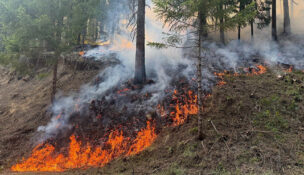
The lower levels of snowpack are not only affecting Idaho, but other neighboring states, while also creating drier conditions that could seriously impact what has become the annual wildfire season in Idaho and several other western states.
“The western U.S. is experiencing an unprecedented snow drought, and with the rapid melt off, the opportunity for wildfires to start is longer,” she said. “Even if the fire season isn’t bad in Idaho, it’s likely we’ll see impacts from smoke from neighboring states.”
Current snowpack and precipitation conditions for each basin can be accessed via the NRCS interactive map.
To read the entire Water Supply Outlook Report, please visit the NRCS Idaho Snow Survey Webpage.
Idaho NRCS offers a variety of programs to help farmers, ranchers, forest landowners, Tribes and conservation partners with financial and technical assistance to voluntarily put conservation on the ground, not only helping the environment, but agricultural operations as well.

 Loading ...