Sign In
Upcoming Event
 Free Newsletter

Lexi Ahrens
Director of Inclusive Health • Special Olympics Idaho
IBR Staff//June 29, 2026//


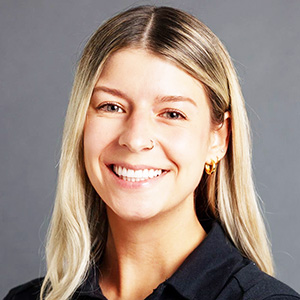 Lexi Ahrens did not set out to reshape how Idaho’s health care system treats people with intellectual and developmental disabilities. She just wanted to help athletes feel seen.
Two and a half years into her role at Special Olympics Idaho, the 28-year-old has done considerably more than that. As director of Inclusive Health, Ahrens has built a statewide health infrastructure, including screenings, fitness programming, follow-up care coordination, provider training and athlete leadership development, that serves Idahoans with intellectual and developmental disabilities at no cost to the individuals or families who need it most.
“I focus on supporting individuals as whole people – physically, mentally and socially – by creating programs that reduce barriers and meet people where they are,” Ahrens said.
The foundation of that work is the Healthy Athletes program, a Special Olympics initiative that Ahrens has strengthened and scaled across Idaho. She coordinates health screenings spanning multiple disciplines, helps athletes navigate required health forms and connects them and their families with local providers and community resources after screenings conclude.
But Ahrens has not stopped at access. She has developed fitness and wellness programming, including the Fit 5 initiative, fitness challenges and partnerships with local gyms, designed to give athletes inclusive exercise options that extend well beyond competition season. Program data show athletes are statistically improving their overall fitness and, in many cases, achieving healthy weight loss, results that point to the durability of what she has built.
Kristi Kraft, who nominated Ahrens for Idaho Business Review’s Accomplished Under 40 award, said what distinguishes the work is its emphasis on systems change rather than short-term fixes.
“She has established partnerships with medical and dental schools to ensure future physicians are trained to provide respectful, competent care for people with IDD, an area where gaps in knowledge and access are well documented and deeply impactful,” Kraft wrote. “Lexi’s vision, leadership and commitment are changing lives across Idaho.”
Those partnerships represent one of Ahrens’ longer-horizon bets: That training the next generation of health care providers to understand and respect patients with intellectual and developmental disabilities will ultimately do more good than any single screening event. It is a public health approach applied at the provider level, and it reflects the graduate training she brought to the job.
Ahrens holds a master’s degree in sport, exercise and performance psychology from the University of Wisconsin-Green Bay and a bachelor’s degree in psychology from the University of Wisconsin-Stevens Point. She presented research at the Association for Applied Sport Psychology’s annual conference on integrating psychological skills training into Special Olympics programming, work that placed her at the intersection of academic inquiry and on-the-ground practice.
She is also a member of the Western Idaho Community Health Collaborative and serves as a Lions Club district leader for Special Olympics, extending her network of partners who can support athletes between organizational touchpoints.
Ahrens describes the athletes themselves as the most clarifying force in her professional life.
“Working for Special Olympics Idaho and getting to know the athletes has had the most positive impact on my life,” she said. “Their resilience, joy and determination constantly inspire me. In moments of stress, I come back to the incredible people I serve, which helps me reconnect with the purpose and mission of this organization.”
That grounding has been essential. Ahrens acknowledges that working in a role fueled by deep personal investment carries its own risks like burnout, losing perspective, and the pull to give more than is sustainable. She has worked through it by building strong routines, leaning on supportive relationships and staying anchored to the mission.
“I’ve learned the importance of stepping back, gaining perspective and taking care of my own well-being,” she said.
It is, in its way, the same lesson she teaches the athletes: That taking care of yourself is not a retreat from the work. It is how the work continues.






 Loading ...