Sign In
Upcoming Event
 Free Newsletter

A word with Scott Schoenherr of Rafanelli and Nahas
Anne Wallace Allen//July 9, 2018//


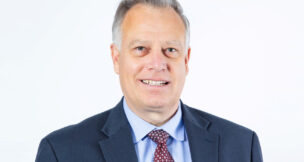
Scott Schoenherr is a partner and Boise director of Rafanelli and Nahas, one of the larger property owners in downtown Boise.
Schoenherr is a Detroit-area native who started out as a football player at Michigan’s Northwood University, transferred to Michigan State to earn a business degree and eventually graduated with an MBA from Harvard. Along the way, he worked in his father’s country bar and later ran a distribution center for Kimberly Clark Corp. in Southern California.
After he earned the MBA, Schoenherr joined a real estate development firm in Menlo Park, Calif. It was the early 1990s, and the real estate industry was in a downturn, so when a friend moved to Boise, Schoenherr, an avid triathlete at the time, followed on a whim without a job. He contacted the two dozen or so members of the Harvard Alumni Association in the Boise area to see if any of them knew of a place to work and landed at Boise Cascade. Later he moved to Micron and then a startup called Crucial Technology that sold computer memory.
Schoenherr was recruited to work for a Florida company in 2000 and spent a year there as the tech economy crashed before moving back to Boise and taking a position at Telemetric, a company that makes wireless devices for electric utilities. With young children at home, Schoenherr wanted to cut the amount of time he spent travelling for work, so he started looking for a job that fit the bill. That’s how he landed in real estate in 2004 with Ron Nahas, who lives in the Bay Area.
Nahas’ father had been a developer in Boise, and Nahas, with his business partner Mark Rafanelli, was entering the Treasure Valley real estate development market in 2004 when he joined forces with Schoenherr. Rafanelli died about five years ago, and now Schoenherr and Nahas are partners in a company that they estimate owns about 1 million square feet of real estate in the Treasure Valley, including the Boise Plaza building, the Boise Plaza parking garage, the Key Bank building and several buildings in the River Quarry and River Run developments on Boise’s Parkcenter Boulevard. They have proposed to build a 10-story office building on land the company owns across the street from the Boise Plaza. The company also owns several apartment buildings in Idaho and California and an office park in Meridian.
Schoenherr is on Ada County Highway District’s advisory board for developers and is an active member of the Urban Land Institute who speaks and writes about planning in downtown Boise. He spent some time talking to Idaho Business Review about commercial real estate, autonomous vehicles and the future. The conversation has been edited for length and clarity.
What does the Boise area need to do to grow sustainably?
Public transit is a huge deal; we can talk about that forever.
I also think one issue we’ve had in Boise is if you look at a satellite image of Houston, or most big cities, the downtown is in the middle and the housing happens around it. Boise looks more like a meteor where the downtown is one place and everything happens to the west. Everything going on in Harris Ranch and that area are great for downtown, but we don’t have people downtown and we have too few ways into downtown.
Growth all the way around downtown will help downtown. The big question right now is the convergence of autonomous vehicles and transportation as a service. That’s a fascinating discussion, and every expert who talks about it believes that’s going to happen faster than any of us believe. It’s going to be like the iPhone, where all of a sudden everyone is going to be doing it. It will happen in Boise slower than in other places, but it will happen; I’m sure of that.
How would autonomous vehicles affect growth?
If you lived in Meridian, and you could basically call up a vehicle like you do on Uber, the vehicle pulls up, you sit down, you can be typing on your laptop or talking on your phone. Do you really care if the commute is 10 minutes longer?
The one risk to autonomous vehicles is that it could spread people out because it would make it easier to live in western Star than it is now. Density is good, and we need vacant land for other things to live than people. I want to be able to drive out and go chukar hunting. I don’t want to live in LA where it just goes on forever, so I think we need to continue to try to be a dense downtown. Autonomous vehicles could work against that. I am no expert, but if you could really sit in the car and time wasn’t a big deal because you can watch CNN in the car, maybe you would live further out.
Every expert I talk to says this is coming fast. This isn’t a 20-year deal; this is a five-year deal.
Given all this, how can local business and public leaders prevent Boise from spreading out too much?
We need to promote dense development. There are still a lot of vacant lots downtown. How do you get people to build on them?
There are a lot of things we could do. Take impact fees. The people at ACHD have the best intentions, yet they believe 1 mile of roadway in western Star is the same as 1 mile of roadway in Harris Ranch. Yet that Harris Ranch person will drive less than the person in western Star. For my building at 11th and Idaho, my ACHD traffic impact fees will be more than the land cost, and the roads are all already there.
If you build a housing unit downtown, you pay ACHD traffic impact fees. I am not picking on ACHD. Everyone’s heart is in the right spot, but we need to figure out ways to motivate dense development or you end up looking more like LA than Portland.
We only have one chance to do it right. Almost every building will be here for 100 years.
How do other cities promote this density?
I don’t have an easy answer to that. Some, like Portland, have urban growth boundaries. And I don’t know beyond that; my guess is they give breaks in fees and things like that for projects that don’t force people to get into their cars to go places.
We need to look at this at a higher level and collaborate – the Chamber, the City Council, the mayor, ACHD. We have to be smart about what we do. For the most part, so far, we have been smart; things like the streetcar, the stadium, the library are exactly the things we should be looking at. I’m not going to take a stand on whether we should do them or not, but they’re something we should be evaluating. Trying to get College of Western Idaho downtown.
If we want the smart young people to want to be here, we’ve got to create a liberal, accepting urban environment. Housing has to be part of it. Mike Brown and Casey Lynch (of LocalConstruct) have done that; they’ve stepped up and done downtown housing when old-time people are not.


 Loading ...