Sign In
Upcoming Event
 Free Newsletter

Quiet work of nonprofit clinic aids underserved and low-income citizens
Steve Lombard//December 6, 2024//
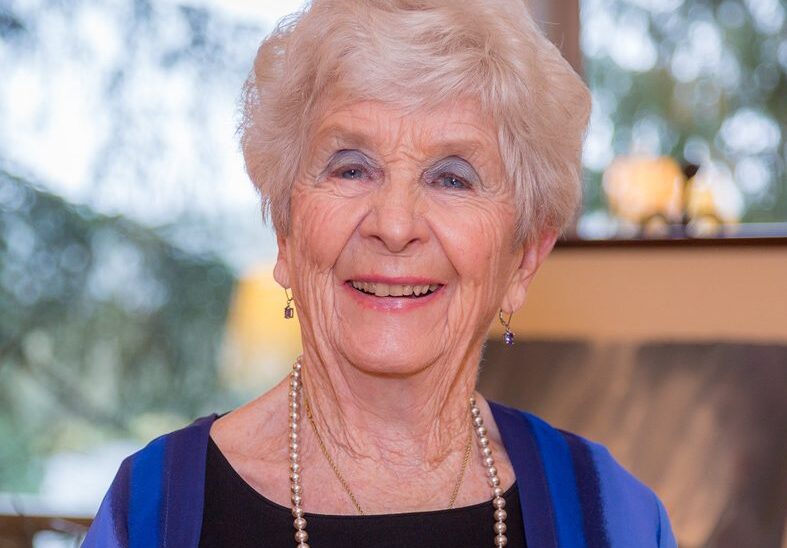
Friendship Clinic founder Marie Blanchard will celebrate her 99th birthday on Dec. 19 and still remains an active member of the board of directors. (PHOTO: COURTESY OF THE FRIENDSHIP CLINIC)
Quiet work of nonprofit clinic aids underserved and low-income citizens
Steve Lombard//December 6, 2024//


In dire need of medical assistance, they had nowhere else to turn.
One man battling untreated asthma wound up in the emergency room several times a year, his breathing episodes so severe they caused great stress for his family and cut short his ability to work.
Tests for one woman revealed her to be diabetic, yet she could in no way afford to pay for life-saving insulin.
Debilitating seizures was the diagnosis of the chronic issue that disrupted yet another patient’s daily life.
Three patients with serious medical issues who share one common bond: All were treated with compassion and kindness at the Friendship Clinic, a nonprofit and free medical facility tucked neatly inside a couple of small rooms generously provided by the All Saints Episcopal Church on Latah Street.
Situated on the Boise Bench, the clinic serves as a bridge, connecting hope with health for the uninsured and underinsured, with an emphasis on health promotion and disease prevention. Most seeking help suffer chronic conditions such as diabetes, hypertension, high cholesterol and behavioral health issues.
Patients primarily fall within 200% of Federal Poverty Guidelines, and are often referred to as “gap” patients or “the working poor.” Some earn too much to qualify for Medicaid, while others make too little to qualify for subsidies to purchase insurance under the Affordable Care Act (ACA).
“We have individuals in need already facing great difficulty in life,” said Yvonna Rowett, the clinic’s office administrator and volunteer coordinator. “And sometimes they just don’t want to seek the help they need because they might just get punched in the gut yet again. They don’t want to have to deal with the rejection.”
Known for changing lives, and sometimes even saving them, the clinic is staffed entirely by a combination of dedicated volunteers comprised of local, licensed medical professionals and soon-to-be medical practitioners fostered through partnerships with several of Idaho’s institutions of higher learning.
Operating on a shoestring budget with an official staff roster of only two part-time, paid employees, the clinic relies strictly on donations to support its mission of serving those who lack medical coverage, receiving not one single dollar from the state, or any other assistance from the federal government.
“This clinic hopefully gives everyone that helping hand they need to make it through that next chapter or phase of their life,” Rowett said. “We’re a bridge.”
If the clinic serves as a bridge, then Rowett surely knows the terrain below. Though set to retire at the end of this year, she has meticulously managed the site’s office operations for two decades.
Equally important to providing medical care, the clinic also serves as a venue for students engaged in health care education to receive volunteer experience in a clinical setting.
“All of our medical professionals are volunteers and without them we do not have a medical clinic,” Rowett said. “We appreciate everything they do for our community.”
The key term being “community” for clinic founder Marie Blanchard.
At the spry age of 78, the former nurse made good on a lifelong promise she made herself to one day provide free health care to those in need. She envisioned a facility that would serve as a safety net for socioeconomically and even geographically underserved patients.
As a child of The Great Depression, Blanchard spent her youth in Minidoka, Idaho, where residents needing medical care had to travel 13 miles to neighboring Rupert to see a doctor. Volunteerism and giving back to those in need were two primary lessons she gleaned as a child and carried forward in her own life.
And it was in that tiny railroad town where she watched her father, a pharmacist, always “go out of his way” to help those in need. “Growing up during the Depression taught me how we need to help take care of each other because that is what we had to do back then. If somebody had a problem, you helped them.”
Plus, she vividly recalled her father being the “only one” with any “medical knowledge” in town.
“I got so much from him and everything else I learned from living through the Depression,” Blanchard said. “He would especially help anyone who would ask him. He’d be very pleased to know I carried this on.”
Her path to carrying on his legacy first began while earning a nursing degree through the University of Denver. During her senior year of college, she took advantage of an exchange program to continue her studies at the University of Seattle.
Landing in the Emerald City turned out to be a unique opportunity and eventually led to a position as a stewardess with Pan Am Airlines as she waited for her husband to finish his schooling.
And soon Blanchard found herself experiencing another life-changing situation, taking part in what was dubbed a “mercy flight” to Nome, Alaska. The humanitarian mission aimed to assist 30 Inuit Indians suffering from tuberculosis.
With the impact of her father’s care for patients and generosity embedded in her head and her heart, Blanchard found herself “deeply affected” by the tribe’s inability to access medical care.
“It was an eye-opening experience,” she said, “and TB was so rampant back then and these people had no access to health care.”
Using these life lessons as a springboard, Blanchard began to fulfill her dream.
In 2002, she sought help from nursing students at Boise State University to conduct a community survey to support the need for a free clinic on the Boise Bench. The survey was part of a senior project and helped raise funds for the clinic’s establishment two years later.
Now operating quietly and discreetly for two decades, the clinic sees patients by appointment on Tuesday evenings, and some Mondays, while working to fulfill its mission to save lives and to help build a healthy community.
Services provided include free blood work and X-rays (analysis through Saint Alphonsus Medical Center) mental health evaluations and consultations, and consultations for both dietary and physical therapy.
The clinic also provides free medications through various means, medications donated by national partner organizations like Direct Relief and AmeriCares, while others are purchased for the patient directly by the clinic.
“It’s one of those places that seems to fly under the radar,” said Margaret K. Leahy, a retired nurse who spent many nights volunteering at the clinic. “A lot of the patients that come hear about it through word of mouth.”

A former instructor of nursing at BSU for 23 years, Leahy refers to the clinic as an “intersection of education and compassion.”
“Most of our RNs come to the clinic because they want to keep on nursing,” she said. “It meets their needs. It’s a labor of love.”
In addition to the nursing students from BSU, the clinic utilizes an array of volunteer future medical providers including residents from the Boise Veterans Affairs Medical Center and students enrolled in the Physician Assistant program at Idaho State University.
There is also an official partnership between the clinic and the University of Washington School of Medicine program, known as WWAMI (Washington, Wyoming. Alaska, Montana and Idaho).
According to Dr. Mary Barinaga, dean of the WWAMI program, the partnership between the school and the clinic has been mutually beneficial for more than a decade.
“WWAMI has a special slant on serving underserved communities,” Barinaga said. “So, this also shows the importance of access to primary care to help people live longer and healthier and more productive lives.”
Annually, about 30 WWAMI students take part rotating as clinic volunteers.
“When physicians volunteer their time, it is quite fulfilling and it fills our cup up for why we made the choice to go into medicine,” she said. “Plus, teaching in this type of setting is so rewarding.”
Through her lengthy connection to the clinic, Barinaga strongly believes the facility’s unique setting provides a win-win for those served, and the aspiring medical professionals. “It’s really important as a physician to be a leader in your community and to be as engaged as you can. That skill will carry forward into their future professional lives.”
For Dr. Alan Swajkoski, his involvement with clinic founder Marie Blanchard extends more than three decades. The two originally met through church.
A self-professed “mostly retired” OBGYN who has practiced medicine in Boise since 1991, and as a current member of the clinic’s board of directors, Swajkoski said he still believes in the old-school approach of establishing a personal connection between providers and patients.
In his professional medical opinion, “motivation” for most of the student volunteers is “highly unnecessary.”
“I like to see their eyes open up to the overall benefits they can offer society in general,” he said. “And I can truly say that most of the nursing practitioners and physicians have come into the clinic with that goal in mind. Their desire and motivation to improve the lives of those who can’t afford health care is pretty much off the charts.”
A “breath of fresh air” is how he humbly describes his 32-year relationship with the clinic and its inspirational founder.
“It started with Marie and now so many of the young people, the nurse practitioners and physicians we see come through the clinic to serve, they really do exemplify what is right about medical care,” he said.
Family nurse practitioner Nancy L’Heureux began her relationship with the clinic in 2012. Also a board member, she continues to fulfill her main goal when she entered into medical practice: To serve vulnerable populations.
“Being here gives me great insight into what people experience in their day-to-day lives, those struggling to make ends meet, working hard, but not quite able to afford medical care,” she said.
“These are people doing everything they can to pull their lives together. It’s very eye-opening.”
As is watching Blanchard, an “amazing woman filled with vision” as she describes her.
“Marie has the drive and the vision to get out there and find donors and to remain the driving force behind this clinic,” L’Heureux said. “And she remains passionate about caring for others. It’s quite inspiring and motivating to see.”
This past October, the Friendship Clinic humbly celebrated its 20th year of service to the community, honoring all who have helped in its journey to serve the community.
“I can’t believe it has been 20 years,” said Blanchard, who will celebrate her 99th birthday Dec. 19. “When you start something like this, it will always continue. We’ve had so many great volunteers and that is so important.”
Fully retired from actual work, but still an active member of the clinic’s board of directors, Blanchard continues to serve as the “face and spirit” of the clinic.
“She’s a great many things, if not a visionary,” said Rowett who also met Blanchard through church. “At a very late age, her late 70s, she went out and determined a need in the community. She’s an incredible woman.”


 Loading ...