Sign In
Upcoming Event
 Free Newsletter

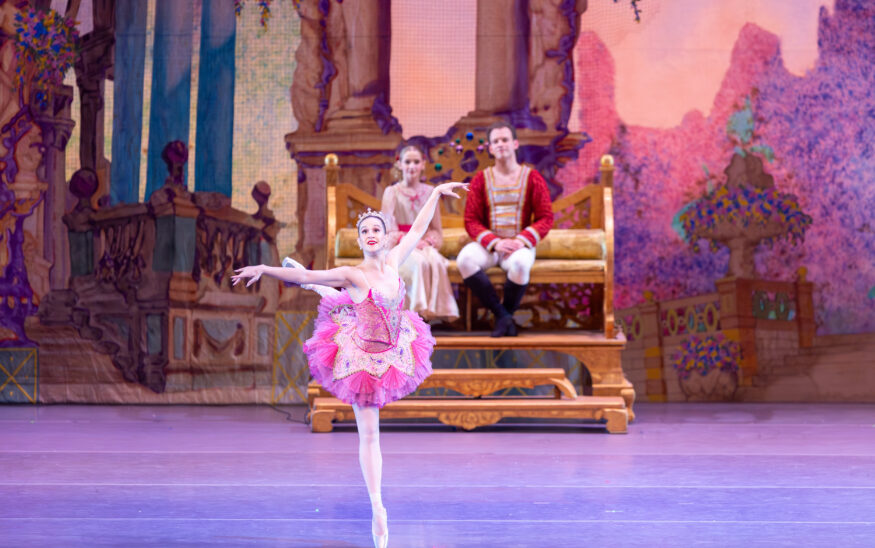
Apprentice Mia Tureson with Ballet Idaho performs in “The Nutcracker,” a well-known show typically performed around the holidays. (PHOTO: KYLE GREEN)
Staying en pointe: Local dance organization works to reduce injuries
Marc Lutz//January 3, 2025//


From pas de bourrée to pirouettes, ballet dancers can begin their training as early as 3 years old, launching a career by their late teens.
Yet with all their training and strengthening, these highly disciplined athletes can still sustain injuries that can pull them off stage or worse, end their careers. One local organization is teaming up with health care providers in the Treasure Valley to treat and prevent those costly injuries.
In a 2011 study published by Researchgate.net, 87 dancers were looked at for the number of injuries they sustained. Seventy-five percent of the dancers suffered 217 injuries or 2.9 injuries per dancer. A 1993 report published by the National Library of Medicine showed that out of 104 dancers that were studied, 309 injuries were sustained over a three-year period, about 2.97 injuries per dancer.
Of those injuries, the majority were in the foot, 23.9%. The second-highest area to sustain an injury was the lumbar at 23% and the ankle had about 13.3% of injuries.
The study reported that “the experience of this ballet company is similar to that of a college athletic department or a professional sports team.”
That’s why Ballet Idaho has partnered with Saint Alphonsus for more than four years to provide care for its dancers when it comes to injuries. Of those physicians looking after athletes, Dr. Chris Hirose, a fourth-generation orthopedic surgeon specializing in foot and ankle injuries, has his roots in sports medicine.
His father was the orthopedic surgeon for the Denver Broncos, and that work informed a lot of Hirose’s view on the treatment of athletes.
“That experience for my father was really quite good, and he took care of a lot of athletes,” he said. “I’ve always been interested in taking care of athletes, and just in general, taking care of everybody. But the [ballet] athletic group is particularly interesting because it’s so specialized and the performance is so high, so you really need to know what you’re doing [in treatment].”
And for those who don’t think ballet is akin to sports, Hirose pointed out just how rigorous the training can be.
“I think the career of a ballet athlete is relatively brief,” he said. “It’s really rare to see a ballet dancer in their 30s and beyond, although there’s always an outlier, but that’s really unusual. There are several sports like this. Figure skating is one of those that’s fairly similar because – especially the women – they have a specific window in which they could perform optimally. And then, when they start maturing … their body shape changes with maturity.”
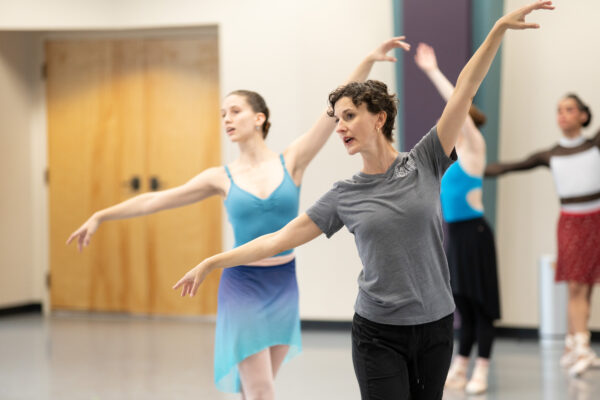
When it comes to injuries incurred by women in ballet, they differ much more than from men due to the nature of their roles on the stage.
“For women, they’re en pointe a lot, on their forefoot, so we see a lot of injuries around the ankle, especially posterior ankle, tendonitis of the Achilles,” Hirose said. “There’s another tendon that brings your big toe down like that, and the tendon runs in back of our ankle … so we’ll see tendonitis of that or even a tear of that tendon. Once that happens, young ladies can’t go up on their toes.”
Males are different because their strength depends on them being able to lift the women.
“We see stress fractures with the men, and then they’re doing a lot of very large leaps,” he said. “There’s a sudden acceleration and deceleration, so it’s sometimes Achilles tendon injuries. You could have Achilles tendon rupture, the tendons that are at risk for sudden acceleration, deceleration.”
One of the challenges for physicians like Hirose is not only providing care, but getting athletes functioning as much as possible as soon as possible. Of course, the injuries don’t typically happen until the dancers are training or performing during the season.
“Most of the ballet dancers who come to see me usually come at a time when they’re performing like now [early December] they’re doing the Nutcracker,” he said. “Because there’s a lot of stress – it’s just day in, day out practice and performance. So the goal is to try to keep them performing in a safe way.”
Hirose cited the example of an elite dancer who was performing during the 2023 season. She had a bad case of flexor hallucis longus tendonitis, an injury that happens when the tendon connecting the calf muscle to the big toe gets inflamed due to overuse.
“To keep her going, I immobilized her when she wasn’t performing or in practice,” he said. “A good way to do that is with a controlled ankle motion boot … so she could take it off. Then I coordinated this with two of our physical therapists who have a really strong relationship with Ballet Idaho, and they help these athletes get through their tendonitis.”
Additionally, a radiologist administered a steroid injection, which was fluoroscopically guided.

The work and risk that the dancers put in on a regular basis isn’t lost on Ballet Idaho. The organization knows the efforts its employees put in, so it does what it can to provide them with the necessary care, both preventative and in the moment.
Anne Mueller, associate artistic director of Ballet Idaho, said that the dancers have 29 work weeks of contracted employment, along with other off-season activities.
“That’s 29 weeks during which they are full-time with us, rehearsing and performing,” she said. “Then, the remainder of the year, some of that’s recovery time … so they can recover after a show before we start the next one. There’s a pretty extended break period for them in the summer, during which they have to maintain themselves.”
Mueller also stated that when an injury sidelines a dancer or reduces the amount one can perform, it can take a toll emotionally as well. Having been a ballet dancer herself, along with other colleagues at Ballet Idaho, she said they try to provide a support system for the dancers.
“We try to have a really open and supportive dialog with dancers when they’re struggling with something,” she said. “We try to be partners with them and manage it because if they come to us and they let us know what’s going on soon enough, we can together make decisions on like, ‘maybe you shouldn’t be lifting,’ or ‘maybe today you shouldn’t be jumping.’ If the dancers try to push through and do it all on their own, I think the outcome is, usually, more serious injury and more time loss and not being able to dance.”
Through its partnership with Saint Alphonsus, Mueller said the company has regular sessions with physical therapists to help with injuries and conditioning to keep the dancers moving. It also has an connection through the health system’s Caleb Anderson, a sports medicine program supervisor.
If there is an injury that Ballet Idaho doesn’t know how to deal with, Mueller said they will reach out to Anderson as the first point of contact and he will connect them with the right treatment option, and as quickly as possible since time is truly of the essence.
The partnership allows the dancers and trainees within the company one free visit and two follow-up physical training sessions, also free. The structure of the partnership also helps Ballet Idaho avoid workers compensation claims if possible.
“If something happens, we don’t necessarily need to open a workers compensation claim immediately to have them treated,” Mueller said. “This really helps us as a business to keep our workers healthy but also help control our workers comp costs. Like with any sports team, that can be a pretty significant expense to the organization.”






 Loading ...