Sign In
Upcoming Event
 Free Newsletter

Water Woes: A wetter April isn’t necessarily enough to rebound Idaho from a dry winter, experts say
Steve Lombard//June 5, 2026//
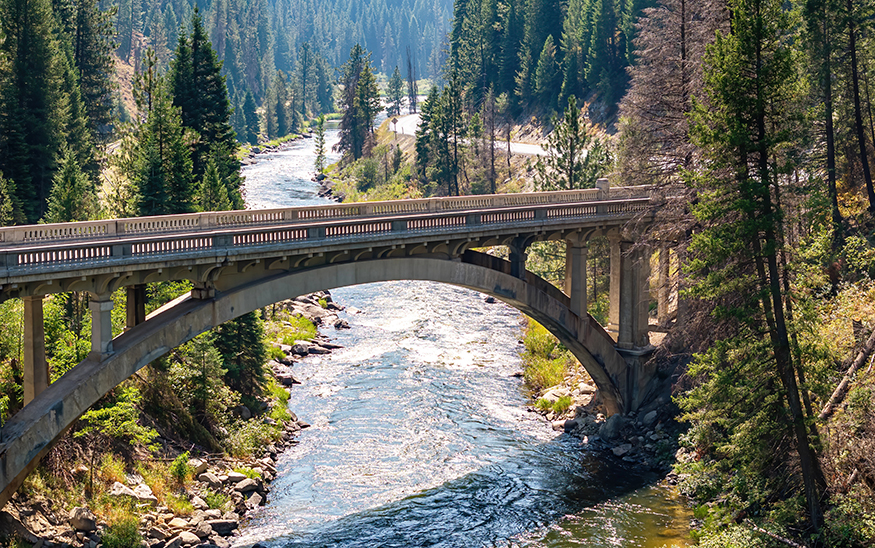
Beautiful wild Idaho river with iconic bridge
Water Woes: A wetter April isn’t necessarily enough to rebound Idaho from a dry winter, experts say
Steve Lombard//June 5, 2026//


April showers can bring May flowers.
At a Glance:
- Idaho‘s driest winter since 1934 impacts irrigation supply
- David Hoekema notes record-low snowpack despite 131% precipitation
- Gov. Brad Little issues emergency drought declaration for all counties
Despite Idaho experiencing the wettest April in history, a question remains as to whether or not April’s record rainfall will be enough to help offset a lower irrigation water supply this season due to the state’s driest winter since 1934.
“In this wet April, we have seen drought categorizations increase,” said David Hoekema, a hydrologist with the Idaho Department of Water Resources (DWR).
“It’s because we lack the snow. The common person may not realize just how critical snow is.”
In the Treasure Valley region, Bogus Basin received more than 20 inches of snow in April. However, the most recent winter season produced Idaho’s lowest snowpack ever, according to National Weather Service data.
Winter snowfall throughout the Gem State directly impacts irrigation water system and supply, not just for farmers who rely on it to help keep area farmland properly irrigated, but suburban households, too, that depend on canals flowing with water that is directed to neighborhood communities.
“The one advantage we have in the Boise system is that our reservoirs are nearly full,” he said. “But we are going to start diverting storage out of these reservoirs about a month early.”

Having tracked hydrological patters across Idaho for the past 15 years, Hoekema called this past winter “completely unprecedented” due to the warm temperatures that dominated the traditional winter season.
When it comes to precipitation, what many people may fail to realize is that summer droughts are typically preceded by extremely dry winters, including this past season.
“The warmest water year on record in Idaho is 1934, interestingly set by winter temperatures,” he said. “Of all the years we have in our historic record, we have never seen anything close to that. This winter tracked pretty closely with 1934.”
In Hoekema’s world, snow, or in this case the lack of it, is the basis of the drought Idaho and other western states are experiencing. “What is really crazy is that we have received 131% of normal precipitation in Idaho, yet we are still setting a record-low snowpack. That is phenomenal and we have never seen anything like it before.”
Some forecasts have estimated that minimally 80% of the state’s 24 basins that provide irrigation water supply will be in some level of drought.
“It’s looking more like every basin will be in drought,” Hoekema said. “Earlier we were hoping high elevation basins would fare a little better. But with the heat dome in March, snowmelt started at about 10,000 feet, which is really quite early.
“The higher elevation snow doesn’t typically melt until May. To have had it start melting as early as March is phenomenal.”
Which means both farmers and those who rely on irrigation water supplied to their suburban neighborhoods will be facing reduced flows this watering season.
“Every Idahoan will feel the impact of this low snow year,” said Erin Whorton, a water supply specialist at the Natural Resources Conservation Service (NRCS) Idaho.
“Changes in timing and amount of runoff pose significant water supply challenges for agricultural producers, outdoor recreation and energy sectors. With very little snow left in the mountains to sustain streamflow into the dry summer months, our rivers could reach record-low flow conditions.”
Data issued by the U.S. Drought Monitor indicate Owyhee County as having “exceptional drought conditions,” the highest on the scale and the most severe statewide.
In the Treasure Valley, the reservoir system, Whorton suggested, will likely fill this year, but she cautioned all area residents should remain conscientious of their water usage.
“Reservoir water is like the water in the bank,” she said. “Once we get out of our rainy spring season and snowmelt has tapered off, that is when we typically shift to other water sources. Now we’re having to stretch these other sources out longer this year due to not having the limited snowpack.”
With nearly three-quarters of Idaho’s surface water produced by snow, state snowpack levels as of May 1 this year were reported to be about 58% of normal, according to statistics provided by the NRCS Water Supply Outlook Report.
Typically, 75% of Boise area precipitation falls between November and May, Hoekema said, adding that it’s “not unusual” to have very little to zero precipitation in July or August.
“It’s not uncommon to have a little or no precipitation in those months,” he said. “So we really rely on the snowpack building up in the mountains. That is our largest reservoir. Because of all the rain that fell in the Boise basin, we were able to fill the reservoirs quite a bit earlier, about a month earlier than normal.”
In April, Gov. Brad Little issued an emergency drought declaration for each of the state’s 44 counties. On the agricultural side, less water means more adjustments on the farm.
“One thing farmers will have to do in a situation like this is look at what crops they have planted,” Hoekema said. “They’ll need to plant more early season crops or even reduce the amount of what they refer to as cash crops by reducing the acreage.”
Fallowing out some land or leaving it intentionally unplanted for one or more growing seasons may also be of serious consideration, or perhaps the best option for some farmers.
“If they fallow out some ground, they can do an emergency transfer to utilize senior water rights in another field so they can have enough water to meet that crop demand to finish off crops in one area and fallow others,” he said.
In a water year like this one, crops, he said, produce ahead of schedule which means harvests will happen earlier too. “They’ll be looking to shut things down as soon as possible to try to hold some storage to buffer against next year. But it’s going to be tight.”
For those with suburban landscapes to maintain, the concept of zero-scaping may sound like a good idea but creating a yard or environment with mostly bare dirt or gravel and no plant life is not ideal for the Treasure Valley water region or water supply system.
“Some people might think that zero-scaping is a good idea when we are facing a drought like this, but actually it does not help,” Hoekema said. “The main recharge to our aquifer system is the canals that deliver irrigation water.
“But if people zero-scape out, and we send less water down through the canals, then we decrease the amount of water to the aquifer.”
For those with grass on their property, utilizing an effective organic lawn program is one way to help strengthen lawns that can use less water.

“Our lawn program is natural, meaning it builds up the soil to help retain moisture,” said Callie Zamzow, co-CEO of Zamzow’s, a lawn, garden and pet supplier.
“Using chemical fertilizers, you can force a lawn to look green or make a lawn behave a certain way.”
But the downside depending on chemicals is that carbon, which enables a lawn to retain water and preserve nutrients, will slowly be burned out of the soil.
“If you don’t have the life in the soil, you can’t retain the water,” she said. “People who have been using these types of treatments are probably going to have a little more difficult time this summer because they have not been building up that base layer that keeps the roots healthy.”
Plus, for proper lawn maintenance, watering deeply helps filter water down into the roots, while only watering a couple of times per week during cooler evening and early morning hours also helps to preserve water usage.
“The big thing right now at this stage of the season is that the roots of a lawn are waking up and searching for water deeper into the soil,” Zamzow said. “That is what builds a stronger root system and allows a lawn to keep itself watered.”
Whether on a farm or in a neighborhood, water conservation practiced by all, Hoekema strongly believes, will benefit everyone who lives and works in the Treasure Valley.
“Typically for the Boise and the Snake rivers there is storage that is not used because they want water in the so-called bank account for the next year,” he said. “In a year like this, the best things to do is to get by with as little water as possible.”
For all who call Idaho home the hope is, that come this winter, more snow returns to Idaho’s mountains.
“We expect if we have a second drought year next year, it will be worse than this year,” Hoekema said. “This is by far the worst single year of runoff out of the mountains that I have seen.”





 Loading ...