
 Sign In
Upcoming Event
 Free Newsletter

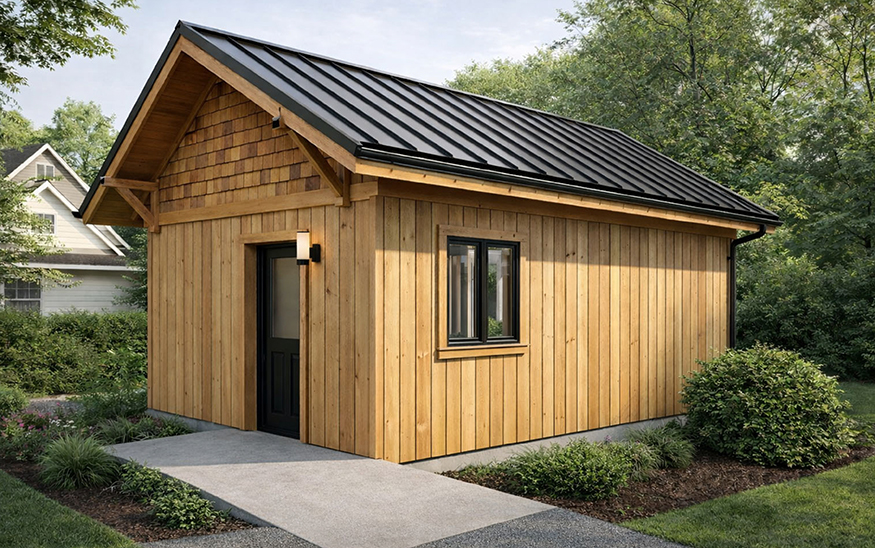
The Goldfinch design is the smallest ADU created by PARKE Architecture at 280 square feet. (ILLUSTRATION: PARKE ARCHITECTURE)
Boise partners with architect to offer cost-saving ADU designs
Steve Lombard//April 10, 2026//


In some cases, the renovation plan can be as smooth as reshaping a neighborhood without the use of a bulldozer.
At a Glance:
- Eamonn Parke leads design of eight pre-approved ADU plans
- City of Boise offers no-cost ADU plans to reduce housing costs
- Boise urban planner Kayla Duclos spearheads ADU program
The addition of a tiny structure known as an accessory dwelling unit (ADU) to an existing property can often help property owners leverage a plot to their advantage.
“ADUs are the most organic and intuitive ways to increase housing density,” said local architect Eamonn Parke, founder and owner of PARKE Architecture, and the primary design lead for a variety of pre-approved, no-cost ADU plans now available to Boise residents.

The joint effort between the city and Parke’s design firm to draft the blueprints, eight in total, and all named for birds found locally, reflects a response to a growing trend nationwide in the battle against skyrocketing housing prices.
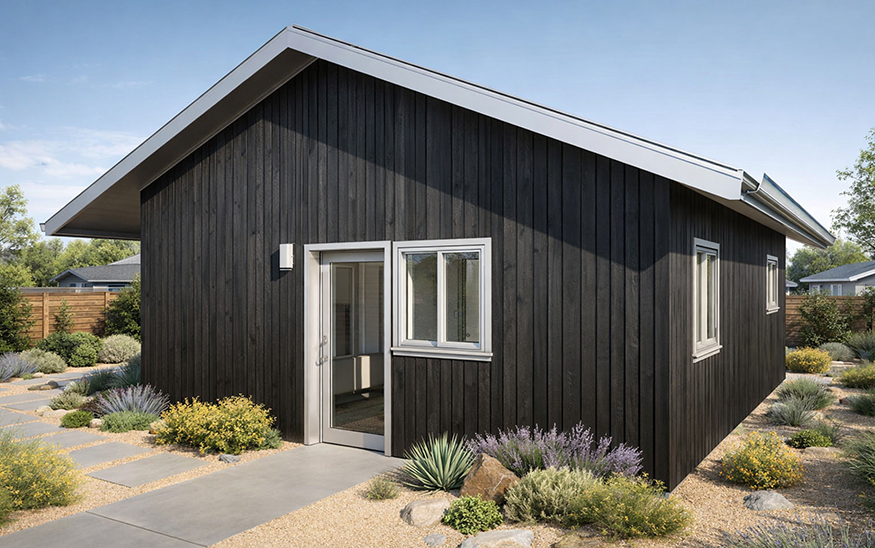
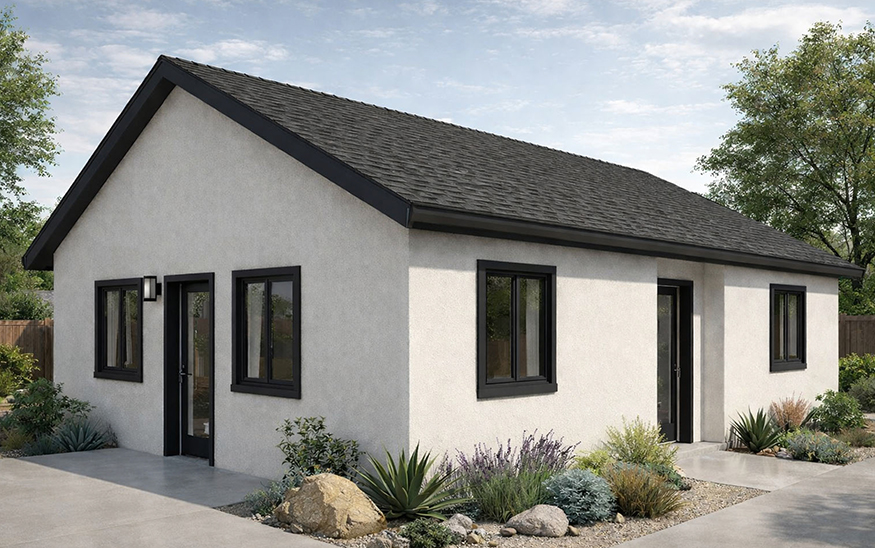
The selection of designs range between 280 and 695 square feet, and aim to streamline the city’s ADU permitting process, while helping to reduce costs for those who want or need to create a more affordable housing option.
The city reinforced this concept through a press release last month announcing the availability of the new plans. “Although not the entire solution, ADUs have the potential to meaningfully contribute to our city’s housing supply in such a way that is particularly mindful of the affordability challenges we are facing together,” said Maureen Brewer, director of the city’s Planning and Development Services department.
In fact, a poll conducted in February by Change Research on behalf of Neighbors for Boise found an overwhelming majority (88%) of Boise voters consider housing affordability to be a “serious problem” in the City of Trees.
It’s an issue not unfamiliar to Parke, a Boise native who completed his master’s degree in architecture at the University of Idaho. Following a Request for Qualifications (RFQ) issued by the city last fall, Parke, with urging from colleagues, applied for what he perceived as the “meaningful community opportunity” to lead the design team for the program.
His vast experience from the past decade designing a variety of housing plans locally has taught him a thing or two about the benefits of ADU builds.
“Beyond the opportunity to do a project with the city, it was also a good chance to do something interesting from a philosophical level as it relates to housing alternatives,” he said. “And I felt it strongly aligned with my vision and values when it comes to providing alternative housing options.”

Along with using the RFQ process to tab the right design team, city officials spent considerable time researching ADU policies of neighboring western U.S. cities, using them as a model to develop specific plans that could fit perfectly for those who call Boise home.
“I believe this program is the first of its kind in Idaho, but we have seen other peer cities increasing their local housing supply through the creation of pre-approved ADU plans that are permit-ready,” said Kayla Duclos, an urban designer with the City of Boise who spearheaded the program.
“We have seen in other cities how overall supply correlates with lower housing costs. We want to give our Boise residents opportunities to contribute to housing solutions.”
Statistics provided by the city indicate that between 2019 and 2023, roughly 61 ADUs were being constructed yearly in Boise. However, during the past two years, 212 such structures were added, an average of 106 annually, or 40-plus more per year during this time.
“There’s been a significant interest in ADUs since the adoption of the city’s modern zoning code,” said Duclos, who like Parke, also obtained her master’s degree in architecture at the U of I.
“We feel we are responding to the interest by providing these permit-ready ADU plans.”
It’s all in the interest of saving residents time and money, while still providing a mix of housing options in what has become for many an unaffordable housing market.
“This will cut down on the design time, the building permit timeline and reduce it down to a matter of weeks,” she said.
Costs for ADU plans typically range in the ballpark of about $10,000, and the city’s pre-approved plans provide an immediate upfront savings for those choosing or needing to go this route to attain more affordable housing.
“The plans accommodate different site conditions, lot sizes, access heights and budgets,” Duclos said, stressing how options built into the plans will help alleviate the need for custom permits for ADU builders.
“Footprint size, height and overall form are meant to give residents more opportunities to contribute to housing in their own backyard and to do it in a way that is as seamless as possible.”
However, while no upfront price tag is attached to the pre-approved ADU plans, residents are still responsible for the costs of relevant permits and associated impact fees which can vary based on the size and location of an ADU.
“Plans made specifically for Boise are designed to fit the patterns of existing neighborhoods with a variety of plan options in size, bedroom count and amenities included with each to make it easier for property owners to use a plan,” Duclos said.
Since ADUs are not for everyone, nor are they suitable for all properties, some in the City of Trees may say this new ADU plan program is for the birds. Each of the eight new designs is named for a local or migrating bird found within the Treasure Valley.
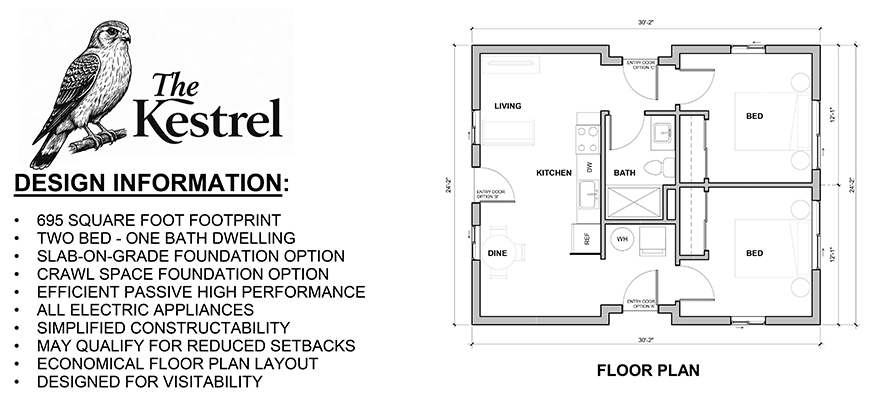
The names come straight out of the “Field Guide to Boise Birds,” a local bird guide produced by the Boise Parks & Recreation Department. Included in the flock of plans is the smallest, The Goldfinch, a 280 square foot studio, to The Kingfisher, a one-bedroom encompassing 491 square feet, and the largest, The Kestrel, a 695-square foot, two-bedroom dwelling.
According to Parke, going the bird-naming route provided a unique way to help give the program wings. “We bounced around some other ideas but landed on birds because we could make the connection between the different ADU types, sizes and styles, and some of the birds that were on that list.”
“I think ADUs were seen as unconventional a few years ago, but I really think they are gaining traction nationwide,” said Parke. “There have been many other preexisting programs that have been successful before this one.”
From her post in the city, Duclos believes it simply comes down to accommodating more residents within Boise’s existing footprint.
“These new ADU plans are designed to be efficient in material, energy space and costs so that we can support current and sustainable living spaces,” she said. “ADUs help our city grow in ways that are less resource consumptive.”
“There was an extra effort to design these structures to operate more efficiently, meaning higher performance by increasing insulation values and intentionally designing them so they could be constructed with readily available construction materials and not items that need to be specially ordered,” Parke said.
While certain areas of Boise require different needs depending on the age and locations of properties and existing structures, all eight pre-approved plans can be utilized in any area of the city.
“Historically we’ve seen most demand in the north end, but recently we’ve seen an increase in the Bench,” Duclos said. “But one of the prime goals of these plans is to assist homeowners all across the city.”
“It’s a good thing to maintain some of the older plots and neighborhoods and to acknowledge the original construction by being able to construct in addition, rather than having to subtract in a way where things need to be torn down and then reconstructed,” Parke said.
Additionally, Parke believes the new plans will ultimately suit a wide variety of residents seeking to add an ADU to their property.
“Costs vary, like for converting a two-car garage versus converting a two-story above a garage, which is a more expensive build and requires more plan review, a more in-depth process,” he said. “We went back and forth with our team and the city to figure out what was worth pursuing and what will be necessary and appropriate for as many different site configurations as possible.”
Regardless, no matter the type of build necessary, he sees the benefits and lower costs of pre-determined ADU plans as a win for both the city and residents.
“The city’s attitude toward being able to provide pre-approved plans at no charge to residents of Boise is an effort that I certainly think helps minimize the up-front costs of building an ADU,” he said.
For those wanting to learn more about local affordable housing options, Urban Land Institute (ULI) Idaho will host Housing Week, April 13-17, a series of local forums, site tours, networking and skill-building workshops. Visit the ULI website for more information.
And for Parke, a true Boisean, there is added personal incentive in helping to improve the community in which he has always called home.
“To be able to feel like you have made a meaningful contribution to the place you have lived for most of your life is quite gratifying,” he said.


