Sign In
Upcoming Event
 Free Newsletter

Analysis: Apartment permit applications decline, data says
Catie Clark//April 29, 2021//


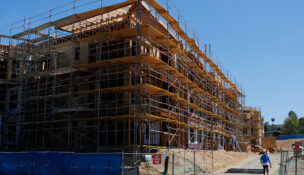
As the Idaho Business Review has covered in several stories over the last year, the current state of the residential real estate is driven mainly by the simple economics of supply and demand. The demand side of the equation is simple. The supply side is complicated. What this data tells us is that housing developers believe the demand and their best margins exist right now in the seller’s market for single-family homes.
We’ve been tracking housing permit activity for Idaho since last summer. Permit application statistics are gathered on a monthly basis for every state and territory by the U.S. Census Bureau. While we usually present a year-over-year comparison for a month at a time, this time we’ve looked at all the currently available data back to June 2019. What the data show is a mostly anemic year for building housing in the state of Idaho in 2020 compared with the latter half of 2019 and the beginning of 2021. The 2019 and 2021 data show the usual peaks of the yearly permit application cycle, which is highest in late spring through early fall, and much lower in the winter.
The trends in permits show an interesting added nuance where multi-unit housing permits decline in volume as 2020 progresses and single-family unit permits rise. But before we go further, let’s explain how the census data works for housing permits.
Using permit applications is a leading indicator for building housing, which is to say that permit applications mark the beginning of the construction cycle and essentially forecast the creation of new units. The census reports total permits; single unit permits; two-, three- and four-unit permits and five or more unit permits by both individual unit and by structure containing those units. Understanding the five or more unit categories is key here. As the graph shows, counting the structures for multi-unit housing is quite flat, indicating that there were not a lot of new apartment buildings going up in the state. In fact, the numbers are so low that the line for this variable is hardly visible.
The low number of apartment complexes sends us to looking at multi-unit housing by counting individual units. This data shows that once the pandemic hit, the number of projected new apartments dropped by approximately one half compared with before March 2020. Furthermore, the creation of individual apartments has not yet regained 2019 levels of activity even into the current year. Also clearly shown in the graph, permit activity for duplexes, triplexes and quadriplexes is as anemic as five-or-more unit multi-unit complexes.
For young families who can’t afford houses and for single millennials moving into Idaho for jobs, especially in the tech-rich job centers of Idaho Falls and the Treasure Valley, this is a not a good time for developers to neglect apartments. It should not be a surprise that rents have constantly increased in the populous areas of the state consistently since the pandemic arrived.
Single-unit housing includes not just traditional single-family homes, but also units like manufactured housing, trailer homes and tiny homes with and without foundations. The normal building cycle sees increases in permit applications in the late spring and summer and dropoffs every winter. In 2020, that trend was hugely muted, with only a slight swell in permit activity in late summer and spring. It is interesting that single-unit permits creep upward in the latter half of 2020 while multi-unit permits slump downward at the same time.




 Loading ...