Sign In
Upcoming Event
 Free Newsletter

A Word With Dr. Schott about St. Luke’s new health insurance plan
Paige Lyman//February 14, 2023//


Standing as one of Idaho’s largest health care system, St. Luke’s is a not-for-profit health system that has been providing care throughout Idaho since it first opened in 1902. In 2022, St. Luke’s announced its launch of a nonprofit health insurance plan that would offer coverage to individuals and families across 20 Idaho counties beginning in January 2023. St. Luke’s Health Plan opened enrollment in October 2022, including individual, family and employer plans. St. Luke’s notes via the health plan’s site that the insurance plan was created as a natural next step in its continued effort to improve “quality, access and affordability” in delivering care.

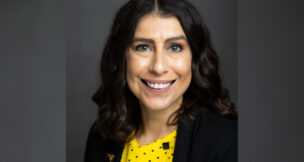
Dr. Jon Schott has spent most of his career working as a family physician, with specializations in family medicine, geriatrics and chronic disease management. He currently serves as Chief Medical Officer of St. Luke’s Health Partners, where he oversees the newly introduced health plan. New to serving in an executive role at a health insurance company, Schott said he has great expectations for St. Luke’s Health Plan.
In this Q&A, Idaho Business Review spoke with Schott about the newly launched St. Luke’s Health Plan, what the team behind the plan has learned, and the outlook for the nonprofit health insurance plan.
This content has been edited for clarity and length.
Since the announcement of St. Luke’s Health Plan in 2022, how have things been going so far? What’s been going well for the plan and the team behind it?
On Jan. 1, St. Luke’s Health Plan benefits went into effect for our first-ever enrolled members. It was this exciting moment that an incredible amount of planning and hard work led to. As we have worked to thoughtfully plan and develop this unique health plan, we have also been diligently working to build a culture of innovation, teamwork and compassion among our team.
I am amazed daily by the team’s passion and professionalism. We are strategically anticipating deadlines while keeping what is best for members and our care teams in mind; working to minimize barriers to care and keeping the cost to our members as a point of focus. The amount of work completed by the team has been challenging, but the team is getting into a sustainable rhythm.
Can you share a little bit behind what initially sparked the idea for St. Luke’s to launch its own nonprofit health insurance?
For more than 120 years, St. Luke’s has been striving to improve patient outcomes, lower costs and deliver affordable, easy-to-access care. We believe it is our responsibility to continue to deliver high-quality care for the people who live and work in our communities. The natural next step toward further improving quality, access and affordability is to connect the delivery of care with the funding of care through the development of a health plan.
Today’s health care costs and premiums are not affordable, and we have felt how disjointed care can be and how difficult it can be to navigate the health care system. We know people are choosing whether to access care based on cost. We see that people are using the emergency room for care that could be provided in more cost-effective ways. We also see patients struggle to understand billing statements after care is delivered.
St. Luke’s has a unique opportunity to improve things because of its relationship with the network of providers that are financially and clinically invested in the care they deliver.
From how people access care, to the quality of care received, to the experience of receiving that care and ultimately, how much it costs, we are committed to simplifying the care and insurance experience end-to-end.
Have there been any learning opportunities for you and the team behind St. Luke’s Health Plan since the announcement and launch? If so, are there any particular things you’ve learned that you would like to highlight?
As someone who has spent much of their career as a family physician rather than an executive at a health insurance company, this has been like going back to medical school in terms of the learning curve. Health insurance is complex and regulated, and there is much at stake.
In my role with the Health Plan, I have gained even more insight as to how what is best for patients can become lost in the shuffle. I have also learned that the demand is greater than expected. Consumers are demanding transparency, affordability and accountability for our outcomes.
St. Luke’s Health Plan’s objectives are directly aligned with our pursuit of affordability and health care for Idahoans.
What has the first month been like so far?
My sense is that things have gone extremely well so far. As a new entity, there have been some operational details that have arisen, but the team has been able to resolve those quickly. We have learned valuable lessons, and we are quickly evolving to exceed the expectations of our members.
The health plan’s mission and vision are all centered around improving the health of communities that St. Luke’s serves through patient-centered care. Can you share insight into how the health plan helps local communities, like providing access to doctors and specialists within the St. Luke’s network?
Access to health care is an extraordinarily complex topic and one that is critical to population health. It is also a challenge across the nation. For Idaho, a rural state with multiple intrinsic difficulties recruiting care team members, we will not be able to recruit our way out of this. We must think about innovative ways to use people and resources we have in ways to facilitate access.
One method of innovative care that Health Plan members have access to is on-demand virtual care visits, which allow people to see a clinician on demand, from wherever they are – their office, their car, or home. These visits can both offer treatment to patients for a host of illnesses as well as offer referrals when appropriate to other care providers in the network.
Among the network, which includes both St. Luke’s and independent providers, members have access to more than 4,500 practitioners in hundreds of locations, providing them with the highest quality of care where and when they need it.
As the chief medical officer for the health plan, can you share what the next steps are? Where do you see the plan moving now that it’s up and running completely?
We have much work to do and much to learn, but we are excited to continue moving forward on this new journey. My sense is that people, both providers and community members, are watching to see if we can deliver. The focus in the near term is strategic growth. By that I mean building the fundamental structure that facilitates success. A clear priority for me is building relationships with clinical leaders in a way that builds trust and facilitates communication. That communication is key to our ability to be an organization that removes barriers for our patients and providers.
All of that will take time, but we are in this for the long haul and committed to doing it right. We have the right team. We have the right structure and I have no doubt that we will succeed in changing how people in our area think about health insurance and how that insurance facilitates high value health care.






 Loading ...