Sign In
Upcoming Event
 Free Newsletter

Idaho businesses adopt ESOP model to secure succession and reward employees
Marc Lutz//February 13, 2026//
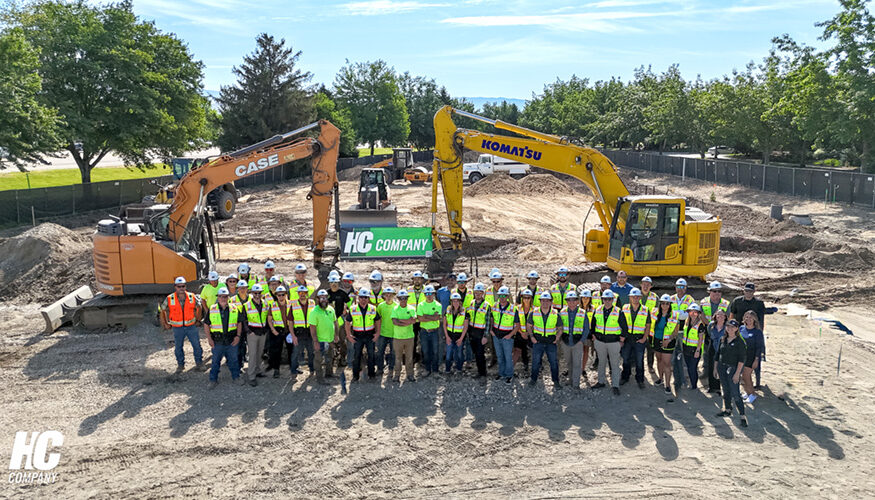
HC Company recently changed its company structure to that of an Employee Ownership Stock Plan, or ESOP, providing more financial benefits to the employees of the Boise-based business. (PHOTO: HC COMPANY)
Idaho businesses adopt ESOP model to secure succession and reward employees
Marc Lutz//February 13, 2026//


When it comes to succession planning for a business, many might picture a company being left to children by their parents, a corporation being absorbed by another corporate entity, or any number of other possibilities.
At a Glance:
- Approximately 45 companies in Idaho operate as ESOPs, including HC Company, WinCo Foods, and Schweitzer Engineering Laboratories.
- HC Company converted to an ESOP in January to preserve culture and reward employees while ensuring long-term leadership.
- Sletten Construction became 100% employee-owned in 2004 to benefit employees and maintain company stability.
But one lesser-known option is becoming increasingly turned to, much to the benefit of employees: The Employee Stock Ownership Plan, or ESOP as it is more commonly known. About 45 companies in Idaho are ESOPs, with one recently converted in January.
Simply defined, an ESOP is a structure that gives employees ownership stock in the company they work for. As a qualified retirement plan, the model provides employee stakeholders with financial benefits tied to the success of the company.
Reasons for switching to such a model can vary from business to business, and not all companies that use the model are 100% employee owned. For some, it can take a few years to convert to the model because previous stakeholders need to be bought out.
In the U.S., there are a little more than 6,400 companies that operate as ESOPs, with around 300-plus being added each year, and about 11 million employees participating in the model. In Idaho, employers such as WinCo Foods and Schweitzer Engineering Laboratories have been ESOPs for many years.
Why choose an ESOP?
The most recent company to join those ranks is HC Company, a general contracting, construction management and design build services business in Boise that employs 80 staff.
For the company, which was founded in 2002, the ESOP model would help preserve HC Company’s culture and reward those who have helped make it a success.

“HC’s ownership has always been intentional about long-term leadership and continuity and succession,” said Dan Hayes, president, CEO and founder. “Over the years, we have brought key team members into ownership to strengthen alignment and preserve our culture.”
Hayes stated that the company researched ownership structures that supported its priorities, with employee ownership standing out.
“As the company grew, we evaluated ownership structures that would best support those priorities. The employee-ownership model stood out because it allows HC to remain independent, retain its leadership team, and reward the people who contribute to the company’s success every day,” he said. “The ESOP creates a clear path for future leaders to develop from within while ensuring the company’s success directly benefits its employees, supporting engagement, accountability and long-term stability.”
HC Company stated that it will provide its employee-owners with “ongoing education and transparency” regarding the new structure and what that means for them. “HC Company was not built by any one person — it was built by all of us,” the ownership group said in a statement. “Those who build the future of this company should own the future of this company.”
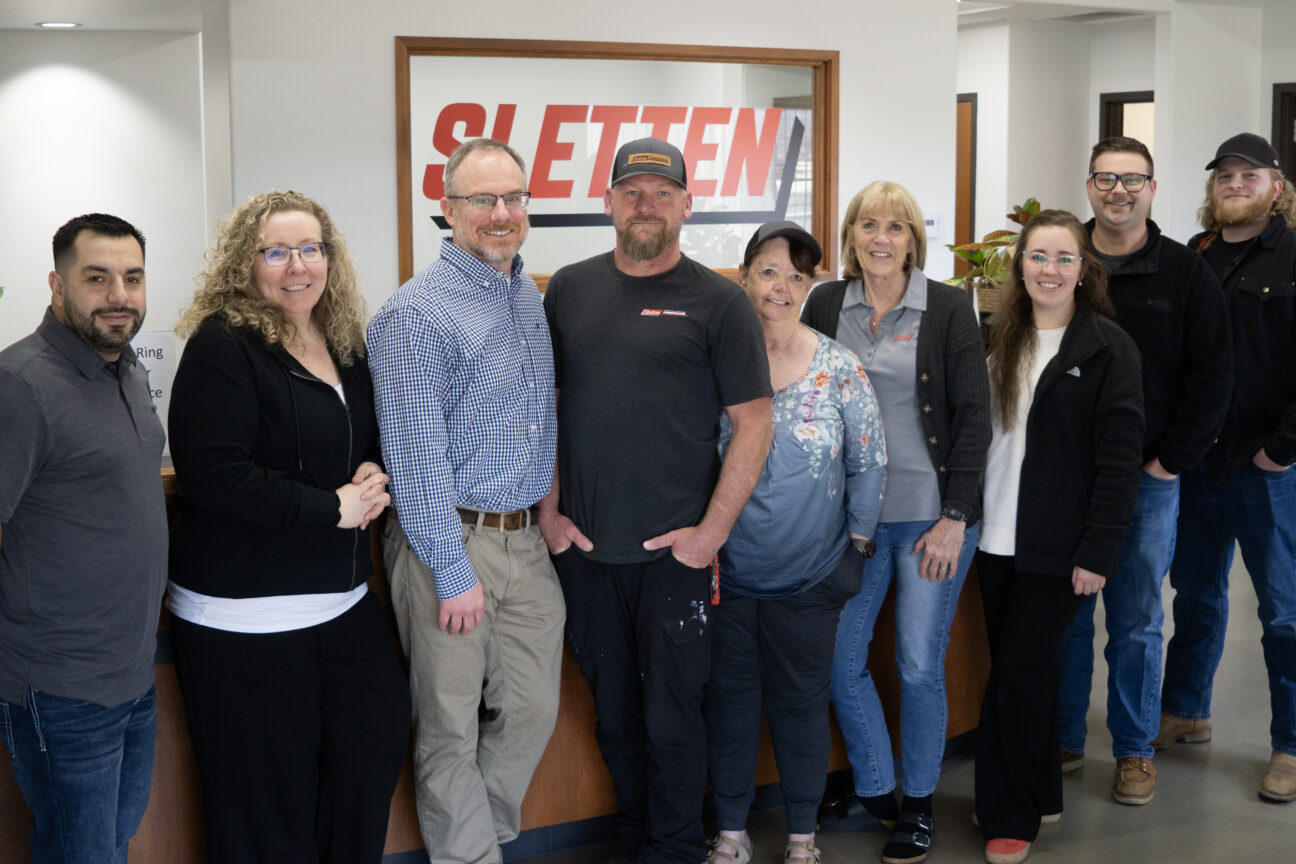
Great Falls, Montana-based Sletten Construction, which has a branch in Boise, starting making the transition to an ESOP in the 1990s. It became 100% employee owned in 2004, according to Bill Sharp, vice president of Sletten’s Idaho Building division. He stated the decision to convert the ownership model was made when then-president and CEO J. Robert Sletten wanted to make sure the employees were taken care of.
“He [J. Robert Sletten] wanted to do something for the employees to make sure that they were getting benefits out of it,” Sharp said. “It was an ownership model that bought out the existing owners of the company and basically set up a model that would just go on and hold its own in perpetuity.”
The construction company, which specializes in commercial construction and has built everything from Walmart locations to the L.E. and Thelma E. Stephens Performing Arts Center at Idaho State University, has a vesting period before employees can take part in the ownership program, which is one to one and a half years, depending on when they start.

Dr. Ed Schweitzer, who founded Schweitzer Engineering Laboratories (SEL) in 1984, started contemplating the ESOP not long after its inception. Even that early in the company’s history, he was thinking about the future of the employees and its customers, said Joey Nestegard, executive vice president.
“He evaluated multiple business models and chose and ESOP because the structure focused on sustainable growth and long-term relationships rather than short-term shareholder demands,” Nestegard said. “And he saw the business model as a way to help employees share in the success of the company and build meaningful wealth while creating a stable, resilient company.
With approximately 1,350 employees at location in Moscow, Lewiston and Boise, and 7,500 employees at 107 locations worldwide, SEL didn’t fully become an ESOP until 2009.
Beneficial to company and employees
Though most companies retain their corporate hierarchy, with a board of directors in place to handle things like leadership changes, employees don’t necessarily have a say in major decisions. For instance, they don’t have shareholder votes like traditional corporate entities with stock ownership.

But they do reap other benefits from their companies doing well.
“The benefits are meaningful. Employee owners tend to stay longer — median tenure is about 50% higher than in traditional companies — and they build significantly stronger financial futures, with more than twice the retirement savings of employees elsewhere,” Nestegard said. “This combination of purpose, culture and long-term financial benefit is what makes employee ownership so powerful for the people who work here.”
That sense of ownership makes a big difference in how many employees approach their work, Sharp said.
“I think a lot of it is your retirement is linked to how well the company does, and — taking an ownership mentality — it may not be good to burn a bridge for short-term financial gain. If you’re looking at it long-term, if you lose a client, you could be losing out on future profits that could grow the ESOP and your account,” he said. “So, I think it helps with just taking in the big picture about how everything kind of ties in.”
With HC Company’s transition to an ESOP, the benefits for employees are quite numerous, Hayes said. Along with the employees’ pride of ownership and a job well done, he said retirement wealth increases with the value of the business.
“This can be especially significant since ESOP companies generally don’t pay most income taxes,” he said. “There is no buy-in cost for employees. This retirement wealth is in addition to other retirement plans such as 401(k)s and is tax deferred until retirement.”
That retirement wealth, Hayes said, can be “substantial” for employees who have been with the company for a long time, which reinforces loyalty and commitment to their company. “Research shows that well-run ESOP companies tend to outperform their peers because employees think and act like owners.”
Employee-owned companies are also less likely to be sold or shut down, Hayes stated, which leads to more job security and stability. Companies that go through mergers and acquisitions “could lead to loss of culture, management changes, and potentially layoffs in a ‘strip-and-flip’ mentality.”
The downside of having an ESOP structure
There is plenty of upside to the employee-owned structure, but challenges do come with the territory. One of those is being able to have that long-term vision, as Sharp stated, which isn’t always easy for some when they don’t see immediate results.
”It’s probably not any different than getting vested in a 401(k) program or something like, but the length of time to start seeing a lot of that return and the growth is really hard, I think, especially for younger people who are focused on what’s on their check because you don’t see That ESOP contribution on your check,” he said. “I think it’s the length of time and maybe having that long-term vision of what it could be. It’s a really good benefit because I’m not taking 10% out of my paycheck to contribute to a 401(k) to get a 5% match.”
At Sletten, Sharp said their ESOP is structured so that employees are given a percentage of their salary and bonuses as an ESOP allocation for the year, “We don’t contribute to it. It’s not something we purchase into.”
Hayes echoed the long-term sentiment, saying it’s meant for those employees who stay with a company for many years. HC Company’s vesting is a six-year schedule, which “can feel long” for those seeking quick results, he said.
He also cited a lack of diversification since employee retirement is “invested in a single company and dependent on the company’s performance, without control of when shares are sold.” Hayes said shares are repurchased upon the resignation or retirement of an employee.
“HC Company does not agree with this approach, however some companies may expect more from employees under an ‘owner mindset’ without corresponding increases in salary or benefits,” Hayes stated. “ESOPs are not a substitute for competitive wages or good management.”
For an international company like SEL, there aren’t necessarily drawbacks to the employee-ownership model, but globally, it does have challenges.
“It’s not really a drawback, but one challenge that has come up as we’ve grown internationally is that not all countries allow non-U.S. employees to participate directly in an ESOP,” Nestegard said. “Legal, regulatory or other barriers can prevent global team members from owning actual ESOP shares. To address this, multinational ESOP companies, including SEL, have had to get creative to provide alternative financial benefits to make sure international employees still share in the company’s success.”
Taking ownership
Even as having a stake in the company can motivate staff to be more invested in their work to produce better outcomes, leaders are also seeking to strengthen their companies.
“It is a meaningful transition for the sellers to shift their perspective from ‘owners’ to stewards, and co-employee owners,” Hayes said. “While we remain the leadership of the business, every decision and conversation now comes from a new set of responsibilities and relationships with our fellow employee-owners.”
For Sharp, it’s a matter of working diligently not only so Sletten does better, but that is also weathers the ups and downs of the construction business.
“Because of the ESOP, when you have the peaks and valleys, we don’t lay a bunch of people off when things are slow and hire a bunch of people when it’s busy,” he said. “We kind of keep staffing pretty even and try not to go through those peaks and valleys just because that that hurts the ESOP, and that’s not what we’re about.”
And, even though he’s a co-owner with his fellow employees, Nestegard still feels a responsibility for everyone that works for SEL.
“As a leader, when we make decisions, we need to consider our customers, supplier partners and the more than 7,500 families who rely on us,” he said. “The beauty of being employee-owned and our culture is that we focus on doing the right thing. That helps align us from the start, and when we are aligned, we do amazing things.”






 Loading ...