Sign In
Upcoming Event
 Free Newsletter

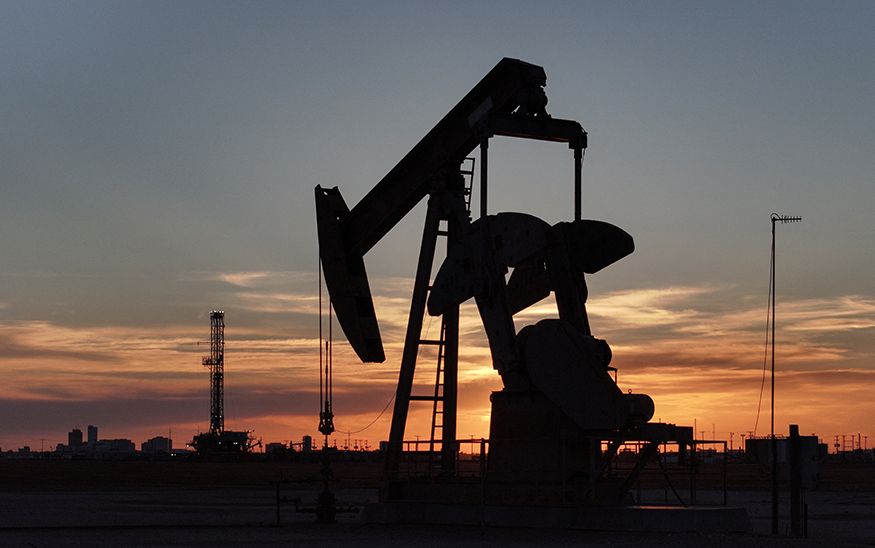
A drone view of a pump jack and drilling rig south of Midland, Texas, on June 11, 2025. (PHOTO: REUTERS/Eli Hartman/File photo)
Oil prices hold near one-week high amid Strait of Hormuz talks
reuters//August 11, 2026//


Oil prices held near a one-week high on Tuesday as the market assessed signs of progress in talks between Oman and Iran over shipping through the Strait of Hormuz while disruption to Middle Eastern and Russian energy flows continued.
At a Glance:
- Brent futures rise to $87.84 per barrel
- Oman and Iran advance talks on Strait of Hormuz shipping
- Three crew killed in suspected Houthi attack in Bab el-Mandeb
Brent futures were up 12 cents, or 0.1%, to $87.84 a barrel at 10:31 a.m. EDT (1431 GMT), while U.S. West Texas Intermediate (WTI) crude rose seven cents, or 0.1%, to $82.20.
On Monday, both benchmarks closed at their highest since July 31.
Talks between Oman and Iran over shipping in the Strait of Hormuz are at an advanced stage, Qatar’s foreign ministry spokesperson said. This comes a day after an exchange of demands between the United States and Iran complicated efforts to reopen the strait.
About 20% of global oil supplies passed through the strait before the start of the Iran war on Feb. 28.
“Any signs of de-escalation or any signs of a deal are good news for risk assets and bad for oil, obviously. But it’s all talk at the moment. It’s all headlines. There’s no meaningful progress,” said Fawad Razaqzada, analyst at City Index and FOREX.com.
Shipping data showed that traffic through the strait dropped to six vessels on Monday, compared with a 10-day average of about 11 vessels.
Elsewhere in the Middle East, three crew members were killed in a suspected attack by Iran-backed Houthis on a small cargo vessel in the Bab el-Mandeb strait between the Red Sea and open Indian Ocean on Tuesday, while a container ship was hit by a missile off Pakistan in a suspected U.S. attack, sources said.
The fatalities aboard the Egyptian-owned Tihamah, if confirmed, would be the first deaths in a Houthi strike on shipping since the Iran war began. The Houthis have not claimed the attack.
The Houthis declared a maritime embargo on Saudi Arabia in the Red Sea on July 20 in response to what they described as a Saudi siege. Riyadh denies that Yemen is under siege.
Oil around the world
The Abu Dhabi National Oil Company (ADNOC) is offering spot crude in a tender, its eighth issued since the start of June as the UAE state oil company works to move oil from inside the Strait of Hormuz, trade sources said.
In Libya, renewed violence in the strategic city of Zawiya has once again disrupted the oil industry, with state oil firm NOC saying it could declare force majeure if drone attacks on energy assets in the city continued. Libya is a member of the Organization of the Petroleum Exporting Countries (OPEC).
In Europe, meanwhile, the Ukrainian military said on Tuesday it attacked an oil refinery in the Russian city of Orsk, the second-largest city in the Orenburg region and an important industrial hub.
The combination of Ukraine’s attacks on Russian energy infrastructure and the Iran war has boosted global energy prices ― Brent futures are up about 44% so far this year — by limiting global supplies.
Russia was the world’s third-biggest crude oil producer behind the U.S. and Saudi Arabia in 2025, according to U.S. energy data, and is a member of the OPEC+ group of countries, which includes OPEC and allies.
Reporting by Scott DiSavino in New York anAnushree Mukherjee and Ishaan Arora in Bengaluru. Editing by Keith Weir, David Goodman and Mark Potter.





 Loading ...