Sign In
Upcoming Event
 Free Newsletter

Idaho faces historic snow drought with lowest snowpack on record
By Laura Hatch, Northern Rockies News Service//April 6, 2026//
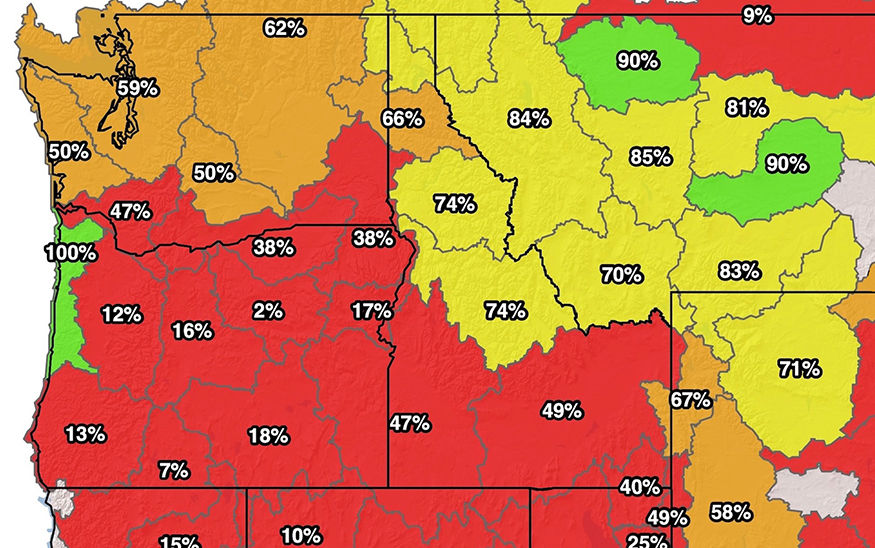
This SNOTEL (snow telemetry) map on the USDA website shows the mountain snowpack's water content compared to the average for the same date. (GRAPHIC: Natural Resources Conservation Service, via Northern Rockies News Service)
Idaho faces historic snow drought with lowest snowpack on record
By Laura Hatch, Northern Rockies News Service//April 6, 2026//


With Idaho‘s snowpack the lowest on record in some areas, scientists are warning this may be a glimpse of what is to come.
At a Glance:
- Alejandro Flores calls it a historic snow drought
- Idaho snowpack reached maximum early on March 30
- Snowpack below 8,000 feet plummeted in western U.S.
Idaho reached maximum snowpack on March 30, with some areas reaching it in mid-March. It usually happens in early April.
Alejandro Flores, professor of geosciences at Boise State University, called it a historic snow drought, with a “triple whammy” hitting the state and the Western U.S.
“December and February were normal precipitation but very warm,” Flores recounted. “January was a little bit closer to normal temperatures, although it was still warmer, but just no precipitation. And that is what really has set us back in terms of the snowpack.”
Flores pointed out river basins in the Yellowstone region were closer to normal but the snowpack below 8,000 feet plummeted in the Western U.S. He is concerned about how widespread the snow drought is and added there are few, if any, historical comparisons. He believes the West is starting to get an idea of what the future will look like and emphasized states like Idaho need to plan for less snowpack.
Flores cautioned the weather in the next few months will dictate what happens with stream flow and runoff levels going into the summer. He suggested the bigger question is how often we will see snow drought years.
“Do they start to kind of stack up more frequently?” Flores asked. “Not only is this not a one-off, but is it something that we should expect more frequently as we move into the future?”
Flores underscored how much of the state’s water management system relies on snowpack, as it becomes much less reliable, driving researchers to look ahead.
“Trying to figure out what that movement towards what some of my colleagues have called ‘low- to no-snow future’ means, in terms of our existing water management infrastructure and how we need to adapt,” Flores said.
This story was provided by the Northern Rockies News Service, a bureau of the Public News Service.



 Loading ...