Sign In
Upcoming Event
 Free Newsletter

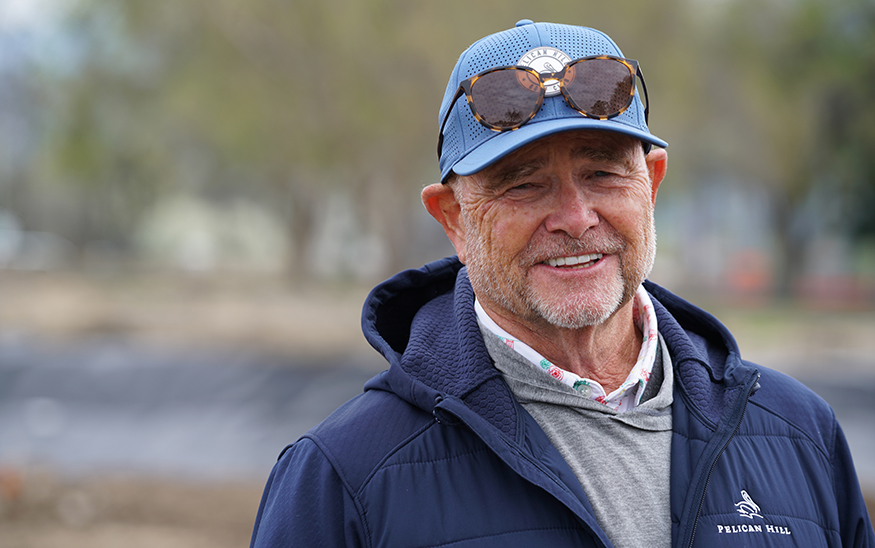
Brian Curley, an award-winning golf course architect with Schmidt-Curley Design, created the remodeled greens at The River Club in Garden City. (PHOTO: MARC LUTZ, IBR)
Garden City golf course remodel designed by world-renowned architect
Marc Lutz//April 24, 2026//


For more than 100 years, a golf course in Garden City has been welcoming members and providing the gift of good walk spoiled by a little white ball, as the saying goes. But time takes its toll on all things, and the historic Plantation Country Club had paid its fair share.
At a Glance:
- Glass Creek invests over $10 million in The River Club
- Brian Curley redesigns golf course with new raised back nine
- Brighton Homes developing 250 homes on 20 acres of former club property
The club has undergone extensive changes since 2018 and is the final stages of a massive remodel to the course, with the redesign being done by award-winning Brian Curley, known the world over for his expertise in course architecture.
Eight years ago, the Plantation Country Club was purchased by Santa Barbara, California-based Glass Creek, LLC, led by Will Gustafson, who had a definite vision of what the property could become. The name was changed to The River Club and a host of other changes to the tune of more than $10 million would follow.
None of those initial changes in the past five years included the actual golf course.
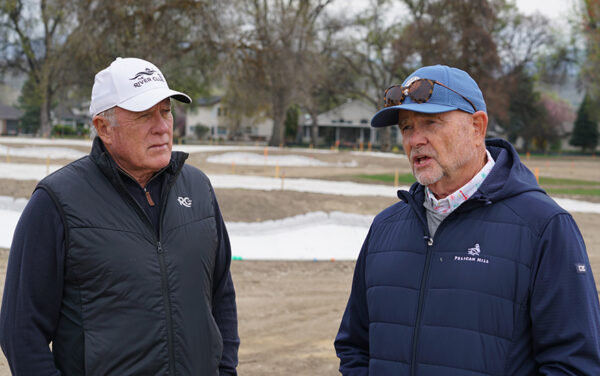
“When we bought it, it was in really bad shape, and we’d fixed everything, we think, other than golf,” Gustafson said. “Bar, kitchen, swimming pools, pickleball courts, bocce ball courts. Now it’s time to re-do the golf course.”
But it was going to take more than just planting new greens, replacing sand and shoring up water features. Gustafson wanted a new course that would live up to the standards of the club’s new offerings and what its growing membership deserved: the best of the best.
Curley, a golf course architect with Schmidt-Curley Design, is a longtime friend of Gustafson who has spent his life in and around golf, whether playing or working in it. In fact, he said he only had one job that wasn’t in golf, and that was when he graduated from college for a short while.
Now based in Arizona, Curley grew up on the Monterey Peninsula, where Pebble Beach is located.
“My world was the Monterey Peninsula. That’s what I knew of golf. My vision of what golf should look like are the best courses, arguably, in the world,” he said. “I was raised with a high bar as what I consider is tolerable, let alone excellent.”
He knew he wanted to be around golf due to his love of the game, but he also knew he didn’t want to be a professional player. Every one of the pros he had encountered who weren’t at the top of their game weren’t necessarily making a living at actually playing.
“Most pros were the guys that worked at the shop. And all the guys who worked in the shop were angry, should-have-been-better golfers who had to fold shirts in the pro shop now,” Curley recounted. “They all hated their jobs. And I go, ‘I want to be around golf, but I really don’t want to be the pro in the shop.”
The young golfer was also a good artist, drawing just about everything that interested him. In 1975, while at Spy Glass in Pebble Beach, he saw a photo depicting an “big, old, fat guy sitting on a sand dune with a bucket hat.” But it was the logo on the man’s rumpled shirt that caught his eye. “And it says, ‘Robert Trent Jones, Senior Golf Course Architect.”
That was the spark that led to a career. “You can get paid to design golf courses? That’s a job? It didn’t even occur to me.”
Curley gained experience by learning from people like Pete Dye and Lee Schmidt, with whom he later went on to form Schmidt-Curley Design. He has designed courses throughout the U.S. In Asia, he has designed a multitude of courses in China, Cambodia, Thailand and Vietnam. His work has taken him from Mexico to Sweden. He’s designed courses in Egypt and Saudi Arabia.
His designs have won awards, including Architect of the Year in 2011 and a handful of “Best New Course” accolades among others. He also serves as a course rater for Golf Magazine.
Despite being friends for more than 30 years, it’s Curley’s expertise and creative abilities that led Gustafson to hiring him for the remodel.
“Of course, he’s the best there is, otherwise I would have hired somebody else,” Gustafson said.
Curley was recently back in Idaho to check in on The River Club’s progress, stating that he would still be working on a course in the Middle East if not for the current conflict.
Even though the golf course is the final phase of the club’s remodel, planning and preparation have taken seven years. Due to the unusually dry winter the Treasure Valley encountered this year, construction on the site was able to start in December of 2025, with work being done by Duininck Golf, a Minnesota-based company that specializes in golf course construction.
Part of the delay in starting the overhaul of the course was waiting for a development deal to be completed. Twenty acres of the property along State Street were sold and Brighton Homes will be developing 250 homes on the property, with the initial phase of 134 townhomes being built.
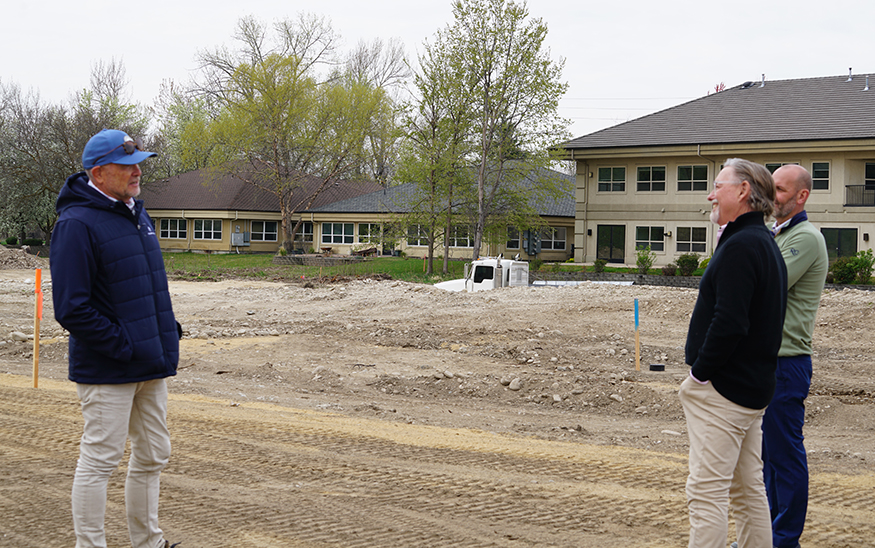
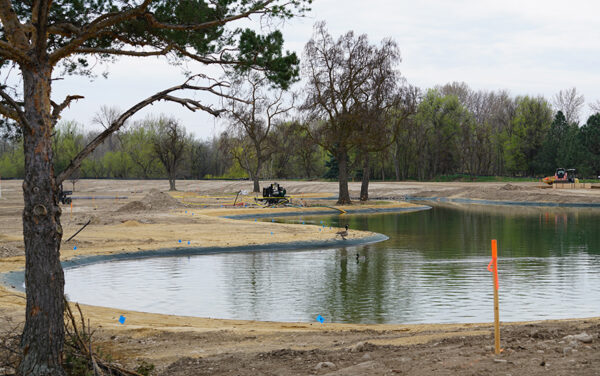
The Garden City course is being completely redesigned, creating features like a raised back nine and an island hole, surrounded by a water trap that stands out as a signature piece which is visible from the clubhouse. It will go from a par 71 to a par 68 and is roughly 6,000 yards.
“I’m really trying to change things up and make it a very memorable kind of hole-by-hole experience,” Curley said.
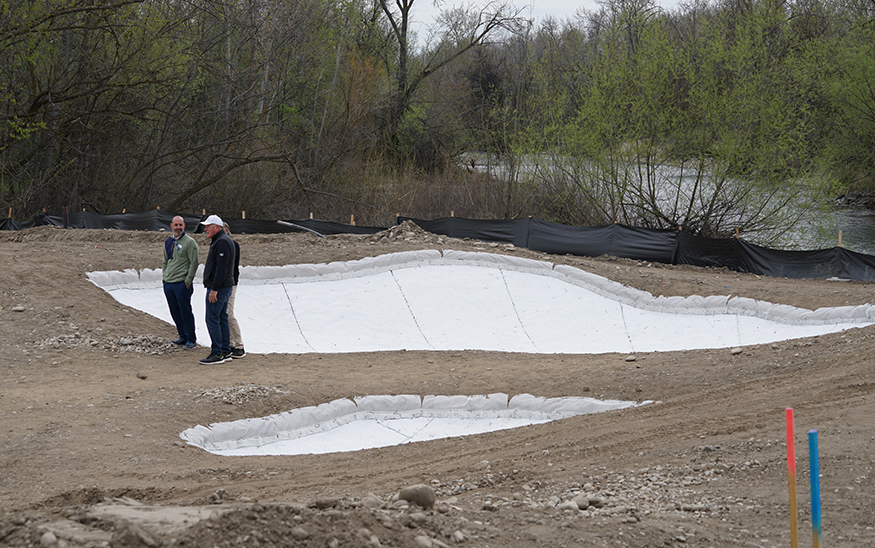
One of the more notable redesigns, soil taken from areas that are being dug out, like the water traps, was used to lift the greens on the back fairways that run along the Boise River.
Many of the club’s members had no idea the course ran along the river because of a dike and trees that blocked out the sound of the water.
“We bookended two greens, the 13th and 18th holes, and we lifted that whole area up about 10 feet,” Curley said. “So now you’re up above dike level. You look down into the water, and we’re right where the water makes its turn. There are rapids, so it’s got sound and we cleared all the trees out — not all but most. Now you’ve got a massive view of the river.”
Construction of the reimagined course will be done by this June, but it won’t be playable until spring of 2027, since the grass needs time to grow in fully. The overall cost of the course remodel is $15 million, according to Gustafson.
Curley pointed out that he rarely does remodel projects, preferring to stick with new construction. But because he has come to love The River Club — and because Gustafson gave him complete creative freedom — he decided to take on the project.
“Will brought me here years ago on this bleak winter day, and this place was a dump,” Curley said. “I walked around and I’m just like, ‘What are you doing here?’ But he put a lot of effort and money and time and love into the facility to what you see right now.”
Retired television news anchor and member of the club since 1999, Mark Johnson said seeing the transformation of The River Club has been emotional for him, a word he doesn’t use lightly.
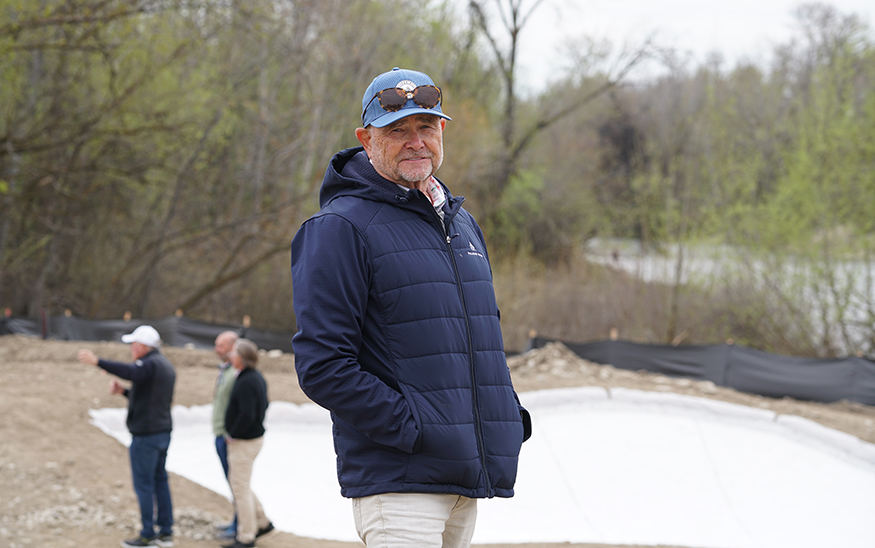
“I’ve seen this place go from a regular green tee fairway that was just an average golf course, and seen it transformed into this gem,” Johnson said, recalling his days in journalism when he wrote less-than-flattering stories about Gustafson and his acquisition of Johnson’s favorite club.
“But he has gone from what I thought was the evil empire, coming in to steal our piece of Idaho, into this guy that really wanted to make something special for us and our families and for generations to come,” he said.
As for Curley, it’s all about enhancing what he views as an already vibrant, lively and fun club to be part of. He wants the course to reflect the personality of the membership, keeping it challenging but still fun to play.
“As far as transformation goes, it’s going to be hard to beat this one,” he said.






 Loading ...