Sign In
Upcoming Event
 Free Newsletter

Idaho legislation leads to required civics education to graduate high school
Steve Lombard//August 3, 2026//

New legislation requires students to receive a fullyear of American history and another full year of American government curriculum, along with passing a more stringent test in order to graduation high school. (PHOTO: DEPOSITPHOTOS.COM)
Idaho legislation leads to required civics education to graduate high school
Steve Lombard//August 3, 2026//


A “person for all seasons” — a description President Ronald Reagan once used to describe Sandra Day O’Connor, the nation’s first female U.S. Supreme Court justice.
At a Glance:
- Gov. Brad Little signs Senate Bill 1336 into law
- Barbara Ehardt sponsors legislation emphasizing constitutional republic
- House Bill 712 creates Idaho State Seal of Excellence for civics
A firm believer in the importance of a proper civics’ education, O’Connor, who served on the court’s highest bench from 1981 to 2006, once said, “Knowledge about the ideas embodied in the Constitution and the ways in which it shapes our lives is not passed down from generation to generation through the gene pool; it must be learned anew by each generation.”
Beginning with the 2026-27 school year, Idaho’s public high school students will be exposed to America’s foundational ideals in greater detail. New requirements for civics education, outlined in Senate Bill 1336, require a full year of American history and another full year of American government, as well as a more stringent test required for graduation that will kick in the following year.
Following the passage of SB 1336 earlier this year, Gov. Brad Little signed the legislation into law in April.
“One of the main reasons our founders wanted our children to get a solid education is so they can be educated and uphold our republic,” said Barbara Ehardt, state representative from District 33 in Idaho Falls who helped sponsor the legislation in the House.
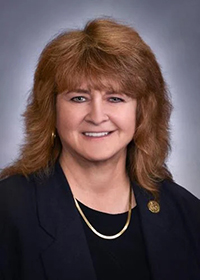
“This new curriculum is outstanding. It’s based on making a student a thinker, a statesman, to think critically. Our kids need to be armed with the tools necessary to support a constitutional republic.”
Or, as famed education reformer John Dewey once quipped, “Democracy has to be born anew every generation, and education is its midwife.”
A native Idahoan whose college basketball coaching resume includes stops at University of California, Santa Barbara, Washington State University, Brigham Young University and Cal State Fullerton, Ehardt also taught at the secondary level during her coaching days.
The classroom experience helped reinforce her views on what she believes to be the value of a proper education, particularly as it relates to young people developing into future American leaders.
“When I see kids these days, even here in Idaho Falls, espousing the virtues of Marxism, there is something wrong with that,” she said. “It should not be happening in our schools. That is how we lose the republic.”
All the more reason she feels so strongly that the new requirements set forth by the new legislation will help to re-establish the “true intent” of classroom civics instruction throughout the state.
“Kids 200 years ago were absolutely pushed in their education and they understood what a constitutional republic form of government is,” Ehardt said. “And I am not saying no one is doing that anymore. But I think we have lost more than what we should have in educating our kids.”
In an editorial drafted late last year, Idaho superintendent of public instruction, Debbie Critchfield, Idaho’s highest ranking education official, noted that “civics education is not a luxury,” but rather a “foundational part of a free society.”
“Our students deserve an education that prepares them for citizenship, and I am committed to enduring that civics remain a central part of that education in every Idaho classroom,” she wrote. “The study of the privileges and obligations of citizens enables us to value independence and personal responsibility.”
A perspective that lends a “breath of fresh air to Meg Goudy, director of the Bill & Milly Kay Baldwin Center for Education at the Mountain States Policy Center.
“Superintendent Critchfield has been incredibly supportive of this legislation,” Goudy said. “In any state, it helps to have a leader who is onboard with this type of legislation and to help push it forward.”
Plus, Goudy believes Idaho’s newer, more stringent civics requirements emphasizing cardinal virtues such as temperance, prudence, patriotism, fortitude and justice will also help students to prioritize a sense of community over self.
“These moral traits help people greatly to become strong citizens,” she said. “A solid civics education can help students understand that having a greater common good viewpoint as they grow older can be quite beneficial.”
Likewise, she equates the tougher course requirements set forth by Idaho lawmakers as beneficial to students when it comes to learning how to respectfully and properly disagree with those on the opposite side of the fence.

“Students need to be taught how to thoughtfully disagree and debate, what true civil disobedience really means,” Goudy said. “That it’s OK to be angry about something, but to move constructively.
“They need to learn how to organize their thoughts and opinions. When you learn about the traits of democracy, it allows for the freedom to do so civilly. People today just don’t understand how to take the proper channels to promote their ideals and points of view.”
In addition to SB 1336, which declared an “emergency” in the state’s efforts to broaden civics education, House Bill 712 creates a new Idaho State Seal of Excellence for civics education, recognition that aims to place it on par with honors typically reserved for student athletes, musicians and others who achieve academic success.
HB 712 establishes a prestigious School of Civics Literacy designation for campuses that can demonstrate 75% of its students have earned the state’s Civics Seal.
“We want students to understand what it means to participate in society,” Goudy said. “There won’t now just be a focus on the importance of students passing these classes. It’s now a graduation requirement.”
While the new standards have been established at the state level, decision making regarding how students will be taught the new standards will take place at the local level.
“These are state rules but it leaves it up to the local districts and school boards to handle how the students are learning the standards now required,” Goudy said. “I think teachers will be provided the ample professional development to teach civics properly.”
In recent years, whether due to budget cuts, advancements or greater emphasis on STEM education, changes in federal legislation such as the former law known as No Child Left Behind, or any other ideology that has made its way into classrooms, civics education has been pushed to the side in many instances, both in Idaho and nationally.
A 2024 study conducted by the U.S. Chamber of Commerce revealed 70% of Americans failed a basic U.S. civic literacy quiz, results that also showed that only one in three respondents could identify the country’s three branches of government.
Critchfield’s editorial highlighted the need for young people to be able to do more than just recite history or memorize facts. “It’s about equipping students with the tools they need to think critically, communicate respectfully and participate actively in our democratic system.”
For Erhardt, proper civics education is steeped in the foundational principles that will help students understand the start, as well as the history of America.
“Young people need to know why this is so exceptional and to understand the concept of American exceptionalism,” she said. “They need to understand it was founded by good men who did the very best they could during the time period in which they lived.”
Though it’s a term often heard, Ehardt stressed that many people fail to understand the “perspectives” of the political, religious and economic liberties the nation affords its citizens.
“The Constitution and the Declaration of Independence work collaboratively and people must understand one to understand the other,” Ehardt said. “Sadly, many people do not understand how each supports the other as they were designed to do.”
When it comes to civics education, Goudy strongly pointed out there is no “progressive” or “conservative” side of the fence.
“Whatever you consider yourself, conservative or liberal, what is to be taught in these classes are necessary for everyone to understand how to change state government should you disagree with a current law,” she said.
And as a new state resident who this past year made her way from just across the border in Washington, she sees Idaho moving to the forefront of civics education nationwide.
“Idaho has now become one of, if not the most specific state for identifying the documents that need to be reviewed and taught to students,” Goudy said. “Many of the sponsors like Barbara Ehardt and Mike Moyle were brave in pushing this legislation forward, being so specific in the wording and terminology of the bill. I do credit them for their bravery.”
And don’t tell Ehardt this is simply a “policy change” for Idaho’s future.
“This legislation is a foundational change that will help get us back to the entire intent of a public education,” she said. “Our students need to understand that liberty is not some free gift; it takes huge responsibility. And if we are to preserve this wonderful gift that the rest of the world does not have, then we have to work, and there is a lot of work ahead of us to keep it.”






 Loading ...