Sign In
Upcoming Event
 Free Newsletter

Cryptocurrencies’ presence in Idaho grows with more ATMs
Alx Stevens//March 3, 2021//


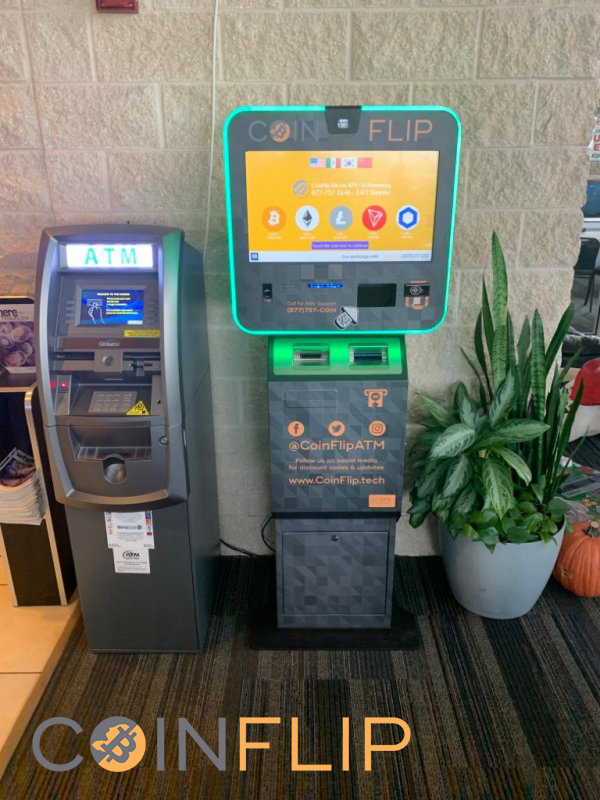
Virtual cryptocurrency is establishing a physical presence in Idaho, with three ATMs already installed in three cities — Chubbuck, Idaho Falls and Pocatello — and CoinFlip CEO Daniel Polotsky has the Boise area on his radar. A total of 40 to 50 are planned for Idaho by the end of the year.
The ATMs allow for cryptocurrency investors to buy Bitcoin, the most popular form of cryptocurrency, but not sell it yet. CoinFlip is touted as the largest cryptocurrency ATM provider in the U.S., with 1,642 nationwide.

“(We have found) ATMs do better in the West (and) more medium-sized towns,” Polotsky said. “Idaho does fit the stats and will do well.”
Additionally, 3,000 to 4,000 are planned throughout the country over the next few years.
“It’s as much a testament to our work, to people want Bitcoin,” said Polotsky. “Right now I think it’s more a speculative asset because it’s growing in popularity and price, that people tend to hold on to.”
“As it does grow and stabilize, you will see it as an exchange mechanism, as its price becomes a bit more predictable,” he added.
That may be on the horizon soon.
National news is reporting Tesla (owned by Elon Musk) invested $1.5 billion in Bitcoin, and stated the intent is to accept Bitcoin as payment for products.
With that, and a growing, sense of validity, Polotsky expects cryptocurrency to become more of an exchange mechanism in the next four to eight years.
“Until it’s a robust part of our ecosystem, I still have work to do,” Polotsky said.
How are stakeholders incorporating cryptocurrency into the economy?
If cryptocurrency is not necessarily a mainstream part of our economy, how does Polotsky get the green light to install these ATMs in Idaho? As a business, he still has to go through traditional regulatory agencies to operate in Idaho, he said.
The Idaho Department of Finance does not provide a lot of oversight on cryptocurrency institutions at this time, though these ATMs, and cryptocurrencies’ growing presence, are on the institution’s radar.
“We’re looking at what our role in that should be,” said Patti Perkins, director of the Department of Finance. “We want to make sure whatever we do with it is consistent with what’s happening nationally, as well as (is) safe for our financial institutions and consumers.”
A lot of states around Idaho are doing the same thing, she added.
“I think it’s something that is still emerging, even though it has been around for a while,” Perkins said. Stakeholders in the financial services industry like Perkins are looking at the totality of how they embrace cryptocurrency as part of the industry, such as how to treat it as a wealth asset.
A few of Idaho’s legislators are currently in conversations with Perkins and other stakeholders.
Trent Wright, president and CEO of the Idaho Bankers Association, is also interested in participating in those conversations. One means is House Bill 181. It starts looking into defining digital assets (like cryptocurrency), and, according to Wright, allows banks and credit unions to test technological operations around them.

Wright said he has seen cryptocurrency ATMs in Boise for about six years. For Wright, House Bill 181 is similar to legislative efforts underway in Wyoming and is intended to “see what the temperature is out there,” and to hear from industry and other legislators.
He wouldn’t be surprised if there is soon more momentum going forward.
“We’re supportive of the efforts,” Wright said. “We think banks should be allowed (more speed in) moving pilot programs to experiment with new technology and ensure appropriate (guard) rails are in place.”
“We’re certainly still getting our arms around (cryptocurrency),” he added. “(It is) different for large banks, different for a lot of our smaller banks (smaller credit unions as well).”
For Perkins, Elon Musk and Tesla’s investment in Bitcoin is significant.
“He is a big name to say, ‘I’m trusting this as having the value you say it does,’” she said. “It still makes us a little bit nervous, (as it’s) not a mature industry yet, it fluctuates wildly. We don’t want to be left in the dust; if we don’t decide, somebody will for us.”
Why invest in cryptocurrency?
Polotsky sees opportunity in cryptocurrency. He said over two million people do not use a bank as a primary service, as banks can be predatory with aspects like overdraft fees and hidden fees.
“It’s revolutionary; it’s digital gold,” Polotsky said. “There’s only 21 million (value in) Bitcoin; you can send it across the world; it’s open 24 hours a day instead of a bank, and it’s very inclusive in nature.”
Polotsky adds no bank account is needed, an investor doesn’t have to be rich.
“This is a way to invest in something; kind of a way to level the playing field,” Polotsky said.
He also praises Idaho’s efforts in including the ATMs, which Polotsky feels provides opportunity to draw interest in Idaho and pick up its economy. Places that quickly create and foster an environment where cryptocurrency is accepted will get benefits within the cryptocurrency industry, such as employment and other resources.
“I think (Idaho is) doing their very best to get up to speed,” Polotsky said, and that most state leaders CoinFlip has worked with have been great.
Polotsky hopes community members will see, and use, CoinFlip as a resource, both for cryptocurrency investment, and as an educational resource. Polotsky acknowledges aspects, like the learning curve and how to use things like a “new wallet” may be intimidating, but CoinFlip is eager to help.
“We try to make it super easy; that’s our goal,” Polotsky said. “Don’t be intimidated by it.”




 Loading ...