Sign In
Upcoming Event
 Free Newsletter

Homeowners can tap into HELOCs to pay down debts and avoid high interest rates
Steve Lombard//August 19, 2026//
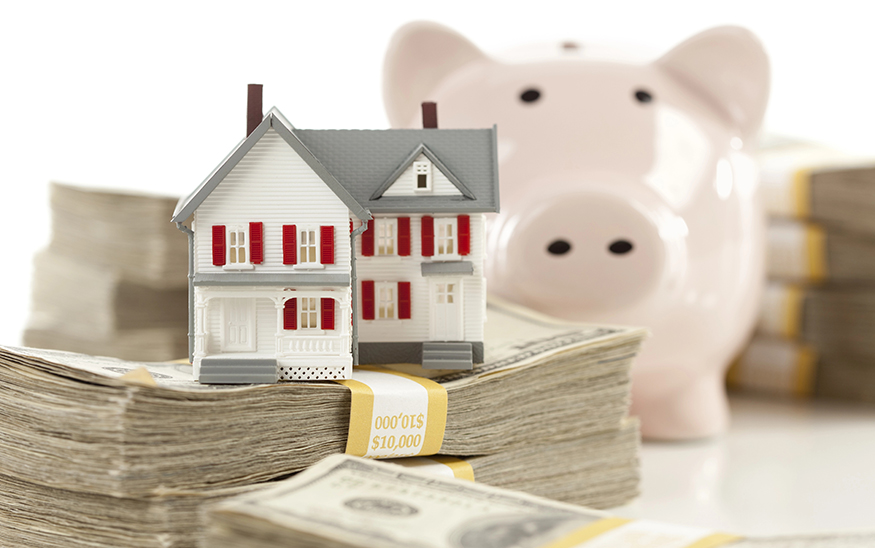
A home equity line of credit, or HELOC, might be a viable option for homeowners struggling to pay down credit card debt or in an emergency situation. (PHOTO: DEPOSITPHOTOS.COM)
Homeowners can tap into HELOCs to pay down debts and avoid high interest rates
Steve Lombard//August 19, 2026//


When it comes to building wealth, home ownership is arguably the single greatest method for most Americans looking to achieve this milestone.
At a Glance:
- Kellie Allen of CMG Home Loans advises on home equity use
- Average borrower has about $295,000 in home equity nationally
- HELOCs offer flexible credit lines to consolidate high-interest debt
Owning a home can represent the largest financial component of a person’s net worth, especially for retirees. According to a report issued earlier this year by the National Institute on Retirement Security (NIRS), home equity values now exceed what most people have stashed away in traditional savings accounts,
But what to do with all this accumulated wealth?
“It’s all perspective and how one looks at their finances based on the impact money has on their life,” said Kellie Allen, branch manager of CMG Home Loans in Eagle. “Debt can certainly be used as a financial management tool.”
A Boise native, Allen has spent more than three decades at the forefront of the local real estate market, arranging home loans and advising homeowners on how to properly use and manage large sums of accumulated equity.
As real estate prices escalate, equity is in abundance.
In June of this year, Cotality, a property information and analytics provider determined the “average borrower has accumulated about $295,000 in home equity” based on a report released at the end of last year.
Furthermore, NIRS also detailed how Baby Boomers, who comprise the majority of retirees nationwide, collectively own roughly $19 trillion in real estate wealth, with home equity accounting for about one-third of their financial assets.
Addressing the NIRS report earlier this year, Jake Krimmel, a senior economist for Realtor.com, shared that using home equity for “purposes other than supporting daily living expenses” can be a good financial move.

“That equity can be tapped in case of emergency, passed on to the next generation, or taken as a lump sum when they sell their house and downsize,” he said.
But Allen cautions that people must first truly understand what equity is and how to use it wisely.
“Equity is basically the difference between what is currently owed on a property and the value of the home,” she said, emphasizing personal financial responsibility remains a huge factor.
“Before the 2008 crash, many were using their home equity as a personal ATM. Home values were appreciating so dramatically. We were seeing this constant refinancing going on.”
Unlike today, with many homeowners “locked-in” with dirt-low, fixed mortgage interest rates well below 4%. Because of this, many are tapping into their equity through a home equity loan or a home equity line of credit (HELOC) to pay off other debts such as high interest credit cards or other financial burdens.
Plus, industry data cited by Axios in February of this year shows more homeowners “staying in their homes for the longest period” during the past 25 years. By the end of 2025, the numbers revealed that those selling homes then had been living in them for an average of 8.6 years, the longest stretch since 2000.
With data only extending 25 years, the national average at that time was half, or 4.2 years of homeowners staying put. Similarly, those who locked in interest rates of 2% and 3% between 2020 and 2021 are now most reluctant to sell, compounding affordability issues for many looking to buy.
“Another reason for these larger amounts of equity is people have not done anything with it,” Allen said. “They have sat on these low-interest rate loans and continue to accumulate appreciation just by owning the home. No one who is locked-in wants to touch that 2% to 3% first mortgage. The way to get to that equity is to throw it into a second mortgage.”
However, for many not scaling down or upsizing, the equity can be put to use to pay off credit card debts, medical bills or even used for a costly home repair such as a roof replacement or a brand-new air-conditioning unit, each that can run upward of $15,000.
“Having the equity doesn’t mean you have to spend or borrow against it,” Allen said, “but it could certainly be a good option to use some of it to consolidate some other debt.”
Whether one owns a home or not, unsecured credit card debt, often referred to as “bad debt,” is a burden for many. Most credit cards today carry an average interest rate of nearly 24%, while secured products such as a home loan or a HELOC both fall more into the 8% to 10% interest range.
With credit card interest rates two to three times higher than a standard home equity product, basic math shows how either option can make a huge a difference financially.
For instance, a credit card balance of $5,000 at the going interest rate of about 24% would generate almost $100 in interest alone each month. Making the minimum payment, it would take about 17 years or 200 months to pay off the debt as long as nothing else gets charged to the card.
Comparatively, using home equity to eliminate that $5,000 credit card balance while making minimum payments can save the borrower over $6,200 while reducing the payoff time by nearly a decade.
Having watched $500,000 property listings within the Treasure Valley shift from mansions to starter homes over the past decade, Allen considers herself a “big proponent” of HELOCs, which typically can offer a borrower about 90% of a home’s value after subtracting what is still owed on it.
“A borrower can establish a $100,000 line of credit and use only $50,000 while the other half that remains available to draw on costs nothing,” she said. “Interest is adjusted on a daily basis for whatever total is outstanding on the line of credit.
A good option she believes for the unexpected crisis. “I think a lot of people should have them for emergency situations. Someone may have gone through a period of living off credit cards for a few months due to an employment issue.”
A situation that helps make a HELOC a popular choice.
“You’re not paying on something you don’t owe, and you still have access to it,” she said. If you have already established a HELOC with your financial institution and have not used it, it’s a great method for utilizing it with a use-it and pay-it process.”
Conversely, in the case of a home equity loan, the borrower only owes what was borrowed along with the corresponding interest rate, one that will always be higher than what is attached to the home’s first mortgage.
“This is a fixed rate versus a variable rate offered by a home equity line of credit,” she said. “The only detriment is whether someone needs access to the full $100,000 today, meaning they only may need half now and half later.”
For either route, personal financial responsibility remains paramount.
“That is 1,000% essential,” Allen said. “Using either method as a debt management tool, you can’t just pay the minimum payment.”
Whether a home equity loan or a HELOC, housing debt is often referred to as “good debt” and can be used to wipe out debts arising from credit cards, automobile purchases and even student and personal loans. Or as Krimmel noted, “home equity is not the most liquid type of asset, which makes it a good nest egg.”
Figures revealed through the NIRS report show the median savings for those classified as retired to be roughly $40,000, compared to their median home equity value, which is three times as large or $130,000.
Choosing the right option typically depends on a borrower’s financial goals, preferred loan features and overall financial situation. No matter the choice, Allen knows borrowers must completely understand how each works and that both come with risks.
“The biggest thing is determining how much equity someone has in their home, and either way it is still a second mortgage on your property,” she said. “If some unforeseen circumstances prevent you from making your house payment, you need to realize you have two payments now and not just one.”
In some instances, winding up in financial peril again by trying to pay off a home equity product can happen as quickly and easily as it does for those who mismanage their credit card spending.
“Buying your way into feeling better is not a great move,” Allen said. “Often it comes down to people wanting things and wanting them now.”
Managing home loans for three decades and having served as a board member for the Idaho Mortgage Lenders Association, Allen remains an adamant supporter of teaching financial literacy at an early age to help keep people out of debt later in life.
“It still always comes back to education and people truly understanding what it means to be in debt and to repay it,” she said. “I still think home ownership is the greatest wealth builder that we have.”






 Loading ...