Sign In
Upcoming Event
 Free Newsletter

Big box construction undergoes major transformation as Idaho’s market surges
By Heide Brandes//July 7, 2025//

Buildings such as this PepsiCo commercial structure and others are part of the growth in Idaho. (PHOTO: ADLER INDUSTRIAL)
Big box construction undergoes major transformation as Idaho’s market surges
By Heide Brandes//July 7, 2025//


Idaho’s commercial construction industry is experiencing dramatic growth, with big box retailers and industrial developers embracing sustainability, automation and flexible design strategies that represent a fundamental shift from traditional building approaches of decades past.
The state’s construction industry has grown more than 60% from 2004 to 2024, driven by booming population gains and economic development, making Idaho one of the fastest-growing construction markets in the nation. This boom coincides with retailers nationwide rethinking how they design, build and operate large-format stores and distribution centers.
“On our recent projects for Amazon and PepsiCo, we installed miles of conduit under their parking lots,” said Will Goede, vice president of Development for Adler Industrial, describing infrastructure preparation for future electric vehicle charging stations that serves as an example of how dramatically big box construction has evolved.
Adler Industrial sees this transformation firsthand through its work with major national tenants. The projects Adler faces today highlights how construction requirements have evolved from simple warehouse boxes to sophisticated facilities designed for future adaptability. For the industry as a whole, the old way is out, and a new way is being ushered in.
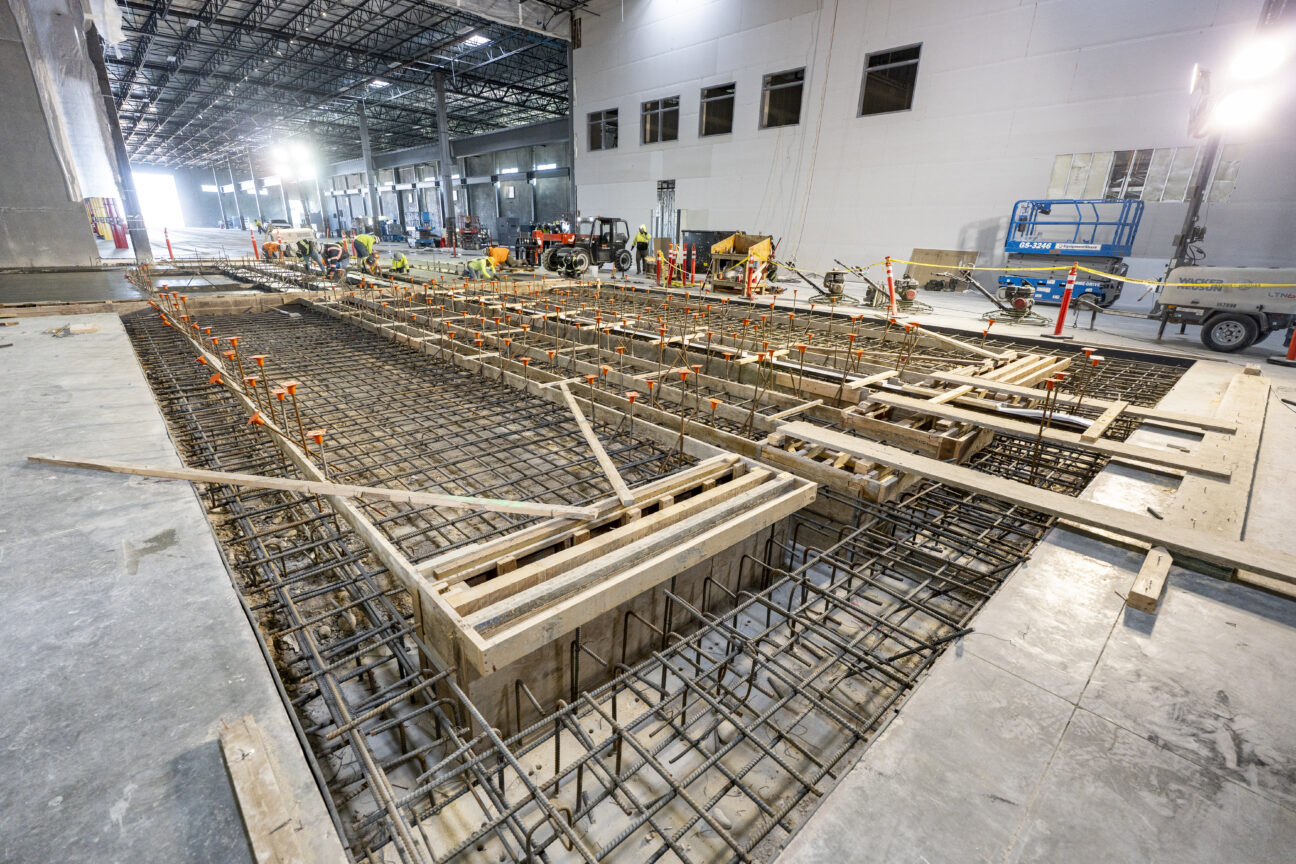
Idaho’s construction renaissance spurs employment
The construction industry in Idaho is a leader in workforce expansion and has seen significant growth over the past decade. From 2014 to 2023, employment has almost doubled and added nearly 31,000 workers, according to Idaho Department of Labor data. In Idaho, $6.5 billion was spent in construction in 2023, making up almost 6% of the state’s gross domestic product, compared to the national average of 4%.
The growth has been concentrated in Ada, Bonneville, Bannock, Canyon, Kootenai and Twin Falls counties, where major retailers are investing in new facilities and renovating existing ones. Idaho’s 27 Walmart stores include 23 Supercenters, three Neighborhood Markets and one Sam’s Club store, with the company planning significant updates to its footprint.
Walmart is kicking off a five-year store expansion plan that will include building more than 150 stores over the period, while simultaneously carrying on with its program to remodel existing stores to the Walmart’s “Store of the Future” prototype.
The most dramatic change in big box construction involves the widespread adoption of sustainable materials and energy-efficient systems, driven largely by regulatory pressure.
“Increased environmental regulations on carbon emissions are pushing the national tenants to plan for electric vehicles and equipment,” Goede said. “Electric trucks and vans are not commonly used for distribution now, but the national tenants are requiring conduits be installed so electric charging stations can be added for electric vans and trucks in the future.”
The sustainable construction materials market was valued at $301.6 billion in 2024 and is set to reach $907.1 billion by 2034. This growth reflects both regulatory requirements and shifting client expectations about environmental responsibility, experts said.
Many follow LEED green building certification requirements as their guide, such as water conservation with more efficient plumbing, low-irrigation landscaping, and rain capture for reuse and stormwater runoff reduction. As of 2024, more than 195,000 LEED-certified buildings and more 205,000 LEED-accredited professionals existed in 186 countries worldwide.

National vs. regional tenant requirements
Not all requirements are the same however, as the construction approach varies significantly between national chains and regional retailers.
“National tenants have large spec books with specific requirements to try and maintain a brand standard across the nation, making it harder to put them in existing buildings without costly renovations,” Goede said. “Smaller regional tenants are more flexible, making it much easier to put them in existing buildings.”
This difference spotlights the different priorities between companies like Walmart, which operates thousands of locations, and regional chains like Bi-Mart, which focus on specific geographic markets. National retailers demand consistency in everything from ceiling heights to HVAC specifications, while regional chains can adapt to existing building configurations.
When it comes to construction materials, Goede emphasized the importance of long-term thinking.
“Concrete tilt-up construction offers the best long-term durability,” he said, adding that material choices must balance initial costs with decades of operational requirements.
The bamboo segment was valued at $68.5 billion in 2024 and is projected to reach $214.3 billion by 2034. That growth proves a growing interest in sustainable alternatives, like precast concrete, which takes sustainability to new heights. The precast manufacturing process contributes to its eco-friendly profile by operating under controlled conditions and reducing the environmental impact of construction sites by minimizing waste and recycling excess materials.
Other sustainable materials gaining traction include cork for insulation and flooring, hempcrete for wall construction, mycelium-based building components, and recycled steel and aluminum. These materials are replacing the basic concrete block and steel construction that dominated big box retail construction 20 to 50 years ago.
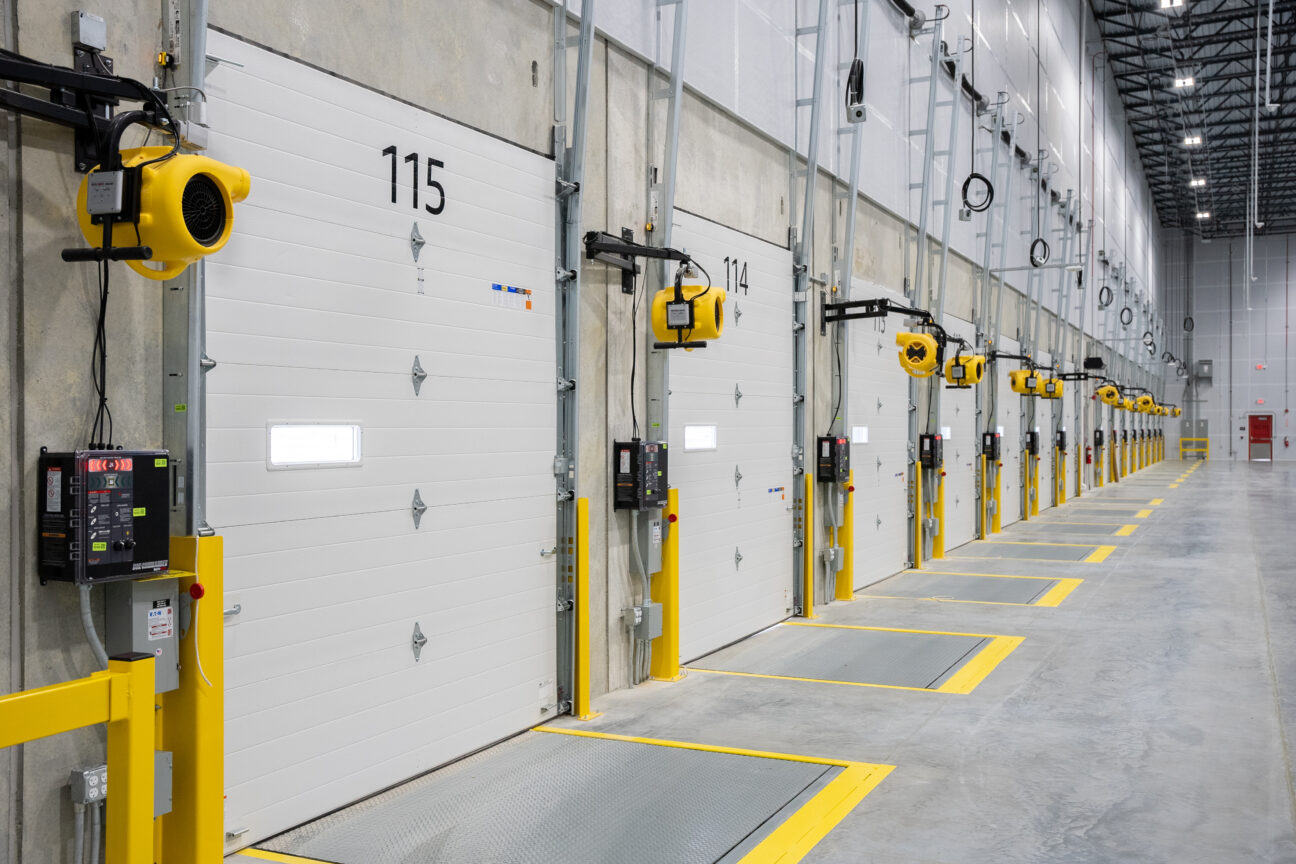
Balancing costs with operational efficiency
The challenge of balancing upfront construction costs with long-term operational savings requires careful consideration of tenant success. Educating tenants is a must for construction companies.
“It is a tricky balancing act, but ultimately we want our tenants to be successful, because when they are successful and grow, we have the opportunity to expand their space or maybe even build them another building,” Goede said.
“We provide a more expensive HVAC system than a lot of our competition, but our HVAC system can be programmed to draw cool air into the warehouse early in the morning when the outside temperatures are coolest to pre-cool the warehouse. This is much cheaper for the tenant than installing an air condition system, and paying the power bill for AC.”
Adler’s approach to modern commercial construction prioritizes operational efficiency over minimal upfront costs, a shift from previous decades when developers often focused primarily on lowest initial investment.
Technology integration and future-proofing
Modern big box construction also integrates advanced technologies that were unimaginable decades ago. Industry analysts expect click-and-collect to play a significant and permanent part of the retail market, with a projected growth of 16.2% in 2025, surpassing $154 billion.
Also known as “buy online pickup in store” (BOPIS), the model requires changes in store layout to serve new needs, such as staging areas with refrigeration and offering special parking and curbside pickup areas. These modifications reflect how e-commerce has fundamentally altered the function of physical retail spaces.
Technology preparation, however, extends beyond current needs.
“We work closely with our electrical engineers to design electrical systems that can be easily upgraded in anticipation of tenants’ power needs continuing to increase,” Goede said.
Design flexibility has also become a key priority as business models continue to evolve. Adler, for instance, designs its buildings to be versatile to appeal to the majority of tenants, and easily expandable so tenant’s space can grow as their business grows, Goede said.
In previous decades, buildings were typically designed for specific, long-term uses with little consideration for future adaptation. Today, 52% of consumers report that half or more of their purchases are influenced by convenience, driving design changes that prioritize efficiency and customer experience.
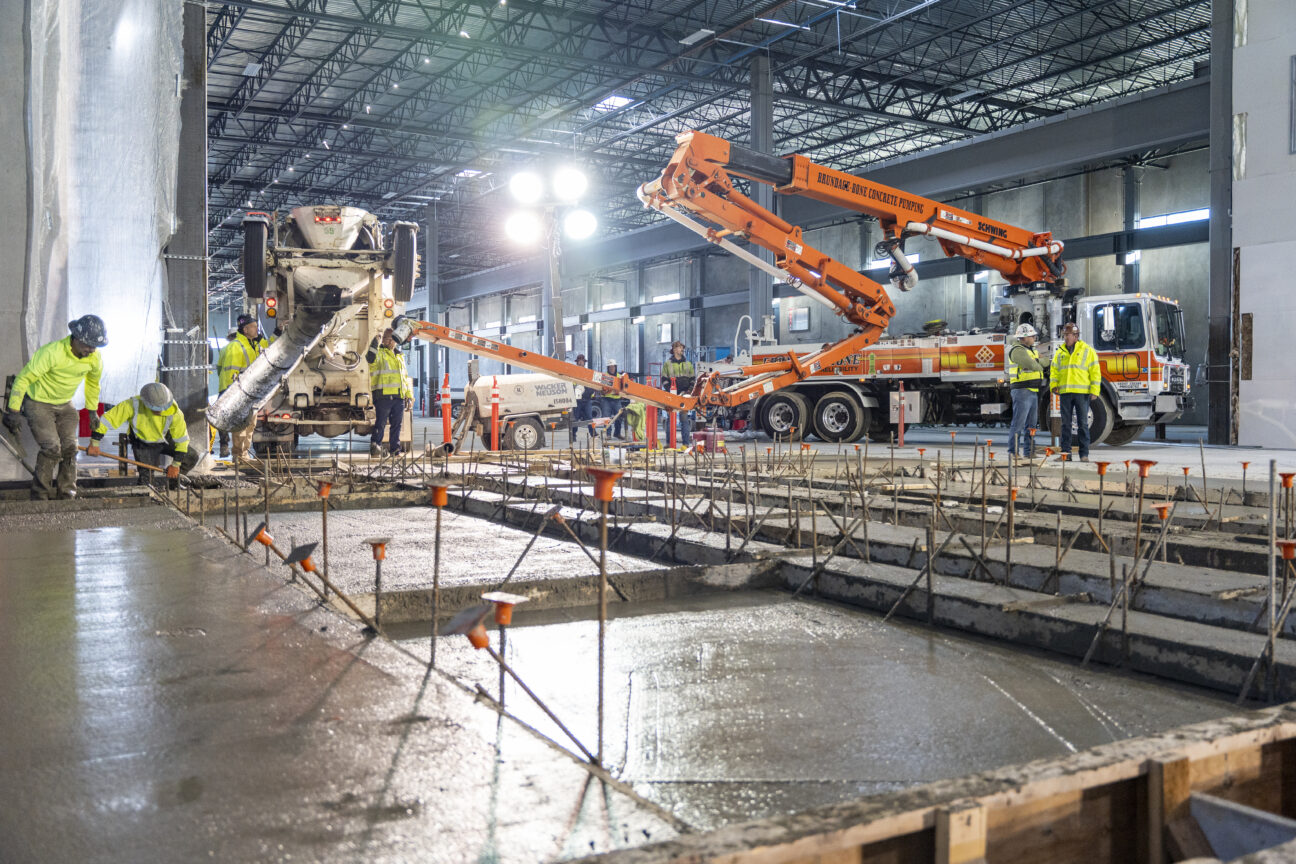
Regional market dynamics and growth
Idaho’s position in the broader western United States makes it attractive for distribution and logistics operations. Although industrial big-box leasing activity slowed in 2023, there were signs of increased demand by year-end. This trend continued in 2024, with a rise in tenants in the market.
Boise continued to outperform national trends with a retail vacancy rate of 11.6% in Q1 2025, rising 140 basis points quarter-over-quarter and climbing 160 bps year-over-year, indicating strong demand for retail space despite some market softening.
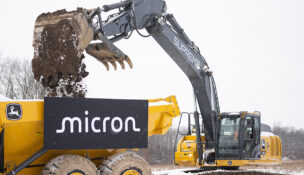
The state’s strategic location and business-friendly environment have attracted major projects. At its peak there were 4,000 construction workers on major developments like the Micron expansion.
Despite robust demand, the industry faces significant challenges. Quoted construction costs currently range from $300 per square foot for a junior anchor box to $500 per square foot for a multi-tenant pad site, making some projects economically challenging.
Wages, however, have surged 15% to 20% in the last year, with a 20% to 25% increase anticipated in 2024, reflecting intense competition for skilled construction workers. Construction spending crossed $2 trillion in the first half of 2024 nationally, but high interest rates continue to impact project financing.
What’s ahead?
Idaho’s construction industry is expected to lead this transformation. The Idaho Department of Labor’s 2022-2032 projections show that the construction industry is projected to grow by 25.6% (or 16,463 workers) from 2022-2032.
The state’s combination of available land, business-friendly policies, strategic location and skilled workforce makes it an ideal testing ground for innovative big box construction approaches. As developers like Goede continue to implement forward-thinking infrastructure and design strategies, Idaho’s experience will likely influence construction practices across the western United States and beyond.

 Loading ...