Sign In
Upcoming Event
 Free Newsletter

Setting up for success
Home staging companies help buyers imagine layouts, reducing time on the market for many properties
Steve Lombard//March 16, 2026//

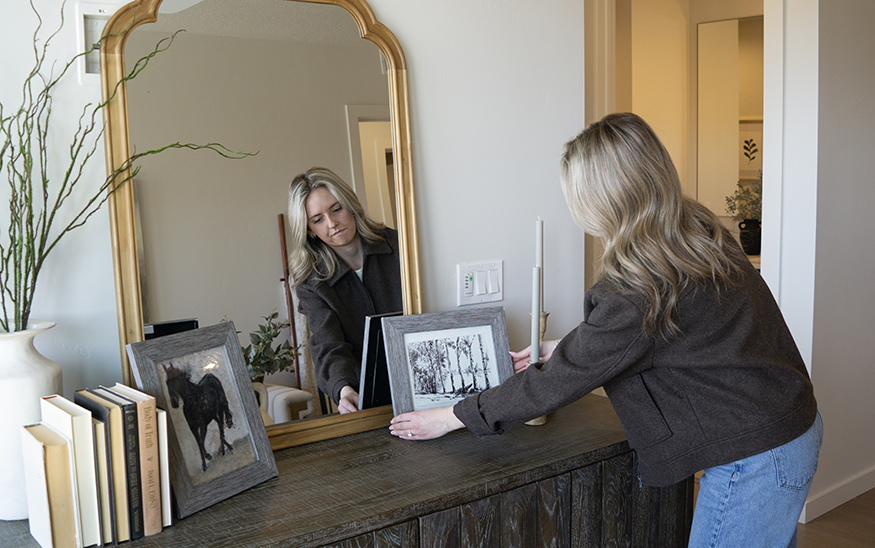
Sienna Quinlivan, lead stager and designer at Frances Joy Staging, takes a closer look at a staging in a condominium the company staged in eastern Boise. (PHOTO: MARC LUTZ, IBR)
Setting up for success
Home staging companies help buyers imagine layouts, reducing time on the market for many properties
Steve Lombard//March 16, 2026//


Creating atmosphere and motivating buyers. It’s all about making prospective homeowners feel that the house for sale they are walking into is theirs and not someone else’s.
At a Glance:
- Nicolle Cahill of Fina Home Design stages homes across southern Idaho, including Treasure Valley.
- Staged homes typically spend 33% to 73% less time on the market and can earn 8% to 10% higher returns.
- Lauren Hoffeld of Frances Joy Staging emphasizes staging as marketing to create comfort and highlight home features.
But when it comes to sprucing up homes on the market, a big misconception is filing these strategic selling concepts under the category of interior design.
“It is so different from designing. Sometimes people might think they have a really good sense of style or taste, so they tend to think they would be good at staging,” said Nicolle Cahill, owner of local staging company Fina Home Design.
“With design, you’re looking to meet certain styles. Staging is more about trying to neutralize the space and have it appeal to anyone, the widest audience.”

While most people these days tend to do their home buying research online before physically walking into a prospective property, a properly staged home, Cahill believes, will typically catch a buyer’s eye.
“To go in and have what is a warm, welcoming and a well put together home is almost the norm now,” she said.
But that does not mean design has no place at the table.
“You need good eye for design, which is a creative process,” Cahill said. “And then you’ll see homes that you will come into and think we should just burn this whole thing down and start over. But by the time we are done, it makes a huge difference.”
For the past six years, Cahill’s firm has staged countless homes, not just in the Treasure Valley, but across Southern Idaho. “We’ll go anywhere and do almost anything. We’ve gone all the way to Garden Valley, we’re in Mountain Home and even Wilder,” she said.
In the staging business, location certainly matters, as do the age and style of the property in need of staging services.
“The style we use is dependent on the home,” said Cahill, who, at the time as a mother of two small children, literally fell into what she thought would be a “hobby” to generate extra income after initially taking a shot at staging her own home for sale.
Following her success, family and friends soon came calling, and the marketing degree she earned from the University of Phoenix began to pay off. “I feel like this business is my happy little surprise that has just grown and grown.”
Grown indeed. Cahill, who started with a single box truck, and even did all the heavy lifting herself, now employs a four-member moving team and an assistant stager.

“By myself it would take about three days to stage a home,” she said. “Now we can get a home staged in about two hours.”
Six years into her craft, Cahill’s outfit can have as many as 50 homes staged at any given time, averaging about 10 to 12 weekly during the peak season that runs spring through Thanksgiving.
Since the COVID pandemic, the stage for staging homes has clearly been set.
“The popularity and expectations of homebuyers, combined with the growth in our valley, all those I know in the business locally seem to be doing really well,” she said. “I see new stagers coming into the market, and I believe they can find their way.”
Lauren Hoffeld found her way into the industry. Ironically, as business operations manager for Frances Joy Staging, her introduction into the field came courtesy of a designer friend.
And like Cahill, she also holds tight to the fine line that separates staging and decorating.
“Staging is marketing. When you walk into a home that is staged, you see texture, you see warmth, you feel cozy,” Hoffeld said. “You get a sense of comfort that makes the space feel like a home.”
She also relies heavily on “creativity” when preparing to stage a home before it hits the market.
“People come to us because they see us as the professionals,” Hoffeld said. “We can often just look at a space and know right away what needs to be staged and how.”
The ultimate goal is keeping homebuyers viewing and perusing a home as long as possible.
“We want to create a sensory experience of scale, texture, flow and form,” she said. “This keeps the potential buyers in the property longer.”
Averaging about 22 stages weekly during the busy season, Hoffeld knows staging a home in the older, north end of Boise is not going to be the same process as it would be for a modern home being built in Eagle.
Think of it along the lines of the role of a wardrobe director for a theater production.
“We don’t want every home we stage looking exactly the same,” she said. “People are often walking multiple listings per day, and you want each property to have its own character and feel.”
Creativity not only highlights the top features of a home, but can draw attention away from what may be considered “problematic” or even “outdated” elements of a property.
(PHOTO: MARC LUTZ, IBR)
“This gives a buyer the perspective on how large or small a room is,” Hoffeld said. “If a room is empty, there is no way for your eye to tell the scale of a room. A buyer can also then get a sense of how to break up a room into different sections or areas.”
Often, those selling a home may not realize that too many or even oversized furnishings, or rooms lacking the right furniture can work against them.
“You don’t want a potential buyer to pay more attention to the furnishings and not the actual house,” she said. “We try to scale it down so a room does not look over-stuffed or that it is so neatly designed that it is actually distracting.”
“It is so critically important the way the home is staged and photographed,” Cahill said. “The buyer must like what they see. The home can’t be too busy or crowded, and the style must be right for them to come and look at the house.”
Financially, proper staging can be a key factor between how long a home remains listed and the final sale price. According to one study, staged homes typically spend 33% to 73% less time on the market, while offering an 8% to 10% higher return on investment.
“As for staging in general, I’m a believer,” said local independent Realtor Chad Hansen. “It’s usually money well spent. Properly staged homes tend to move faster and often bring in slightly stronger offers.”
The biggest advantage for Hansen is in cutting down the number of days a house remains on the open market. “Once a listing sits too long, you’re almost always chasing it with price reductions,” he said.
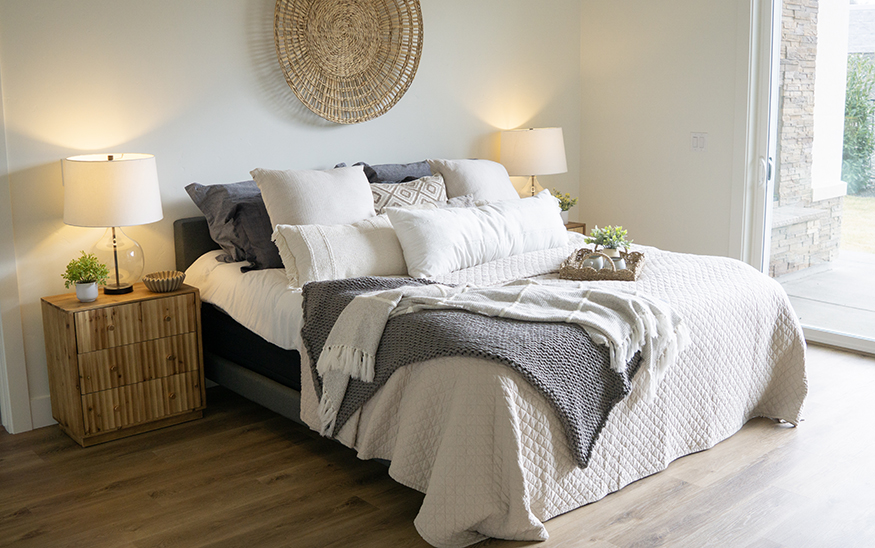
“Statistically, staged homes sell for more than they would have otherwise,” said Cahill. “Staging creates more traffic in the homes which means more opportunities to sell. If a home spends less time on the market, then I consider staging to be a solid investment.”
As Hoffeld noted, price reductions for a home on the market ultimately “cost more” than the price of actual staging services.
“When a house is first listed is when you get the most attention,” she said, noting the first two weeks as the most critical time period.
“A house can be on the market for 60 days and then sold within 30 days after staging. It shows that paying for staging is cheaper and quicker than having to go to a price reduction to sell a home.”
Through his home selling experience, Hansen concurs. “Staging won’t rescue an overpriced home, but when pricing is right, it helps you hit the mark and keeps momentum on your side.”
Staging companies rely on a large, rotating inventory of furnishings to meet the needs of a wide array of homes, as well as to keep the décor fresh and relevant for the needs of the home to be staged.
In some cases, and more frequently these days, buyers may also even want the furniture used in the staging process to be included in the final home sale.
“As we continue to elevate the furnishings we use to stage a house, we are finding we are getting more buyers who want to purchase this furniture,” Hoffeld said. “More and more buyers want the furniture or a particular piece of décor used in staging.”
Staging, like selling homes or those providing a wide range of home services and repairs, can be a competitive business, particularly in continuously growing markets like the Treasure Valley. Especially as more buyers rely on technology to help provide visual elements prior to an actual in-home visit.
Even so, Cahill, who six years ago squeezed her way into the local market, believes there are lots of opportunities for those who want to stage a career in the staging business.
“I believe the industry here has grown along with all the growth here in Idaho,” she said. “There is plenty of room for all of us in this business.”