Sign In
Upcoming Event
 Free Newsletter

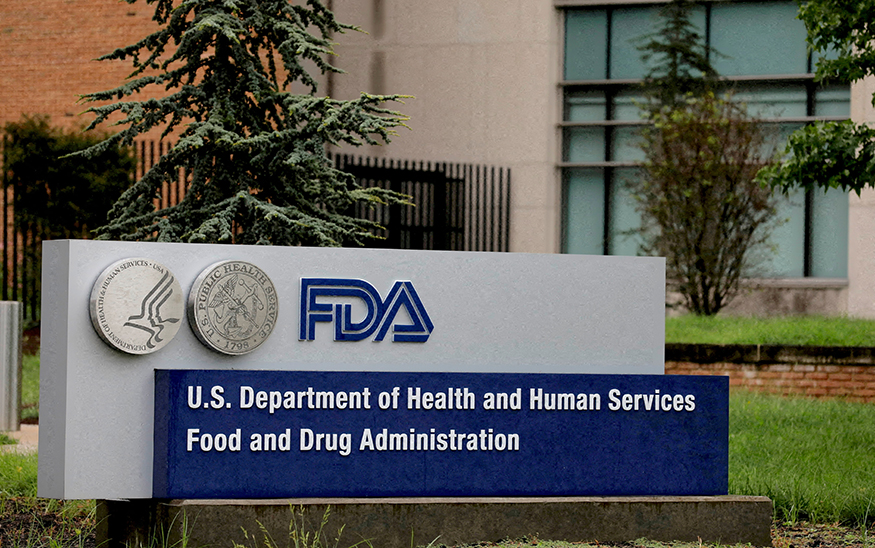
Signage is seen outside of the Food and Drug Administration headquarters in White Oak, Maryland, August 29, 2020. (PHOTO: REUTERS/Andrew Kelly/File Photo)
Biz Briefs: Consumer watchdog workforce could be cut by two-thirds
reuters//April 1, 2026//


REalloys, U.S. Critical Materials sign MoU to build domestic rare earth supply chain
Rare earths developers REalloys and U.S. Critical Materials Corp have signed a memorandum of understanding to build a fully domestic supply chain for the key materials in the U.S., in line with Washington’s aims to reduce reliance on China.
At a Glance:
- Trump administration proposes cutting CFPB workforce to 556 workers
- Plan includes 85% cut in supervision division and 80% in enforcement
- Justice Department seeks court approval to lift stay on workforce reduction
Under the agreement, REalloys will secure up to 10% offtake from the U.S. Critical Materials-owned Sheep Creek rare earth deposit in Ravalli County, Montana.
The U.S. has been escalating efforts to reduce dependence on China for the critical materials, such as instituting tighter procurement rules, prompting a rush among miners and processors to build domestic rare earth supply chains.
The Sheep Creek deposit contains high concentrations of elements such as dysprosium and terbium, which are used to power high-performance permanent magnets in F-35 fighter aircraft, missile guidance systems and radar platforms, the companies said.
“We are identifying the strategic assets that plug into our advanced midstream and downstream ecosystem to fortify supply chain security for protected and strategic markets, with zero Chinese involvement at any stage,” said Lipi Sternheim, CEO of REalloys.
REalloys and U.S. Critical Materials also said they would advance test work to improve heavy rare earth processing and seek to finalize a long‑term offtake deal within one year.
Rare disease advocacy group urges Trump administration to restore FDA clarity
A rare disease advocacy coalition on Wednesday urged the Trump administration to restore regulatory clarity as it considers new leadership at the U.S. Food and Drug Administration’s Center for Biologics Evaluation and Research.
Dr. Vinay Prasad, the center’s current incumbent, is set to leave the FDA at the end of April after a tenure marked by high-profile disputes over reviews for vaccines, including Moderna’s COVID shot, gene therapies such as uniQure’s therapy for Huntington’s disease and other rare disease drugs.
The Rare Disease Advocacy, Biotechnology and Investor Coalition sent the letter to President Donald Trump, U.S. Health Secretary Robert F. Kennedy Jr, Mehmet Oz, head of the U.S. Medicare agency and FDA Commissioner Marty Makary.
The coalition, which includes nearly 100 rare disease patient advocacy groups, biotech executives and investors, said CBER has become less flexible in overseeing rare disease clinical trials.
The group said 84% of biotech investors surveyed by RDBI had reduced, paused or exited rare disease investments because of recent FDA uncertainty. About two-thirds of biotech companies surveyed said the uncertainty had made it harder to raise capital over the past 12 months.
“We believe it is of the utmost importance that the FDA chooses a leader who understands the unique challenges of rare disease development and respects and values the views of patients and physicians,” the coalition said in the letter.
CBER approved five orphan drugs in 2025 while issuing four Complete Response Letters and one comparable setback at the pre-marketing application stage, rejecting about half of late-stage programs, compared with one CRL among 20 programs over the prior two years.
In the first quarter of 2026, CBER approved one orphan drug and issued two CRLs, compared with eight approvals and two CRLs at the FDA’s drug evaluation center over the same period.
CRLs are sent by the FDA if the agency determines it will not approve the application in its current form.
Trump admin presents new plan to slash two thirds of consumer watchdog workforce
WASHINGTON, D.C. ― President Donald Trump’s administration has developed a fresh plan to slash the workforce at the U.S. Consumer Financial Protection Bureau by about two thirds, stepping back from earlier efforts to get rid of nearly 90% of all employees, court documents showed.
In a filing submitted Tuesday evening to the U.S. Court of Appeals for the District of Columbia Circuit, the Justice Department said the new plans showed the administration will not shut down the CFPB entirely, as a lower court had found they planned to do. CFPB representatives did not immediately respond to requests for comment.
Under the new plan, the CFPB workforce would fall to 556 workers, fewer than a third of its size when Trump took office, and it would eliminate 85% of positions in the Division of Supervision, which oversees the conduct of banks and nonbank financial companies offering consumer services, and 80% in enforcement.
The Justice Department said a lower court should be allowed to consider lifting a stay that currently blocks the administration from carrying out this plan.
The administration had been battling in court until now for permission to eliminate nearly all CFPB positions, something that lawyers for an employee union and others had argued would be illegal and would prevent the agency from fulfilling duties mandated by Congress, which created the agency in 2010.
Trump and other top officials had called for the CFPB’s outright elimination, accusing it of politicized enforcement and unduly burdening companies, something advocates had rejected as an illegal giveaway to politically connected corporate actors that would jeopardize the public.
Tuesday’s motion would pause a pending appeal before the full bench of the appeals court, where judges had appeared skeptical of administration arguments that courts do not have the power to block the government from firing virtually all CFPB workers.
US business inventories unexpectedly fall in January
WASHINGTON, D.C. ―U.S. business inventories unexpectedly fell in January amid a large decline in stocks at wholesalers, suggesting inventory investment could weigh on economic growth in the first quarter.
Inventories dipped 0.1% after being unchanged in December, the Commerce Department’s Census Bureau said on Wednesday. Economists polled by Reuters had expected that inventories, a key component of GDP and one of the most volatile, would edge up 0.1% in January.
Inventories increased 1.0% on a year-over-year basis in January. The Census Bureau is still catching up on data releases following last year’s government shutdown. Retail inventories rose 0.3% in January after gaining 0.1% in December.
Wholesale inventories dropped 0.5% while stocks at manufacturers edged up 0.1%.
Business inventories added to the 0.7% annualized GDP growth pace in the fourth quarter, despite marking their third straight quarterly decline. The economy grew at a 4.4% pace in the July-September quarter.
Business sales increased 0.3% in January after rising 0.7% in December. Sales at retailers eased 0.1%. At January’s sales pace, it would take 1.35 months for businesses to clear shelves, down from 1.36 months in December.





 Loading ...