Sign In
Upcoming Event
 Free Newsletter

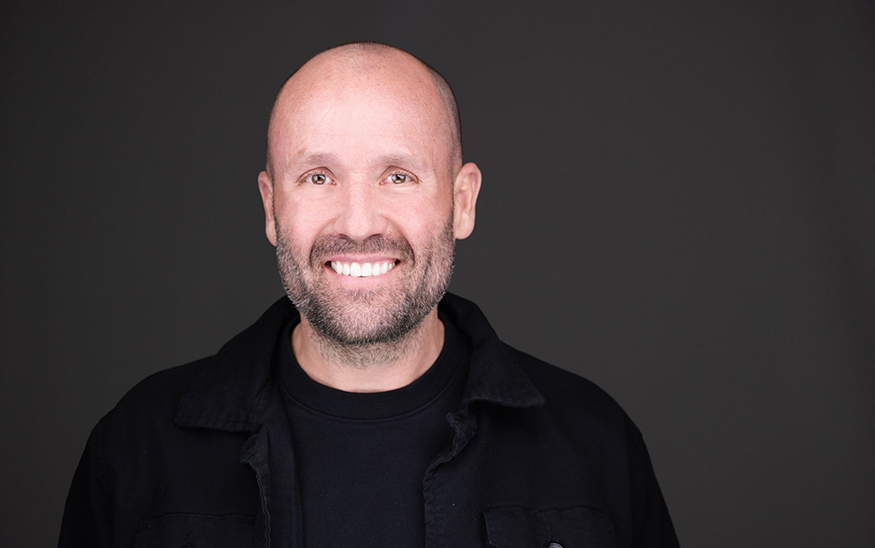
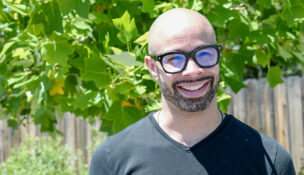
Chris Jones is the owner and CEO of Plant Therapy in Twin Falls. (PHOTO: PLANT THERAPY)
The IBR Interviews of Highly Effective People: Chris Jones
Marc Lutz//April 29, 2026//


For 15 years, Chris Jones has operated Plant Therapy in Twin Falls. The business came about as a result of another business failing, which is a testament to his approach to life. He is willing to give any opportunity a try if he thinks is a worthwhile pursuit, knowing that what works for some doesn’t work for others. But he’s unafraid to try.
At a Glance:
- Chris Jones founded Plant Therapy in Twin Falls
- Plant Therapy employs 85 people
- Company donated $6 million to charity
The business has since grown and now employs 85. It also gives back to the community, having made $6 million in charitable contributions to date.
Though he likes his work and staying busy, Jones also values time away from the office, spending time with his wife and four children.
The following interview has been edited for length.
Idaho Business Review: What inspired you to pursue the career you are in?
Chris Jones: The majority of my career has just been reactionary to things that are going on. I’m a true entrepreneur. I see opportunities everywhere. And I think we could make this a little bit better. I think we could make a little money here. We could do this or that. So, everything has been kind of reactionary.
I’ve been self-employed my whole life, basically, and I was mostly in service-based businesses or stuff that was regionally dependent. I wanted to get into something that was a product that we could ship. Then I felt like our target audience would open up wider, and it would give us more opportunity to scale a business. So that was kind of in the back of my mind.
I had been thinking about this for a little while. Then my mother-in-law had a small beauty products business that she had started about six months before this conversation, and she was just buying a five-gallon bucket of lotion, scenting it with essential oils, and then bottling it and selling it to friends and family, basically. I thought, well, that’s an opportunity to get into a product-based business. She was bored with it, so I bought that from her, and then ultimately failed in that business.
But the outcome of that was that we had all of these essential oils that we were using to scent these other products, and essential oils were just starting to become a little more popular on their own. We decided to launch a brand focused on essential oils, and we listed those products on Amazon, and just immediately found success.
I wish I could say that was all planned out, and it was my career trajectory, but it wasn’t. It just kind of happened to come along at the right place, at the right time.
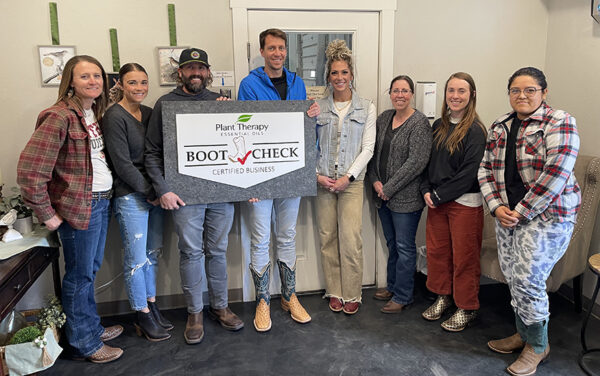
IBR: Being entrepreneurial-minded, do you still keep your eyes open for other opportunities?
CJ: I have to. The only reason I’ve stuck with Plant Therapy so long is because I need to. We have team members. I also still enjoy it. But I’m always thinking of something else or am a little distracted that way. We do have a sister company to Plant Therapy that we built over the last five and a half years, and that’s a vitamin manufacturing business. It was originally based in Star. We moved it to [Twin Falls]. And then I’ve got some other investments and other businesses that I’m involved in as well. All of that together kind of keeps me busy.
IBR: What are some of the challenges you’ve experienced during your career and what have they taught you?
CJ: We are direct to direct-to-consumer ecommerce brand, selling packaged products. I didn’t know anything about manufacturing. I didn’t know anything about selling products online. I didn’t know anything about creative work, design, photography, these kinds of things. Really, everything that we’ve done has just been figuring it out as we go. I think the challenge is lack of previous experience. But that’s also the benefit because I didn’t have any experience to say this won’t work or this might work. We just tried everything, and if it feels like this might work, let’s try it and see what happens. Had I known what I know now, maybe I wouldn’t have done it and been successful because there’s too many reasons why it shouldn’t have worked. So, I think with all of those challenges what have I learned? Just try things and see what works. Just because it didn’t work for somebody else doesn’t mean it won’t work for you and vice versa. Just because it did work for somebody else doesn’t mean it will also work for you.
IBR: When you encounter a roadblock on the path to reaching your goals, how do you circumvent it?
CJ: I think it depends on the roadblock and it’s really just like everything else: just figuring it out. Sometimes the roadblock is a symptom of something else, and figuring out ― is this a symptom, or is this actually the problem ― And then try to get to the root problem and then work on figuring that out.
Whether it’s a people problem, maybe it’s somebody else that needs to do it, or a time constraint, or some kind of physical limitation. We’re constantly encountering roadblocks. I think that’s what all business is. It’s like find whatever your roadblock is, fix that, something else will immediately pop up as the [new] roadblock. So, fix that. And it’s continuing to do that and continuing to iterate on those changes. That’s the only way to see progress. I guess it just depends on the challenge and then trying to figure out how to solve it.
IBR: Talk about your most recent accomplishments, the significance of those accomplishments, and how you got there.
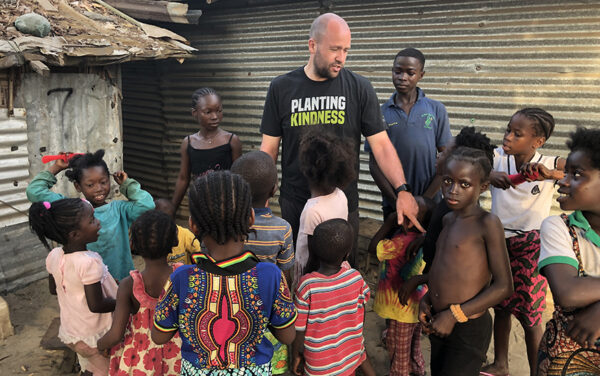
CJ: We’ll turn 15 this year. I think that, in itself, is a pretty big accomplishment. A lot of businesses don’t survive the first few years, let alone we’ve gone through a lot of industry changes over the last 15 years. We started strictly on Amazon, and then built our dotcom and then opened up some retail stores and that kind of thing. I think surviving 15 years and thriving is a big accomplishment, and our goal has always been to positively impact as many lives as possible, and we do that through a lot of ways, but one of those is through our charitable giving. And in the last year, we’ve just surpassed the $6 million mark for giving back since we started the business. That’s another big accomplishment on the business front that I’m pretty proud of.
IBR: How would you define your leadership style?
CJ: It’s almost a pull leadership style instead of a push. I’m not actively pushing things. I try to hire the best people for the role and then help them remove roadblocks in that role. So much of it is them needing to ask me if they need something. Then they need to come to me and ask for it. So that’s why I say it’s like a pull thing. Instead of me pushing everything, they should be pulling. But they need to do their job because I’m going to assume they know how to do their job or their position or their role, their responsibility, better than I do. That’s the reason why we hired them to do that. I think my leadership style is very hands off and to trust people to do their jobs.
IBR: Do you mentor others? Or have you had mentors?
CJ: I have been mentored. I do have some direct mentors. I have a business partner that has been wildly successful as an entrepreneur, and I get to be mentored by him. Then I have some other mentors on the personal side and on the professional side, as well as I’m an avid reader and consumer of lots of business books and business strategy books and that kind of thing. I feel like I have these authors that have written several books that I like, and I feel like they are kind of a mentor, even though they don’t know they’re mentoring me. I’m gaining insight and knowledge and getting better by listening to them and putting some of those things into practice. It’s that same trial and error; read something in a book, and oftentimes there’s conflicting information, but it’s OK. What feels right? Does this feel like it could make us better? If so, then let’s try it, and if it doesn’t work, that’s OK too.
IBR: How do you plan each day to be successful?
CJ: I adhere to my calendar very well. If anybody on my team wants to chat or something like that, everybody has access to my calendar, and they can put themselves on it anytime that I have an open slot. I think that my most important responsibility is helping the people on my team be successful in their roles. And a lot of that is just figuring out what those roadblocks are and helping with that. I think that’s how I plan my day. It’s part of that pull relationship; what do the people on my team need? And I allow them time and access to help.

IBR: What will you accomplish this year?
CJ: I think when we make changes in the business, sometimes you can see that immediately, and then other times it takes months, or potentially years, to see some of those changes come to fruition. For 2026, we have some goals, obviously, and we have metrics that we’re trying to follow and meet, but I don’t have any huge initiatives that we’re trying to pull off. What we’ve done is some big initiatives over the past year, and I think it’s just continually refining those and trying to see the fruits of our labors from the past couple of years and making changes. I don’t really have a good answer for “what are we going to accomplish this year?” I hope some of it is settling into who we are as Plant Therapy and just trying to continually get a little bit better without something huge on the horizon.
IBR: If you had to retire tomorrow, how would you describe the entirety of your career, and what would you do in retirement?
CJ: You know, I actually tried my hand at retirement last summer. A little bit. I had a CEO at Plant Therapy. I had a CEO at these other two businesses that I’m involved with, and I decided to step back a little bit and take a little bit more time off. And I didn’t enjoy it at all. I wanted to garden, spend more time outside, take care of my physical health a little bit better. I just found that I kind of thrive in chaos, and I need problems to solve, to feel satisfied in my life. What does retirement look like? I’m probably living it. It’s all day in the office, but I don’t have to be here for it to run on a day-to-day basis. To me, I guess that’s probably retirement. I don’t know if there will be true retirement, but my wife, really wants to spend part of our year in Hawaii every year. That’s her retirement goal. I suppose at some point we’ll probably end up doing that.



 Loading ...