Sign In
Upcoming Event
 Free Newsletter

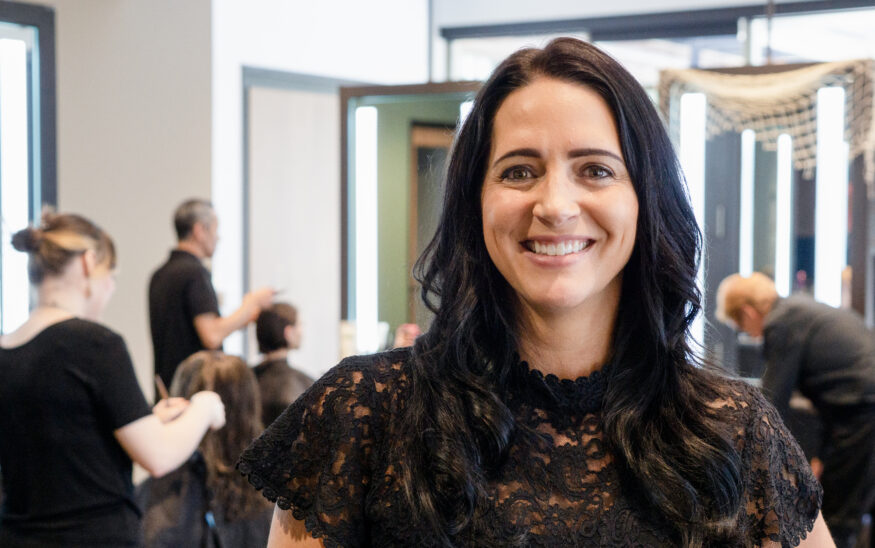
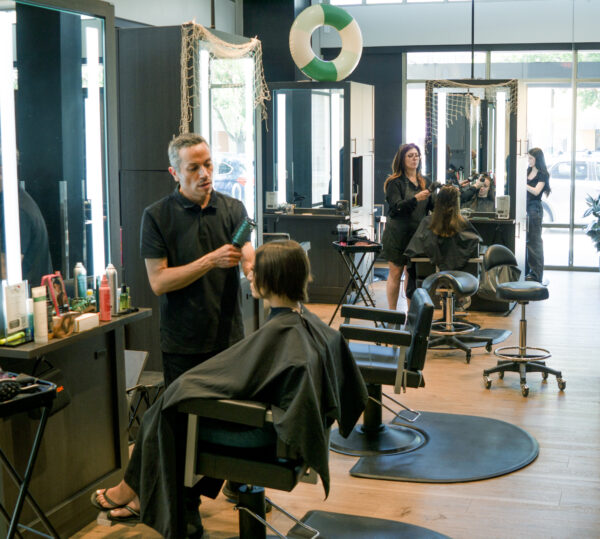
Shelby Bills, owner of Graeber & Company in downtown Boise, began working at the salon at the age of 19, learning as much as she could about the business. (PHOTO: MARC LUTZ, IBR)
The IBR Interviews of Highly Effective People: Shelby Bills
Marc Lutz//July 6, 2026//


At 19 years old, Shelby Bills joined Graeber & Company, the salon founded by Bill and Jean Graeber in 1965, working at the front desk. She fell in love with the work, being the first and last point of contact for clients. The ability to start changing someone’s mood for the better when they walked in had her hooked.
At a Glance:
- Shelby Bills began working at Graeber & Company at 19
- Bills bought out all partners by 2021 to become sole owner
- Graeber & Company relocated to a remodeled space in Boise
Bills was attending Boise State University at the time, pursuing a degree in marketing. The work at the salon gave her insight into scheduling and matching the client with the right stylist. It was the first lesson of many that she would learn throughout her leadership career.
After two years with the business, she left to work for Aveda as a sales rep for all of Idaho. From the start, she was learning how to coach, how to handle objections, and how to guide stylists who own salons to grow the business.
Even though she’s never been a stylist herself, she has learned all the aspects that will help a salon run successfully while allowing cosmetologists to stay in the creative zone. Because of that, when Graeber’s then-co-owner Carolyn Shelley asked her to come back to work, she negotiated for more pay and more control.
In one year after returning, Bills took the salon from $200,000 per year in business to $500,000.
Today, she owns Graeber & Company, having led the 61-year-old company through a move two years ago into a space that was bought and remodeled specifically for the business.
Bills, a mom of two teenagers, is just as active in the community as she is in business. She was born and raised in Idaho and comes from a family of entrepreneurs who know what it takes to succeed. Part of that formula, she said, is “faceplanting forward,” or learning from failures.
The following interview is edited for length and clarity.
Idaho Business Review: What inspired you to pursue the career you are in?
Shelby Bills: I wanted to become a partner at Graeber, so that’s where it all started. We started the negotiation process when I was 23 years old, and it took about two years to finalize the partner buyout. I was supposed to buy out the silent partner, and then two days before I was going to buy him out, my boss, Carolyn, she was the managing partner, and she was like, “I’m ready to retire.” I ended up buying her out, and she ran everything. She was going to get married, and she was going to come back to the salon and teach me the inside operations and the bills and all of that. She went on her honeymoon and she ended up having to have open-heart surgery and passed away at 62 years old.
Here I am, 25, with a 2-year-old and with a toddler, trying to figure out how to run a business that I only ran part of. I quickly realized that I could take on all of it, and I had to fail fast and hard. The people that were on my team back then weren’t happy. They were in their 50s, they were not happy about it, so we had a lot of them exit at that time. It was also 2009. I bought the business smack in the middle of a recession with the loss of its leader and everyone leaving all at the same time, so I learned really quick what it took to run a company. Then along the way, I bought out each one of the partners, because there were four of them, and then finally bought out the last partner in 2021. (Editor’s note: Bills bought out Joe Wheat and Robert Vasquez in 2015. Odell England, who still works at Graeber as the master stylist, was bought out in 2021.)
IBR: What are some of the challenges you’ve experienced during your career and what have they taught you?
SB: Early on, I got a lot of pushback because I wasn’t a hairdresser owning a hair salon. People back then, people were like, “Oh my gosh, how could you run a salon, when you’ve never done hair?’ Running a business is completely different than doing the service. I think learning right away that that I needed to know so much about business, having people challenge me, having them not believe in me, having your team not believe in you was really, really hard. Being able to come through that, buying a business in the middle of a recession, that was crazy.
I’ve been through economic downturns, pandemics, partner buyouts, buildouts, legal battles. Our last landlord gave me an ultimatum that if I didn’t sign a 10-year lease, then they were putting my space on the market, and that’s why I actually moved. I also think if I wouldn’t have had that, would I have made the move? Maybe not.
I think what I’ve learned along the process is that it’s up to me how I react and respond. My reaction is going to determine the outcome, and if I make it a bigger deal than what it is, then it’s going to be a really big deal. Learning how to like hold space for myself and know what’s true and what’s real and what’s not. Then just staying curious. I ask a lot of questions. I have coaches, I’m in conferences, I’m out in the industry. I ask why things happen, why they are the way they are.
IBR: When you encounter a roadblock on the path to reaching your goals, how do you navigate it?
SB: I think early in my career it was a white-knuckle [approach]. I pushed through probably the first 10 years of my career like, “This is going to happen because I’m going to make it happen,” and pretty much I always tell people I’ve been a rebel without a cause my whole life. When someone tells me I can’t do something or I shouldn’t do something, I’m usually like, “OK, I’m going to prove it to you, watch me.” So there was a lot of resistance the first 10 years.
I think the past 10 years of my career has been really stepping back to see to see the whole picture, and what is possible, and is this a roadblock? Is it a “no” or is it a “not right now?” Is it look at all the other opportunities? I also am a best-case, worst-case scenario person, so I love to think about if I can make this happen, what’s the best case? And if this were to happen, what’s the worst case? And if I can handle the worst case, then I can navigate it, but it has to work for my business, my team and our clients. Those are the lenses that I look through.
IBR: Talk about a time when you felt less than highly effective and what you did to overcome that feeling.
SB: The most recent time was during this buildout … because I’ve bought homes, I’ve been a tenant, but I had never demoed anything and built it from almost the ground up. I didn’t know what I didn’t know in the beginning, so I was really looking for the professionals to guide me. Sometimes that isn’t necessarily the best-case scenario either, when you don’t know what you’re talking about. I did not feel effective in that role in the beginning of the buildout, and I did not feel effective in my business because I was being pulled. So, delegating in my business and promoting my manager (Sydney Osborne) to become our general manager ― she took over all the day-to-day operations two years ago when I was doing the buildout ― and really like trusting that, and that she had been with me for several years already doing that role. Letting go of that and trusting her and trusting myself, knowing that I had done a really good job training her, and she was going to do a really great job with the team.
IBR: Talk about your most recent accomplishments, the significance of those accomplishments, and how you got there.
SB: We were in that old location longer than I had been around.. It’s a big deal to move and to move your clients and to move your team. But I didn’t just make a move, I did an entire rebrand and really rebuilt the business from the inside out ― our culture, everything client facing is new and different, all of our logos, website, everything. I was doing all of that at the same time as I was doing this buildout, because I wanted to make sure that we were coming into the next 60 years as a company that was modern, updated, and the vision had to be bigger than where we were currently. Taking all of that on, I’m so proud. I’m proud of the team that I have and our culture. They care so much about people, they care about this space, they care about our community even more than we ever have before. It wasn’t just about the move, it was about everything that it meant, and it was about my leadership: How was I going to develop even more leaders that could handle the capacity, because we have a bigger space, we have more chairs, we’re going to have more team members. We could have probably up to 45 team members. I can’t run the same kind of business that I ran before, so I’ve gotten to get better. My leadership team has gotten to get better and stronger, and it’s been really fun.
IBR: How would you define your leadership style?
SB: I want to say servant-leadership, but it’s servant-leadership with like high accountability and standards. For me, it is the level of care that I can give to my team and to our clients, because in my mind, I have two sets of clients. I have my team that are also my clients, but we have our guests that are also our clients. The level of care that I can deliver to all of the humans that come into our space is really big for me. I want to make sure that I’m holding us to a high standard, that we are delivering on quality care. We have a legacy to uphold, too. I think about all of those things, and then I also think about my responsibility as a leader is to create more leaders. With that comes servant-leadership, teaching more leaders, helping develop more leaders, but also high standard of leadership.
IBR: You talked about accountability. Is that accountability for yourself and keeping others accountable?
SB: We provide jobs for 35 families in our community, and we touch thousands of guests every single year. It starts with me and my responsibility to what I have said that I’m going to do, the promises that I’ve made, the commitments that we’ve made. Then I really think that it trickles through to my leadership team. Then my leadership team, and how they operate, and the level of care that they have. All the way down to our guests in our community, so it definitely starts with the leader, for sure.
IBR: One of the things that I’ve heard from a lot of the people that I’ve interviewed is when it comes to leadership, their success, they always say, comes down to the people that they choose.
SB: Yes. Oh, my gosh, yes. Early on in my career, I would choose really great hairdressers because I’m a non-hairdresser. I wasn’t looking for culture fit. I didn’t know about that yet in my leadership journey, where now we hire for a culture fit, for our core values. Integrity is our number one core value, so do what you say you’re going to do, even when no one’s watching. That’s the second part that people forget: Not just what you signed up to do when we’re watching, but when no one’s here, when you look over your shoulder, are you going to do the right thing? Like, passion, community, giving back to our community. All the people I’m hiring, are they in alignment with those core values? If they’re younger, they might not know those yet, but do they show me ways, and have they shown ways that they’re in alignment with those core values before we even talk about their technical skill? If their technical skill isn’t where it needs to be, we have an entire training program that I developed, an advanced training program that puts them through the technical skill development. And then we also do personal professional development coaching programs.
IBR: Do you mentor others? If so, what do you look for in a mentee?
SB: I just co-authored a book called “Prove Them Wrong,” with 11 mentors in the High Performance Academy. That is a coaching program for hundreds of salon owners and hairstylists across the U.S. and in Canada. I was in that program for six years, I was a mentor for two and a half [and have] been mentoring other salon owners and high-performing stylists, hundreds of them, which has been amazing. Here in our own community, I’m mentoring my leadership team when we’re going to industry events. I haven’t developed necessarily a one-on-one mentorship program, that’s probably in the future, when I have a little more time. I love to help other people, and if they can learn from my mistakes, I call them my “faceplants.” “Faceplanting forward,” if they can learn from that and not have to do that themselves, and if they could reduce the time of learning, that is what I want to help with.
IBR: How do you plan each day to be successful?
SB: A lot of people measure success in, “Did I reach my goal at the end of the day?” Mine’s a little bit different. Did I positively impact the people? Because if I’m not doing that, then what am I doing? Did I make a positive impact ― and that could be for a team member, that could be my leadership team, that could be some of the partners I work with, the brand partners ― but did I make a positive impact? I also only really pick like two to three things a day that I’m focused on that can move the needle.
IBR: What will you accomplish this year?
SB: I’m the bottleneck in my business right now, like it’s not going to grow unless I grow, which means growing my leadership team underneath me. That’s really probably underneath Sydney. And how do I build a leadership team for her, so that she can start to expand? … Right now we’re building out all of our departments and our organization chart and our SOPs and job descriptions. I never had all of that organized, so we’re developing all of that now.
I want [our guests] to have a five-star “wow” experience every time they come in here, so we do a lot more technical education. But they also get an aroma journey, and they can do a hair, skin and scalp quiz, and they get a jade eye mask and paraffin dips with color. So, we’re really trying to add the extra guest experience that they may never get in another salon. We’re looking at both of those: Optimizing the business and optimizing the guest experience.
IBR: If you had to retire tomorrow, how would you describe the entirety of your career, and what would you do in retirement?
SB: I used to ride horses, and I was a radio queen and barrel racer, so I think I would probably ride horses again.
I want to mentor, I want to coach. I’ll probably write another book. I really think it’s going to come down to leadership and culture in business, but I want to create a digital resource center for people to go through a digital training, and then they can have downloads and guides that really help them implement their team, because I do think that’s missing.
I want to travel the world. That’s really big for me. I’ve lived in Idaho my whole life, and as a young mom and a business owner, I get to travel a little bit, but not anywhere for an extensive amount of time. I would like to live somewhere else for three or four months, and actually live in their community, and not just be a tourist.


 Loading ...