Sign In
Upcoming Event
 Free Newsletter

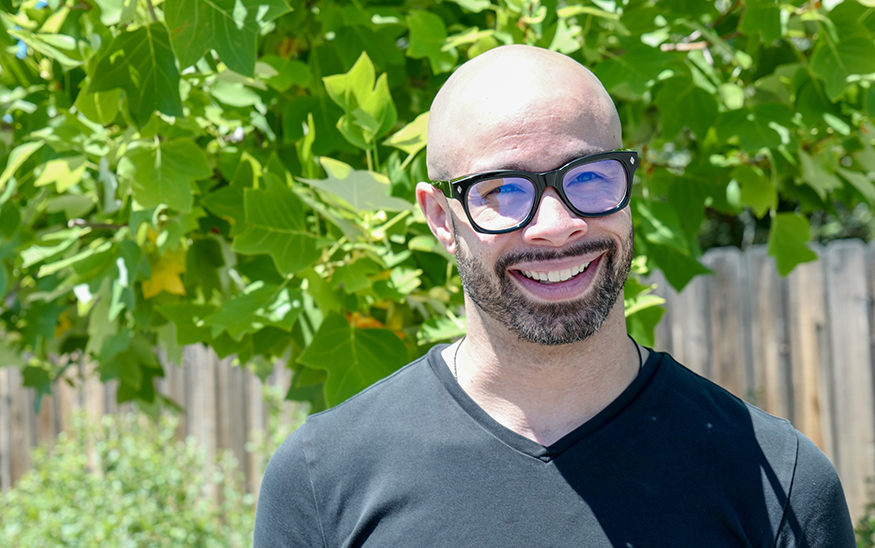
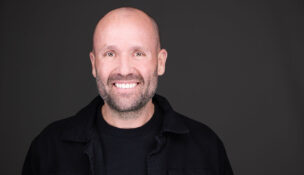
Noah Riley is the founder and owner of AI Genius Automations. The company is planning to bring a new artificial intelligence product and online lessons to market in the near future. (PHOTO: MARC LUTZ, IBR)
The IBR Interviews of Highly Effective People: Noah Riley
Marc Lutz//July 20, 2026//


Before he was immersed in the world of artificial intelligence, Noah Riley was a graphic designer. But his interests were always more aligned with computer programming and the language technology spoke to him.
At a Glance:
- Noah Riley pivoted from graphic design to AI around 2022
- Founded AI Genius Automations focused on saving time with AI
- Overcame early career challenges by refining value proposition
A self-described “nerd,” Riley pivoted from graphic design to working in AI around 2022 when ChatGPT 3.5 was released. He knew there was a career path to take with the emerging technology. However, he wasn’t sure what that path looked like or how he would get there.
For him, computers hold a kind of promise of infinite possibilities. “It’s just this feeling of being able to extend infinitely in any direction. Like it’s an infinite playground,” he said. “I can do anything in a computer. It just feel huge, endless.”
Riley found his confidence to chase possibilities when he was young. A jiu-jitsu instructor helped him unlock his confidence, showing him that he was capable of whatever he wanted to achieve. That confidence has played a huge role in his fledgling company AI Genius Automations, which continues to grow since its founding.
The following interview has been edited for length and clarity.
Idaho Business Review: What inspired you to pursue the career you are in?
NR: I was a graphic designer at the time. My main motivation when I started learning AI was to understand its impact on my industry and my job, and how it was going to impact me. As I got deeper into it, I just thought it was amazing. There was so much to it. I had had the feeling early on that this was the wave of the future. This is going to be doing all kinds of incredible things, and it was kind of more in my wheelhouse to want to be doing things that were more programming and process engineering, which is my background more so than graphic design. It was a hard pivot because there wasn’t [an AI consulting] job that existed. That wasn’t a thing when I started. But also, it was an easy pivot because I’m passionate about it.
IBR: What are some of the challenges you’ve experienced during your career and what have they taught you?
 NR: I would say the most difficult thing that I’ve encountered so far is learning how to communicate the human side of the technology that I work with.
It’s kind of a weird thing right now because AI is so huge, and it spans across so many different domains of our lives and our thoughts. Whether it be a financial business, it could be just process, sometimes it’s personal, like people use it for like therapy or for art. Then there’s the political side, the existential side, the social side. It’s everywhere all at once. So, my motivation in using it is really mostly about saving time, like creating time. I mean, there’s more to it than that, like what it’s capable of doing.
But to me, there’s not any disconnect between the technology that we use, for instance, and the human experience that we’re having as sentient beings. But it’s just shrouded with all this extra stuff, and for instance, if I go into a company or I’m doing either a workshop or we’re going build a piece of software or something, there are always people who have this disposition of resisting or saying flat out AI is bad or AI is dumb or AI is this or AI is that, or fear that it’s going to replace them. and I’m always thinking to myself this: If we just create more time, what’s more valuable than time? You can do anything you want with it.
I have found consistently that the people who seem to get the most out of [artificial intelligence] are the people who are curious and open, and the people who don’t really get a lot out of it are very resistant and enclosed. It’s hard because a lot of that is based on just nothing. They see YouTube videos or news stories or things like that, and I’m like, “Man, you have to remove all of the garbage, and when you see for the first time that you can use this simple tool to do something that used to take you four hours, and now it takes you five minutes, that’s four hours of your life.”
That could be time with your kids. That could be time pursuing a dream. That could be time getting sleep if you’re burnt out. What’s more human than that? So, instead of anthropomorphizing it and talking about it like it’s Terminator and it’s alive, when you get your time back, that’s the thing. Unless you’re not going to die one day, which I assume all of us are, then our time’s really valuable, and I wish people could feel that more.
IBR: When you encounter a roadblock on the path to reaching your goals, how do you circumvent it?
 NR: I don’t. In general, I don’t think that there’s anything truly impossible, and so to me, it’s not so much about “here’s a roadblock and now I have to reroute.” If I want to get the thing that’s on the other side, with enough time and curiosity, flexibility, adaptability, there’s no way to fail. I would say persistence has got to be the thing. I don’t think you can do it without curiosity. Personally, I have to let go of what I think might work. There’s got to be some sense of openness towards what’s possible. But with that openness and persistence, I don’t know what kind of problems couldn’t be solved over enough time.
IBR: Talk about a time when you felt less than highly effective and what you did to overcome that feeling.
NR: It was kind of an interesting road because right in the beginning there was a lot of hype behind AI as it first started coming onto the scene, and when GPT dropped, and especially GPT 4, it really changed. People were like, “Aah, Skynet!” It just felt so powerful, so crazy, and I was kind of in the middle of this hype cyclone, and everywhere I went and everything I did and everywhere I spoke, people [would say,] “You should come to my thing, you should speak at my whatever.” I was very, very visible and making a lot of what felt like progress, but really when it came down to it, no one was paying me.
I spent almost six months without making a dime and I was broke. That would definitely be a time that I felt less than effective, and had to take a step back and ask myself some really hard questions about what I was doing, whether or not it had any value, and whether or not I could make a living doing it.
I think only that kind of desperation would have made me consider doing something like this. I called every single person that I had talked to, had met, and told them about what I did and asked them why they hadn’t paid me to consult with them. All of them. Which was really awkward because some of them were like, “Oh, I didn’t even know that you were trying to get me to pay you.” [I said,] “I wasn’t. I’m wondering why and if you haven’t, would you? And if you wouldn’t, why not?” That’s when I really started to lock in on the value of what I was doing and how to make a living doing it because there was a lot of overlap between the answers, and I was blind to it. I saw the value, but they couldn’t, and it really had to do with how I was talking about it, and what it meant to them.
I redid everything. I redid the website. I redid all the branding. I learned who I should be talking to, like who are my actual target clients, where these people were, how to restructure the offers. It changed everything, and it was almost instant.
IBR: Talk about your most recent accomplishments, the significance of those accomplishments, and how you got there.
NR: I’ve been working on building this system for about two years. It’s a combination of different types of AI technology, but essentially what the goal was, I wanted to spend less time in front of my computer, and I work long hours and I do a lot of dev work. My computer at home is very powerful … this is the place where I’m most optimal. When I step away from my computer, I become much less optimal. I can’t work very fast from my devices. Some things I can’t do at all. Recently, I finished and have been testing and using successfully this system that, essentially, allows me to do almost anything on my computer from anywhere from any of my devices and much of it through just prompting. It has to be pretty sophisticated across all the things. It has to be secure since I’m accessing it remotely.
This is only recent, like in the last month and a half, but it’s working. I had I had an instance last week, which was really striking. It was one of the first times when I was like, “Oh wow! It’s working.”
I want to be more mobile. I want to travel. I’ve been working on this for a long time, and it’s been a long time coming. I always knew that I wanted to be mobile, and I and I knew that it was possible. … I knew all the pieces were there. I just didn’t know how to put them together, and so I’ve been working and working and working towards it, and it’s finally starting to work. That thing that I built will probably be the capstone of this company. I’m going to eventually release it as a commercial product.
IBR: How would you define your leadership style?
 NR: It’s similar to the core philosophy of [AI Genius Automations], which is empowerment.
I really only work with people who are self-motivated. I don’t want to push, push, push. I believe that most people are capable of more than they realize they are, and sometimes, when people feel encouraged and they’re in a good state of mind and they have all of the tools necessary to experiment and try things and be effective, then people just do amazing things. So, my leadership style is really about trying to understand how best I can empower them to be their best selves. I want them to expand out in any in every direction that they can.
IBR: Have you had any mentors?
NR: I feel like I’ve had a lot of mentors. Maybe not in the official sense, but I can think of a lot of people along the way who played such important parts, or sometimes it was an ongoing presence, and sometimes it was just a sentence that hit me so hard in a time that I needed it. I would say probably my earliest and only person I could think of as like a mentor, really like truly a mentor, was my martial arts teacher when I was a kid. I think he taught me more about myself than anyone ever has. It was from 11 to 15. But he was the person who showed me that that I could do anything. I was not a very confident kid; very, very, very poor with words, to the point of being almost nonverbal, almost until I was almost 15. Just skinny, like really bad at like couldn’t make friends. He really instilled in me [that I] can do anything.
IBR: How do you plan each day to be successful?
NR: Flow is everything to me. … When I’m thinking about like how I’m going to actually be in a day, everything is about staying in alpha [brainwaves]. Sometimes it’s about my music. Sometimes it’s about understanding my energy levels and what I eat, what kinds of things I allow myself to think about or focus on or watch or look at. To the point of, if I get a text message, and this is something that would pull me into a different state of mind, I just I won’t answer it for a certain time. Having designated times to address things that I feel will pull me out, and maybe I’ll do that when I go outside, and then I can change my environment, get into a spot where there’s like more openness to ingest information that may not have something to do with what I’m doing.
IBR: If you had to retire tomorrow, how would you describe the entirety of your career, and what would you do in retirement?
NR: It’s just been crazy in so many ways. I would never give it back. It’s been so hard. It’s so rewarding. I’m so glad I took the risk. What I would do tomorrow if I retired, I would get on a plane. I would eat crazy food. I would learn a random language. I would climb a mountain. I would do jiu-jitsu all over the world. I would build. I would build stuff just because. I would build things for people who really need it or want it. Create something impossible. I would paint. I would make music. I would do a million things. I’m just a kid. I would just go play.


 Loading ...