Sign In
Upcoming Event
 Free Newsletter

Southeast Idaho farmers watching water ‘in the bank’
By Celia Klassen
The Power County Press staff writer//February 4, 2026//
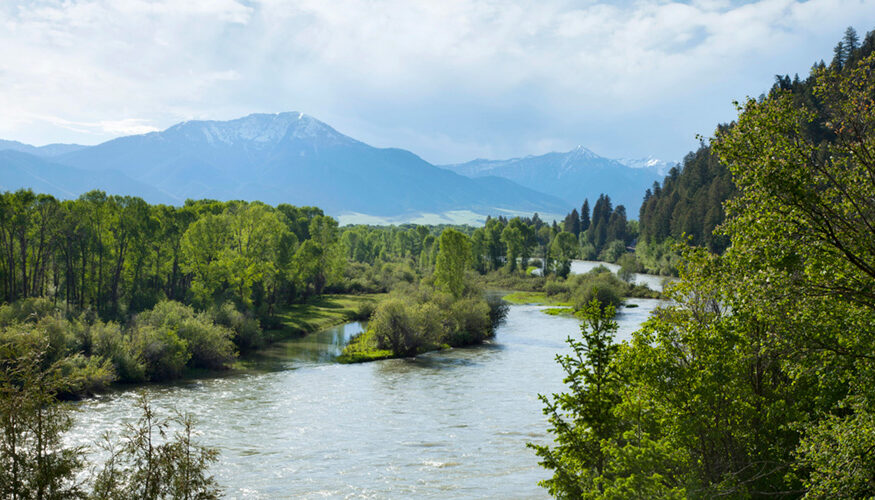
(PHOTO: DEPOSITPHOTOS.COM)
Southeast Idaho farmers watching water ‘in the bank’
By Celia Klassen
The Power County Press staff writer//February 4, 2026//


Southeast Idaho farmers are watching two things at once right now: How much water is already “in the bank” and whether the mountains will have anymore to give in the spring.
At a Glance:
- American Falls Reservoir is about 57% full as of late January
- Upper Snake reservoir system remains well below average at 47%
- Snowpack is near normal above American Falls but weaker near Palisades
- Spring runoff will determine whether reservoirs fully recharge
As of Wednesday, Jan. 28, the Bureau of Reclamation‘s Hydromet “teacup” shows American Falls Reservoir at about 960,191 acre-feet out of 1.67 million acre-feet. This means the reservoir is only 57% full. That is a great rebound from the ultra-low levels experienced late summer and fall, but is it enough?
Upstream, the broader upper Snake reservoir system (the seven major Reclamation reservoirs above Milner) was reported on Jan. 6 to be about 1.9 million acre-feet. While that sounds like a lot, that is only 47% full, and well below average for the time of year ― 570,000 acre-feet lower than this time last year.
The good news is that Water District 1 noted strong precipitation since Oct. 1 and above-average snow water equivalent in key headwater areas (including the Snake above Heise which was 129% at the time).
The caution flag is temperature. Unusually warm storms have pushed more moisture to fall as rain instead of snow, which can mean earlier runoff and less “slow release” mountain storage.
So, what’s the fill outlook for American Falls? Water District 1 says the reservoir’s 1921 storage right is in priority and expected to remain so through the winter, while complete fill depends on spring runoff. Probabilities favor a complete or near-complete fill because of that senior priority.
In plain terms: American Falls is positioned better than more junior accounts if runoff underperforms.
Meanwhile, low-water impacts have already been visible in this part of the Snake system, with agencies warning that low reservoir levels can degrade conditions until they improve.
Farmers of this area get their water from irrigation mostly, so the fact that we had a lot of steady rain that soaked deep into the soil doesn’t actually mean everything is “A-OK.” If the reservoir systems that fill the canals don’t get fed with water from the mountain snow melt, then the farmers could be in trouble.
Although the Aberdeen-Springfield Canal Company gets its irrigation water directly from the Snake River rather than a specific reservoir, the company does hold storage rights in several major reservoirs on the Upper Snake River system. So, water used for canal deliveries can be supported by stored water when the natural river flows aren’t sufficient. The two most significant reservoirs upstream are Jackson Lake which sits at 76% capacity, and Palisades which sits at 77%. That is significant considering that the drought of summer 2025 brought Palisades under 11% by late summer.
The region which drains towards the Palisades Reservoir shows a mixed, but generally below-normal snowpack. The basin index, which is a combined snow water equivalent percentage of median across multiple sites, is about 69% of normal. Some individual nearby sites like Base Camp and Cottonwood Creek are around or above the median but several are well below, especially at lower elevations and on south-facing slopes.
The upstream basin that contributes to the American Fall Reservoir is currently closer to normal than the Palisades watershed. The basin index for the American Falls area is about 95% of normal snow water equivalent. In short, the rain that has occurred was/is much needed. We could
The good news is that snowpack typically peaks in late March or early April, so current values still have room to improve.
This story was provided by The Power County Press.