Sign In
Upcoming Event
 Free Newsletter

Experts delve into Idaho’s economic development and where it’s headed
Steve Lombard//February 26, 2026//
Experts delve into Idaho’s economic development and where it’s headed
Steve Lombard//February 26, 2026//


The number of people moving into Idaho last year was 15.6% higher than those leaving the Gem State, according to a recent study conducted by United Van Lines and Atlas Van Lines.
At a Glance:
- Idaho saw a 15.6% higher influx of new residents than those leaving last year, according to United Van Lines and Atlas Van Lines.
- Clark Krause highlighted Boise Valley’s diverse industry appeal, from microchips to food processing like Chobani.
- Mel Jackson emphasized Blaine County’s workforce housing shortage and rising home prices as critical economic challenges.
The continual influx of new Idahoans means those who work to promote economic and workforce development statewide must strategically plan and partner to help ensure businesses, both new and existing, continue to grow, and to do so aided by a skilled labor force to keep them moving forward.
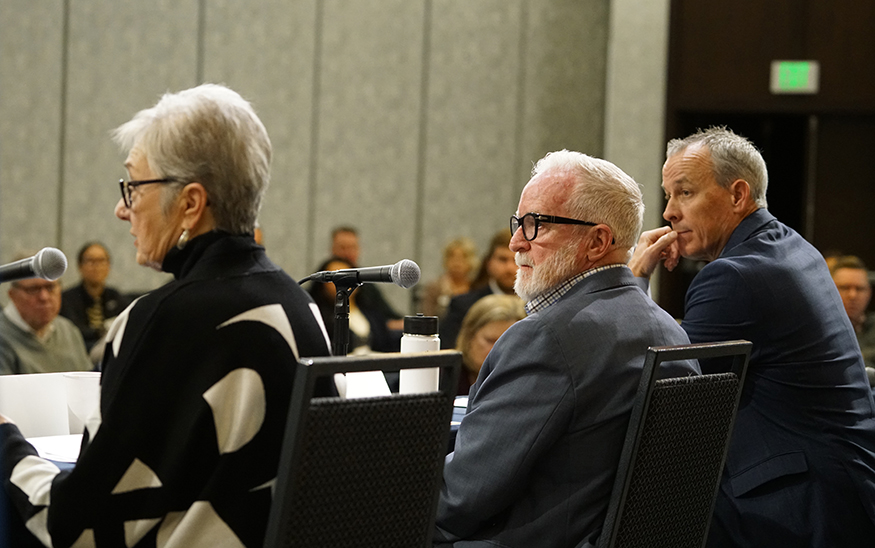
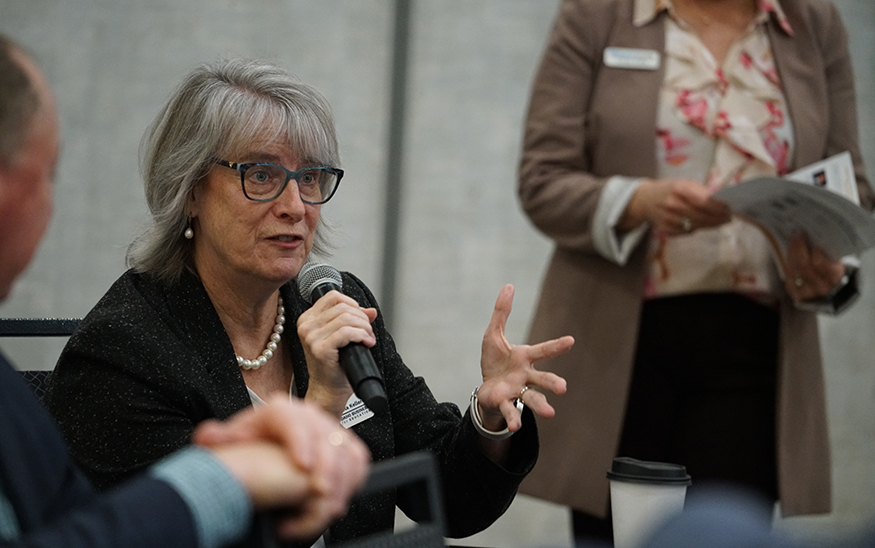
That was one of several key takeaways shared by four economic development experts who gathered from diverse areas statewide to share their thoughts on the state’s economic direction during a panel discussion, Fueling Idaho’s Future — Statewide Economic Development. The event was hosted by Idaho Business Review Feb. 12 at The Grove Hotel as part of its annual Breakfast Series.
“Of most of our competitors, Salt Lake City, Reno, Phoenix, we’re [Boise] the tiny one, said panelist Clark Krause, executive director of the Boise Valley Economic Partnership.
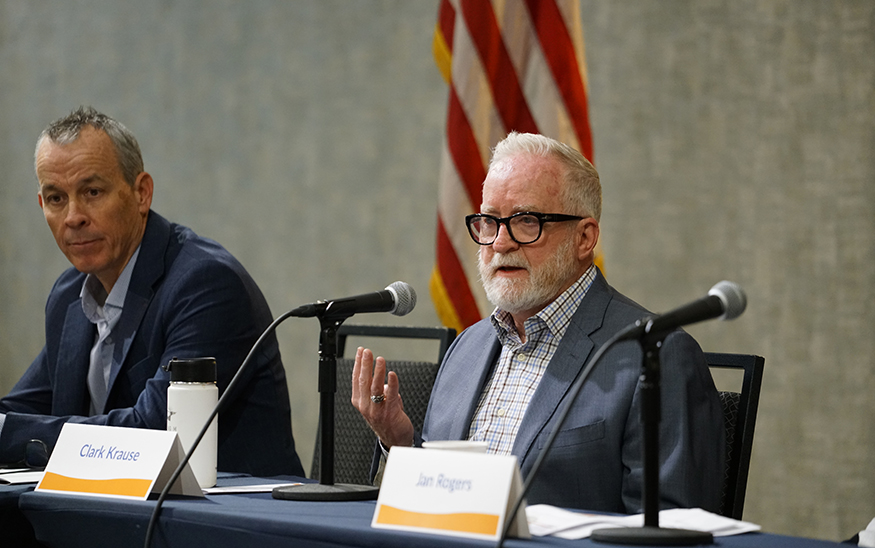
“So, if we are not working well together in this so-called state with a mid-sized city, then something has gone terribly wrong.”
For the better part of 27 years, Krause has worked to help match economic development with growth, having spent relevant time working under the umbrella of the sector in Utah, New Mexico and now Boise for the past 15 years.
Despite a state population hovering around two million, and Boise still not quite having eclipsed the 250,000 plateau, the bulk of the state’s residents still reside in the Treasure Valley, with an estimated 845,000 residents who call the area home.
“Across the whole country you’d be hard-pressed to find another metro of this size or any size that has that many headquarters established here,” he said. “Our history kind of represents our present and our future.”
Or as he likes to cheerfully say, “from microchips to potato chips and everything in between,” numerous outside industries, he strongly feels, are highly attracted to what Idaho and the Boise regional market have to offer.
“We tell clients coming to the Treasure Valley that it’s not about the potato, but what we did with the potato,” he said.
Such sentiment is what Krause believes encapsulates what Idaho has to offer thriving business ventures looking for a new place to land. “It’s about the milk and being able to attract a company like Chobani that can take advantage of the milk.”
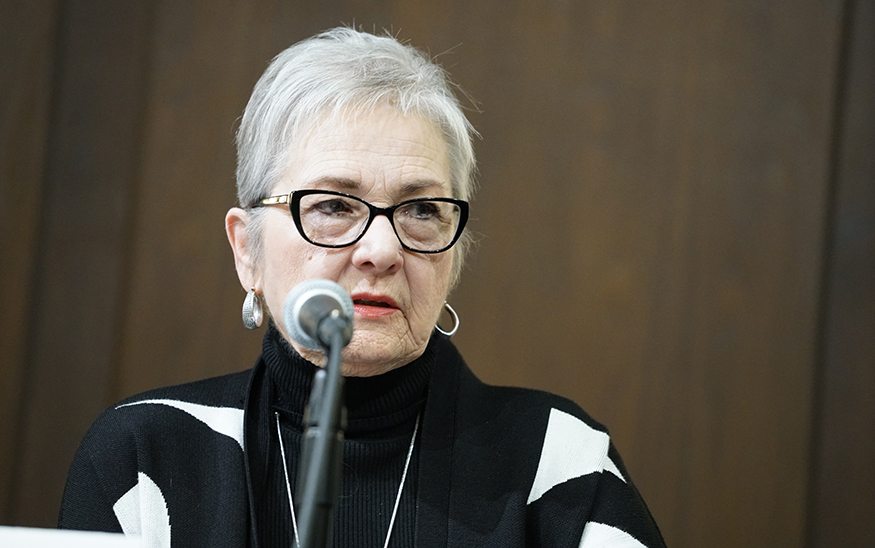
A concept Jan Rogers knows quite well. As executive director of the Southern Idaho Economic Development Organization in Twin Falls, a vital regional agency celebrating its 25th anniversary this year, she watched Chobani go from what she called “dirt to yogurt” in a mere 326 days after the prosperous food company landed in the Magic Valley.
“When milk was good and crops were not, it helped level out the economy, “Rogers said. “But because of the breadth and depth we have in the food industry, we also have the support industry to support it.”
While she describes the Magic Valley as “all things food” when it comes to growing, processing and researching, she acknowledged the strong need for development agencies to work in unison statewide, as well as with local city and county entities.
“We can’t do what we have been able to accomplish, not just in southern Idaho, but across the whole state if you are just trying to be just about you,” she said. “Everybody understands the client, the company, picks the best spot for themselves. So we’ve been able to work very well together.”
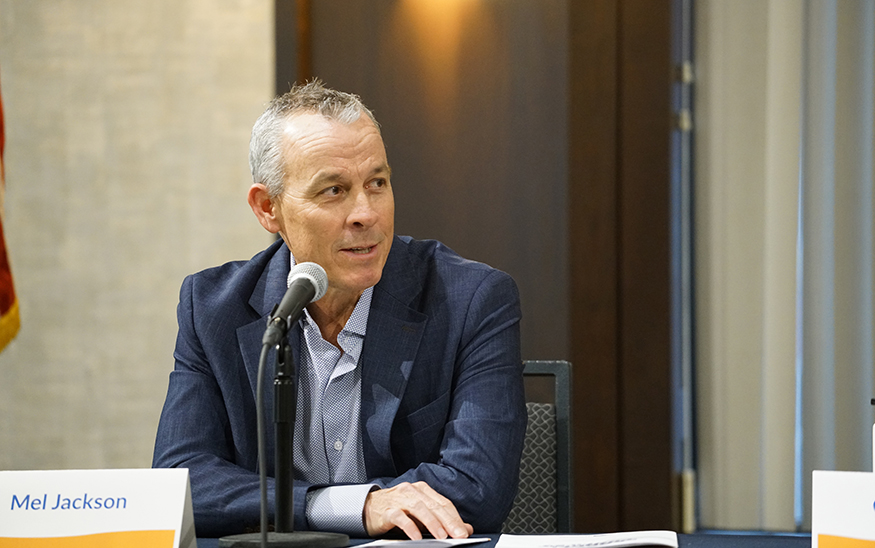
In Blaine County, famously known for its world class skiing access and the quaint, resort-style towns of Sun Valley and Ketchum, hospitality and construction trades make up the bulk of the region’s top industry leaders. As executive director of Sun Valley Economic Development (SVED), Mel Jackson spoke passionately about the need to fill the workforce gap and how providing housing for workers remain the area’s top priorities.
“We listen to the employers in the area and try to find out what their needs are and anticipate what those needs will be looking into the future,” Jackson said. “The Sun Valley Culinary Institute (SVCI) is a great example of a four- to five-year-old institution that came out of the need and desire to train future chefs and it has been a huge success.”
Even with the success of SVCI, workforce housing remains problematic, due in part to the lack of available space impacted by the region’s natural characteristics or geography.

“We’re constrained by the natural environment and it’s not possible to simply expand throughout all parts of the county,” Jackson said. “That is a widening and troublesome gap.”
Also troubling is the high cost of housing in the affluent resort area which compounds the issue. According to Jackson, the median home price in Blaine County checks in at $975,000, with a low of $400,000 in Carey to a high of $1.6 million in Ketchum.
A deeper dive into the county’s housing costs, what Jackson termed the “No.1 issue” and resident “bogeyman,” indicate a 74% increase in the area’s median housing price between 2018 and 2023, with wages only moving up 47% overall.
“The problem for us is that Ketchum is the economic engine of the north valley with about 34% of all jobs in the county despite having only 14% of the population,” he said. “Most shockingly, only 9% of the area workforce lives in Ketchum.”
For Jackson, thinking outside the box, educating the community and what he deemed “tradeoffs” all play a role in dealing with the workforce housing issue.
“Is a parcel best for parking or better to be put in housing?” he asked. “Tradeoffs are real, require an informed public and serve as a reminder to what our number one problem is.”
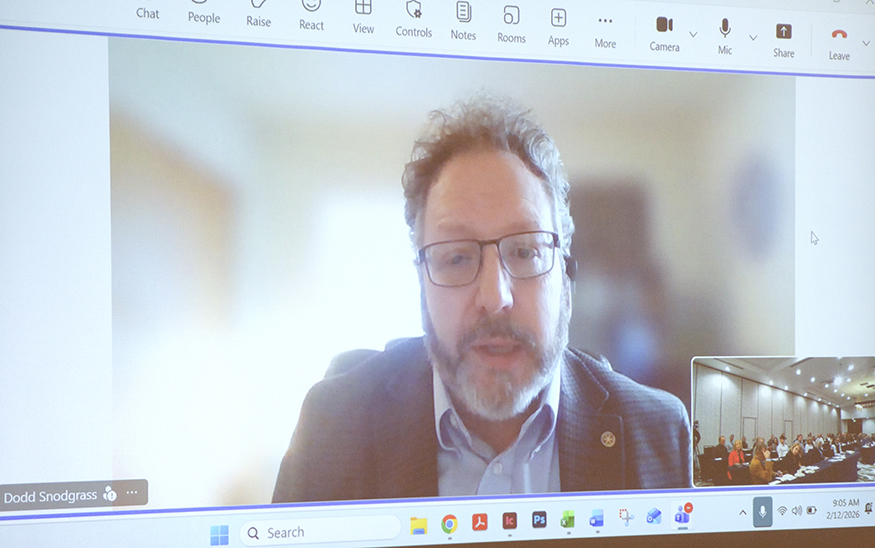
Geography is also an issue in Idaho’s northern region, as is developing and maintaining a viable future workforce. Both are hot topics for Dodd Snodgrass, executive director of the Clearwater Economic Development Association (CEDA).
“Geography is a challenge for us and sometimes people don’t know what they need until they need it,” Snodgrass said. “We try to focus more on the existing businesses and their abilities to expand.”
With a career in economics that spans four-plus decades, including stops at the Federal Reserve Bank of Kansas City, as well as having served as an economic analyst with Idaho Power, such expansion, he shared, depends on a skilled workforce and the “nexus” that exists between K-12 career technical education (CTE) and its role in economic development.
“CTE and workforce development is big in our area,” Snodgrass said. “Our demographics are getting older as we’re losing our young people who leave the region. We do focus a lot on workforce training programs.”
One such program providing a boost is the Idaho LAUNCH program, with area students utilizing the program’s funding mechanism to kickstart trade careers through the University of Idaho and North Idaho College.
“Across the board, we need more trades, training and programs for electricians and plumbers,” he said. “We need a pipeline for people to step in and do these jobs. It’s critically important for us.”
As it is for all others working to boost economic development statewide.
In the Magic Valley, Rogers considers LAUNCH a “gamechanger” for the array of industries that call the region home.
“We have the College of Southern Idaho, which we refer to as our ‘secret sauce’ to help us with any workforce issues,” she said.” We fully support LAUNCH as we continue to grow.”
To illustrate her point, Rogers highlighted the rapidly growing True West Beef, which came to Jerome about three years ago. After starting with roughly 230 workers, the outfit now employs well over 500 workers.
“As we grow our businesses, we grow our workforce,” she said. “For example, the college is now putting together a program for meat cutting with our new meat processor, True West.”
Collectively, the panelists expressed a strong desire for the state legislature to keep LAUNCH funded and off the chopping block as potential state education cuts loom.
“This program will make Idaho better for in perpetuity,” Krause said. “I think we are at a crossroads in the state, and I think we were all pleased when the governor emphasized how important education is and not just having a good K-12 system, but that our graduates will also have opportunities to do things.”
Citing a Brookings Institute report from a decade ago, Krause could not help but note the striking similarities between the state’s economic and workforce needs then and now.
“The report they gave then told us if things do not change, we will run out of a skilled workforce in this community and the state,” he said. “I knew that already because we were creating more jobs than population. It was true back then, and it is still true today.”
“We have to work together. That is something that has been delightful working in this industry for a while,” he said. “Going from being a secret to generosity.”





 Loading ...