Sign In
Upcoming Event
 Free Newsletter

After its buses went dark, Idaho Falls built leaner transportation program
Heide Brandes//August 5, 2026//
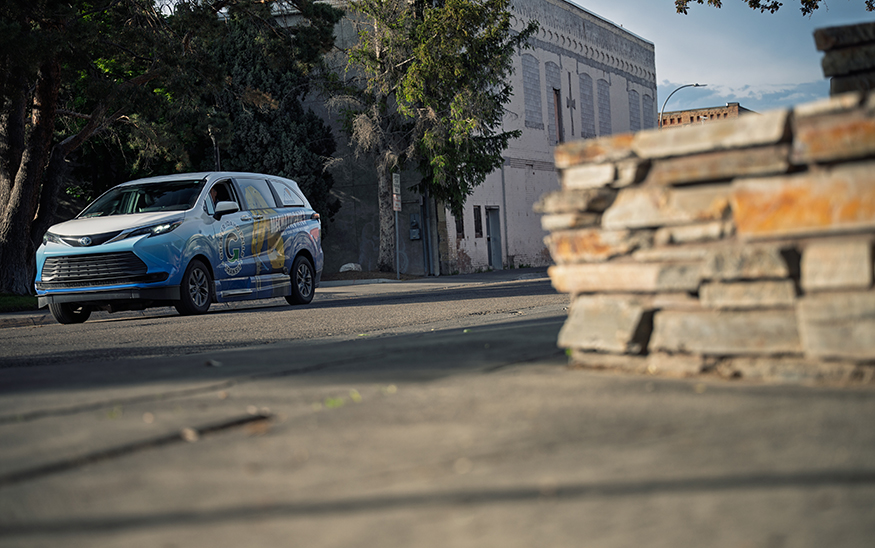
Greater Idaho Falls Transit has taken to the streets, literally, but offering an on-demand service, increasing passenger use. (PHOTO: GIFT)
After its buses went dark, Idaho Falls built leaner transportation program
Heide Brandes//August 5, 2026//


When the Targhee Regional Public Transportation Authority shut down in May 2019, Idaho Falls became a city without a single public transit vehicle on its streets. Seniors lost their rides to the pharmacy. Workers with disabilities lost their rides to jobs they still held. For three years, the gap simply stayed open.
At a Glance:
- Greater Idaho Falls Transit launched with $4.2 million federal grant
- GIFT provided 83,768 rides in 2025 with eight minivans
- Idaho Falls City Councilmember Michelle Ziel-Dingman led transit restructuring
“We will never know the true impact, but we know that people suffered as a result of the system shutting down,” said Kade Marquez, who oversees Greater Idaho Falls Transit for the city.
What Idaho Falls built to replace the failed bus system has become one of the state’s more closely watched experiments in public transportation. GIFT On-Demand, launched in June 2022 with a $4.2 million federal CARES Act grant administered through the Idaho Transportation Department, scrapped fixed routes entirely. Riders book door-to-door trips through an app or a phone line, and a small fleet of minivans threads them together across the city’s 33-square-mile footprint.
The results have outdone the old model by a wide margin. Marquez estimates TRPTA delivered 15,000 to 20,000 rides a year at its peak. In 2025, GIFT provided 83,768 rides to 101,237 total passengers and did so with eight vehicles averaging a pickup or drop-off roughly every two and a half minutes. About 62% of trips are shared rides, and the average wait last year ran about 22 minutes.
Building a unique program
The road back began with Idaho Falls City Councilmember Michelle Ziel-Dingman, appointed to the TRPTA board by former Mayor Rebecca Casper in January 2019. After questioning the agency’s operational data, watching operations collapse within months and inheriting the board chairmanship when nearly the entire board resigned, Ziel-Dingman led the entity through financial restructuring, and made sure former TRPTA employees received their owed pay. She then pursued a new system at the state and federal level.
Marquez said the mayor and council backed the effort completely, though the shutdown exposed something else.
“TRPTA’s operational shutdown also taught us that there is an unwarranted stigma against public transit in Idaho,” Marquez said. “But it’s a normal way of life and a huge economic driver in other parts of the country.”
Marquez came to the job in early 2022 from the oil and gas industry, where he had built and sold a business, and he ran the fledgling service like a startup. The economics start with the vehicles themselves.
A competitively bid minivan costs about $40,000, needs no commercial driver’s license to operate and can reach neighborhoods too narrow for a 40-foot bus, which he said costs as much as 10 minivans. Fares are tiered to manage demand, with seniors paying $2, standard on-demand rides costing $4, scheduled rides $6 and after-hours trips $10.
When rides launched at $1 and $3, demand swamped the system, and Marquez raised prices deliberately.
“We don’t ever want to go to the taxpayer and say we want you to pay more so people on public transit can pay less,” he said.
Who is riding?
The rider data fights the assumptions about who uses small-city transit. The largest group is 18- to 34-year-olds, including community college students and workers saving toward a first car, and seniors make up about 30% of roughly 10,000 monthly riders. According to Marquez, riders GIFT delivers to Walmart spend about $70 per trip and Costco riders average more than $200.
In downtown, the service has become part of a parking strategy. Marquez said GIFT kept about 12,000 personal vehicles out of the downtown core last year, and the agency is exploring a validation-style program with the Idaho Falls Downtown Development Corporation that would offer free rides to customers who spend money at downtown businesses.
“Idaho Falls is experiencing rapid growth, and with that comes increased demand for downtown parking. The solution isn’t singular; it’s layered, flexible and built around individual choice,” said Kerry Hammon, executive director of the IFDDC. “Public transportation partnerships are what is required in a growing, lively and thriving community.”
Partnerships are also how GIFT stretches its budget. Eastern Idaho Public Health contracts with the agency through opioid settlement dollars to guarantee rides to court-ordered counseling and recovery appointments, and Marquez said recidivism among participants has plummeted.
A local health clinic pays a retainer so its patients ride free, protecting appointment schedules for its 18 medical residents. Idaho National Laboratory‘s hundreds of postdoctoral researchers and interns, many arriving from major cities without cars or licenses, have become steady customers.
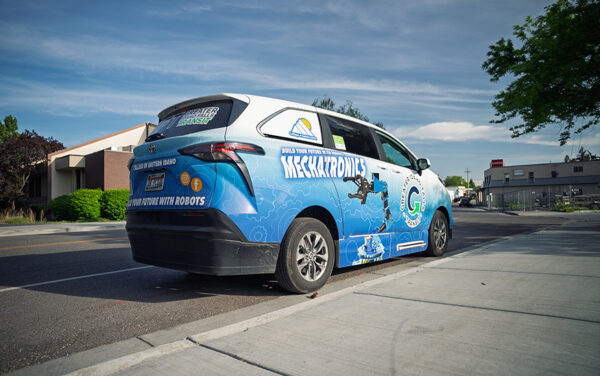
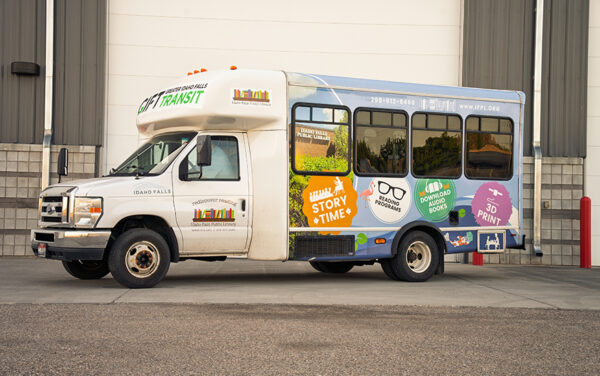
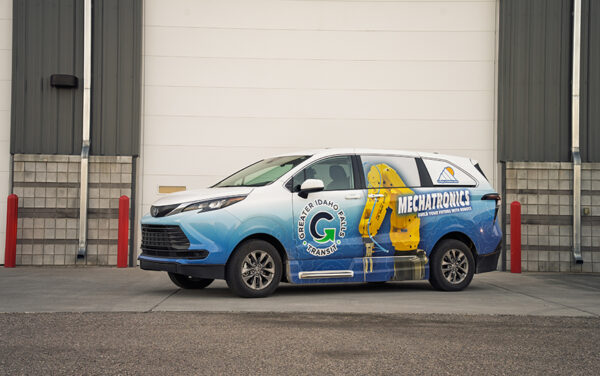
Hospitals and the public library pay to wrap GIFT vehicles in advertising, and a waiting list has formed for the mobile billboards.
The funding question looms anyway. The CARES money has essentially run out, and Idaho contributes no state dollars to transit operations.
“You can’t subtract from zero, so we already know how to run pretty lean,” he said, adding that penny-pinching during the pilot built a cash cushion and that the service now runs on a mix of local and federal funds. “If I could make about five more dollars per ride, I would be at that point where the local taxpayer would not be paying for our service.”
Neighboring Ammon and Bonneville County have asked about joining, a negotiation Marquez frames simply as paying a fair share. For him, the balance sheet was never the whole story. For him, the people who rely on the service are the driving force behind every decision.
“Having a brother that’s still a lifer in the military, I feel very beholden to the service and the sacrifice that those families and those individuals make,” he said of the veterans GIFT carries to VA appointments and the veterans hall. “This is the first opportunity I’ve ever had to give to that community, and I really am grateful.”






 Loading ...