Sign In
Upcoming Event
 Free Newsletter

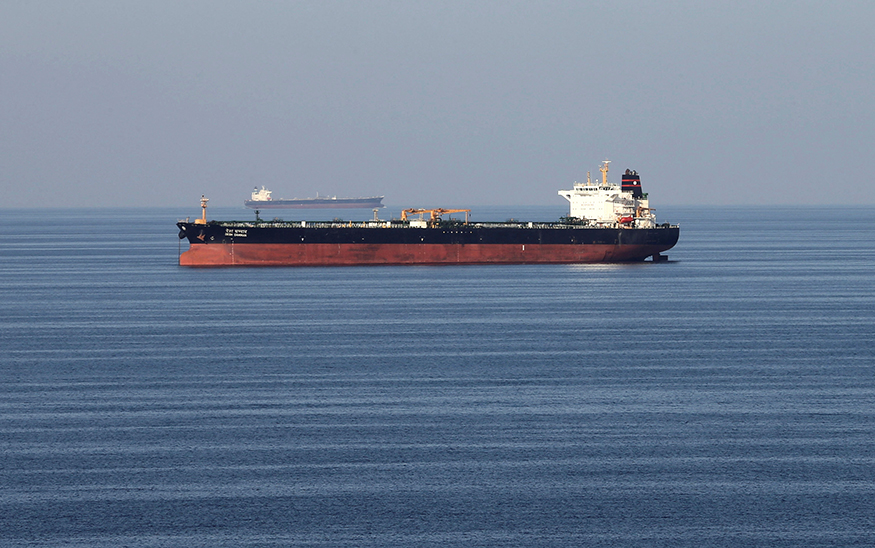
Oil tankers pass through the Strait of Hormuz, Dec. 21, 2018. (PHOTO: REUTERS/Hamad I Mohammed/File)
Oil prices near three-week high amid Strait of Hormuz uncertainty
reuters//August 20, 2026//


Oil prices trimmed gains but kept near a three-week high hit earlier on Wednesday on uncertainty over shipping through the Strait of Hormuz and other ongoing supply disruptions in the market.
At a Glance:
- Brent crude hits highest level since July 30
- Iraq approves new crude export mechanisms starting September 1
- Russian oil shipments fall 15% due to Black Sea port disruptions
Brent crude futures were up 18 cents, or 0.2%, at $91.20 by 1302 GMT, while U.S. West Texas Intermediate crude futures were 16 cents, or 0.19% higher at $85.10 a barrel.
Brent crude hit its highest level since July 30, and WTI reached its highest since July 31 earlier in the session, before retreating.
“Risk appetite received a boost following the announcement from the (Federal Reserve) increasing Treasury buybacks. The news saw the dollar tumble around 0.5% making the drop (in oil prices) even stronger in other currencies,” Saxo Bank analyst Ole Hansen said.
U.S. President Donald Trump said on Tuesday that no talks were taking place with Iran and that the Strait of Hormuz was open, contradicting Iran, which said the waterway remained shut.
A temporary ceasefire agreement expired on Monday and a senior Iranian official told Reuters that his country was moving to a “fully offensive” military posture due to the diplomatic stalemate, though there were no reports of strikes by either side on Tuesday.
“Confidence in safe passage remains low, with shipping volumes still running well below normal levels. That persistent uncertainty continues to keep a geopolitical risk premium embedded in the oil price,” KCM chief market analyst Tim Waterer said.
Shipping uncertainty persists in Hormuz
The Strait of Hormuz carried about one-fifth of global oil and liquefied natural gas supplies before the U.S.-Israeli war on Iran began at the end of February. Its disruption remains a central concern for energy markets.
“Commercial shipping through Hormuz continues to face near full disruption while disagreements persist over the conditions governing maritime traffic,” said Ahmad Assiri, research strategist at brokerage Pepperstone.
Shipping through Hormuz slowed, data showed on Wednesday, as most shipowners avoided the waterway because of the uncertainty.
Iraq’s cabinet approved mechanisms for exporting Iraqi crude through specialized international and local companies and via multiple export outlets, the government said on Tuesday.
The contracts under the new mechanism will run for three months starting September 1, according to a statement issued after the cabinet meeting.
Brent’s move above $91 a barrel suggests traders are pricing in a higher risk premium, with prices potentially returning to three-digit levels, Assiri from Pepperstone added.
Meanwhile, oil shipments from Russia’s western ports have fallen to about 2.3 million barrels per day in the first half of August, 15% below the initial loading plan, because of disruptions at the Black Sea port of Novorossiysk.
Reporting by Anushree Mukherjee in Bengaluru, Jeslyn Lerh in Singapore; Additional reporting by Georgina McCartney in Houston; Editing by Barbara Lewis, Joe Bavier and Emelia Sithole-Matarise.






 Loading ...