Sign In
Upcoming Event
 Free Newsletter

The Idaho Business Review interviews of highly effective people: Angela Hemingway
Marc Lutz//March 13, 2026//
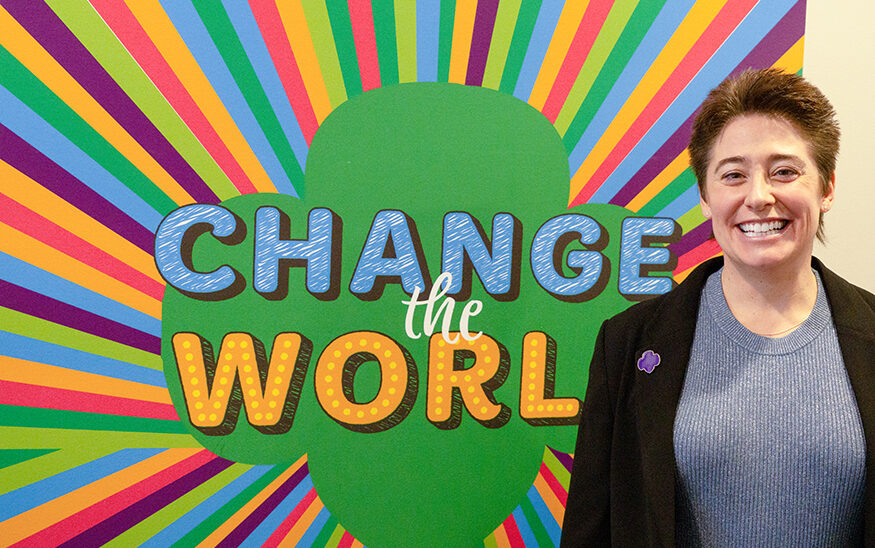
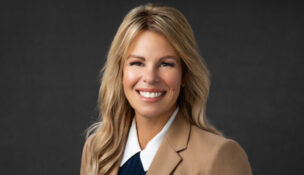
Dr. Angela Hemingway poses in and around the offices of Girls Scouts of Silver Sage in Boise. She took on the role of CEO just 10 months ago. (PHOTO: MARC LUTZ, IBR)
The Idaho Business Review interviews of highly effective people: Angela Hemingway
Marc Lutz//March 13, 2026//


Within just a few moments of spending time with Dr. Angela Hemingway leaves a person feeling inspired, upbeat and ready to tackle, well, anything.
At a Glance:
- Angela Hemingway is CEO of Girl Scouts of Silver Sage and was named to Idaho Business Review‘s Idaho 500 list in 2025.
- She emphasizes education, collaboration, and empowerment in her leadership style and nonprofit mission.
- In early 2025, the organization raised 66% of the previous year’s total funds and launched new partnerships and an alumni program.
That’s just one of the reasons the CEO of Girl Scouts of Silver Sage made the Idaho Business Review’s Idaho 500 list in 2025, and why we felt she is a highly effective leader.
Here, Hemingway discusses mentoring, what led her to running a nonprofit, empowering not just girls and women but everyone. She also talks about what she will do in non-retirement.
This interview has been edited for length.
Idaho Business Review: What inspired you to pursue the career you are in?
Angela Hemingway: It has been quite a pathway that I’ve had an opportunity to walk. In every career pivot that I’ve had, I really have this deep belief that education empowers. And I have a favorite quote by John Dewey: “Education is not the preparation for life; education is life itself.” At every step, whether it was teaching, working at the State Department, working for the governor, even at T-Mobile on a national scale, education is always just at the at the forefront of my mind, and specifically making sure that individuals have access to these phenomenal opportunities that education can provide. And education could mean formal education, but it could also be out-of-school, after school, learning that you gain through real world experience; a lot of different ways that that we could define education. So, Girl Scouts gives me the opportunity to combine that passion I have for service with education, with this community building aspect as well. It just felt like a really natural pivot of my personal mission that I have. Certainly, it’s a privilege, it’s the most rewarding and the most challenging job I’ve ever had. It’s really phenomenal.
IBR: What are some of the challenges you’ve experienced during your career and what have they taught you?
AH: I started teaching both at Boise State [University] and then also in high school, and that just gives you the ability to pivot quickly, to change on the fly. The kiddos finish the lesson early, and we’ve got to pivot and add some more stuff for it’s going to take longer, so I’ve learned how to pivot and embrace change quickly; learned how to work with tight resources, and how to navigate these really complex issues, whether it’s a statewide assessment issue or a computer science issue or national issues like digital access, especially, during Covid and right after we came out of Covid. For me, it’s the pivot, it’s learning how to work under a lot of pressure, and then how to bring your team along with you. There’s nothing worse than the leader that you turn around and no one’s following you. So, how do you encourage them, keep them bought into the mission? Have a real clear vision and continue just pushing forward. I love the heck out of the people who I work with, the volunteers we have, the girls out selling cookies. It’s a really amazing job.
IBR:When you encounter a roadblock on the path to reaching your goals, how do you circumvent it?
AH: I love that. And this is essentially the efforts that we’re out there trying to instill in girls as well, right? You have curiosity. You get really curious. You have courage. You’re going to be brave. You’re going to risk it, even if you think you might fail, you still take that chance. Then you get creative and you innovate, and you figure out how we’re going to move around the roadblock, or if we just need to go straight through the roadblock or jump the roadblock. So, just these different ways that we can look at a problem; we can break it down. And certainly, I never feel like some of these roadblocks are ones that I have to solve on my own. Oftentimes I’m surrounded by just a phenomenal team with very diverse perspectives and [I have to be] willing to listen to them and have the patience to get their feedback. I tell my team all the time, feedback is a gift. I love to listen and try to understand. I may not always be able to maneuver things in the directions that they’re suggesting, but by being curious and creative and innovative, I think we can push through a lot of those roadblocks. And I think sometimes people hit a roadblock and, “Gosh, I failed. I’m a failure.” But for me, I just don’t internalize failure. For me, it’s a learning lesson, it’s a chance to get creative, to pivot and to continue to push forward. So don’t ever internalize failure. It’s not personal.
IBR: Have you taken what you’ve learned and tried to instill it in your own child?
AH: He’s 23 now, at Boise State in the AI science program. Phenomenal young man. But, you know, I think not only like with my own child, but just leading an organization such as this, it’s just recognizing you’re a role model. Girls and my team, just people, kind of watch behaviors, right? How do you treat other people? How do you treat yourself? And even more importantly, how do you treat people when they’re not in the room? Like when Marc walks out of this room and I turn around, I’m going to be like, “That was awesome. Marc is a great guy,” versus some other people that may have a more negative kind of approach to that. So, I think just emulating the behaviors. And you know, it’s kind of back to that rule we all learned from Bambi right? Treat people the way that you want to be treated. I really live by that rule.
IBR: Talk about your most recent accomplishments, the significance of those accomplishments, and how you got there.
AH: I’ve been here at Girl Scouts about 10 months. Quite a change, coming out of a corporate fortune 40 company into an Idaho nonprofit leadership role. With that, one of my goals was to one ensure that all Idahoans are aware of just how awesome Girl Scouts is, whether they have a child that they enroll in Girl Scouts, whether they’re a parent volunteer or a corporate partner. One thing I’m really proud of in the first quarter of this year, we raised 66% of what we raised all of last year. We’ve been out working with donors, with corporations. We’ve got a new semiconductor camp coming forth with Micron. And we’ve got a computer science camp coming forth with INL. We’re working on partnerships with Meta, with Amazon, with Power Engineers, with so many banks across the across the state that understand our cookie program is a financial literacy program. For me, it’s finding those partners that can really engage in our mission.
We’ve also launched … an alumni program. I run into people all the time ― women and men ― that said, “Gosh, I was a Girl Scout,” or “I had a daughter in Girl Scouts,” and I’m like, “You are an alum, come join us.” Really building out our community of supportive adults that understand our mission or embrace our mission and are willing to be part of it. And for me, that could be just giving time, it could be giving a skill or a talent they have, and it could be treasure. I really look at our volunteer experience and partnership experience kind of as all encompassing, whether it’s time, talent or treasure, we really want to welcome them into our fold and bringing those donors to the table and making people aware of all the really cool things we do In the Girl Scout community.
IBR: How would you define your leadership style?
AH: I think it’s one thing for me to define it and how my team would define it, so I hope that I define it as incredibly collaborative. I genuinely like people, and I’m curious about them, and I want to understand how we can come together. So, collaborative, mission-driven, and I also love to empower people. I think my team would say, “She’s not a micro-manager.” I try to give them the tools, the resources, the encouragement and the opportunity to take these calculated risks or smart risks. Let’s try that and see what’s going to happen. Let’s try this new Micron camp and see if we can get girls registered. Let’s try INL ― and our INL camp is for members and non-members, so it’s going to be both boys and girls that can be part of this camp. Again, just trying some of these different things, so collaborative, mission-driven and full of empowerment. And but I also try to be authentic, transparent, genuine, compassionate and empathetic. But again, I drive hard. I push hard. I push myself hard. And as a result, the team knows that we are working towards this mission. Every morning I wake up and I think of my team, and I literally go to our teams, our team huddle, and I put in either a thought for the day or a quote for the day, really something I’m thinking about that empowers them in a way that I’m thinking of driving forward in that particular moment. Before I go to bed, I take that moment to just be grateful and just to say, “Thank you.”
IBR: Do you mentor others? If so, what do you look for in a mentee?
AH: Mentorship is critical, and I think it comes in different shapes and sizes. Even here, I do skip level meetings. Every quarter, I meet with everyone, kind of one-on-one, and whether it’s mentoring or listening to understand, coaching, that sort of stuff. [I look for] people who are curious, who are open to learning, and who are really willing to stretch outside their comfort zones ― those are the favorite people that I just absolutely love to mentor. Also, many of them have a sense of purpose, but maybe they haven’t yet defined it. So, working with them to you know why you do what you do, or why are you here. What do you love about your job, or what do you wish you could change again? I’m super curious, and just love to listen to what they say and what questions they have. Education always weaves into that. I have switched jobs a number of times, but before I moved on to my next phase, I’ve always made sure that I have someone under me who I’ve been mentoring [that would] be great for this position. I’ve got my eye on a couple of them here right when I retire. I really want to uplift, uplift people. Mentoring can happen in moments, or it can happen kind of on that larger scale.
IBR: How do you plan each day to be successful?
AH: Wake up, the check-in with the team, just the repositioning of my thinking, that education empowers, that I’m so fortunate to be here and then check my calendar and get ready to rock and roll, you know? But I really do try to put some mindful time in there, for thinking, for listening, for connecting. I don’t always have to be the loudest voice in the room. I just want to be the one who’s really present when that opportunity arises, and I’m also willing to recognize I have to put myself first: Sleep, get to the gym, eat consistent meals, take care of myself in order to be able to show up and be the best leader I can be.
IBR: What will you accomplish this year?
AH: What we’re working on really hard now is we are expanding our strategic plan, which currently runs 2027 to 2030. We’re really carrying out this 2030 vision, which, in my mind, includes expanding access. Every girl has this tremendous potential, and we want her to have an opportunity to have access to this amazing Girl Scouting experience. Getting that bridge between potential and opportunity was just critically important. How do we build that? Through awareness, through access, obviously financial stability, those are the main things that we’re going to build heavy into our 2030 vision. I could see us modernizing, building out those deeper community partnerships and individual relationships are something that I will be focused on as well. But I think at the end of the day, we want to create a space where every girl feels safe, she feels seen and supported, and she feels empowered, to lead with courage and confidence. If we could do that, we are on the right track.
IBR: If you had to retire tomorrow, how would you describe the entirety of your career, and what would you do in retirement?
AH: I think of my headstone, right? I would hope that that it would say something along the lines of: “Fueled by purpose, guided by impact, remembered for empowering others.” That’s what I would hope the legacy is I leave behind. I don’t envision I’ll officially retire. I’m still a certified math and science teacher. I need to get my CTE certification wrapped in there as well. But I want to teach. I would love to write, and then I want to continue to work to mentor and foster this next generation of leaders, the ones that are going to be leading Idaho. For fun. I’ve got to get outdoors more. I love backpacking and just being on the dusty trail out there and anywhere but preferably Idaho, preferably the Sawtooth or Hell’s Canyon, wherever the weather is the nicest, just be out on the trail enjoying some time with the family.



 Loading ...