Sign In
Upcoming Event
 Free Newsletter

Boise Startup Week Pitch Contest: Innovation in Idaho means toilets, breast milk
Sharon Fisher//October 11, 2019//
Boise Startup Week Pitch Contest: Innovation in Idaho means toilets, breast milk
Sharon Fisher//October 11, 2019//


What do clean toilet seats and nonallergenic breast milk have in common? They were considered the best startup ideas by judges at the Pitch Competition held during Boise Startup Week on Oct. 9.
Washie, a toilet seat intended for public places that lets users clean it off first, and Free to Feed, a series of strips to test for breast milk allergens to help find food sensitivities in babies, won the grand prize of $20,000 and the runner-up prize of $5,000, respectively.

The competition received 32 applicants, which was narrowed down to 16 semifinalists. Dress rehearsals, which cut the semifinalists down to four finalists, were held on Sept. 30 in the Berquist Conference Room in the Student Union Building at Boise State University.
Wild about Washie

Washie, developed by Robert Poleki – a former Bannock County Clerk who quit his job to develop the product – includes a canister with foam. Like soap dispensers, the foam dispenses when the person waves their hand in front of it, and then they can wipe the foam across the seat with toilet paper to clean it. It is cheaper and more sanitary than other options such as paper protectors, he said.
The toilet seat is also connected to the cloud and can alert maintenance personnel when the devices need repair or refilling.
Washie is focusing on airports, and the product is being installed in several of them, with a number of others interested, Poleki said. He received an $83,000 IGEM grant from the state of Idaho, invested $100,000 of his own money and received $150,000 from friends and family. The company is also seeking $1.5 million in seed round funding, he said.
While Washie makes money on the seats themselves, the real money is in selling the foam cartridges, Poleki said.
Tracking down allergens

Free to Feed, developed by Trillitye Paullin, consists of canisters of strips to test for common food allergens in breast milk. Some babies are allergic to substances transmitted through the breast milk from food the mother has eaten, but such sensitivities can be notoriously difficult to track down due to delays between the food appearing in the milk and the baby’s reaction, she said.
The strips cost 15 cents to make, meaning a canister costs $1.50 plus packaging and shipping. It would sell for $19.99, Paullin said. Tests indicated that it would typically take about five canisters to track down food sensitivities in a baby, she said.
Other presenters
Another presenter was Joule Case, which makes portable energy storage. Joule Case has closed on a $500,000 convertible note and is starting to move on to Series A funding. The company is working on one contract that would result in $120 million of orders, said chief marketing officer Amber Bieg.
HouseCheck, a presenter, is creating a national network of home inspectors that will collect data on houses that can be monetized later. The company wants to raise $10 million to buy eight more home inspection firms.
Other participants included Blocksmith, a virtual reality company; Gravity, a dating application that uses artificial intelligence; training company Tovuti; Chillow, an application that helps people find roommates and Jungo, which helps connect student athletes with schools.
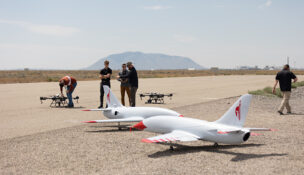
An exhibition during the judging demonstrated a number of other products, including Terroir AI, an application for vineyards that uses artificial intelligence to help grow better grapes; Pitch Aeronautics, which is developing an inspection drone and Planted People, which gives businesses access to service industry staff.